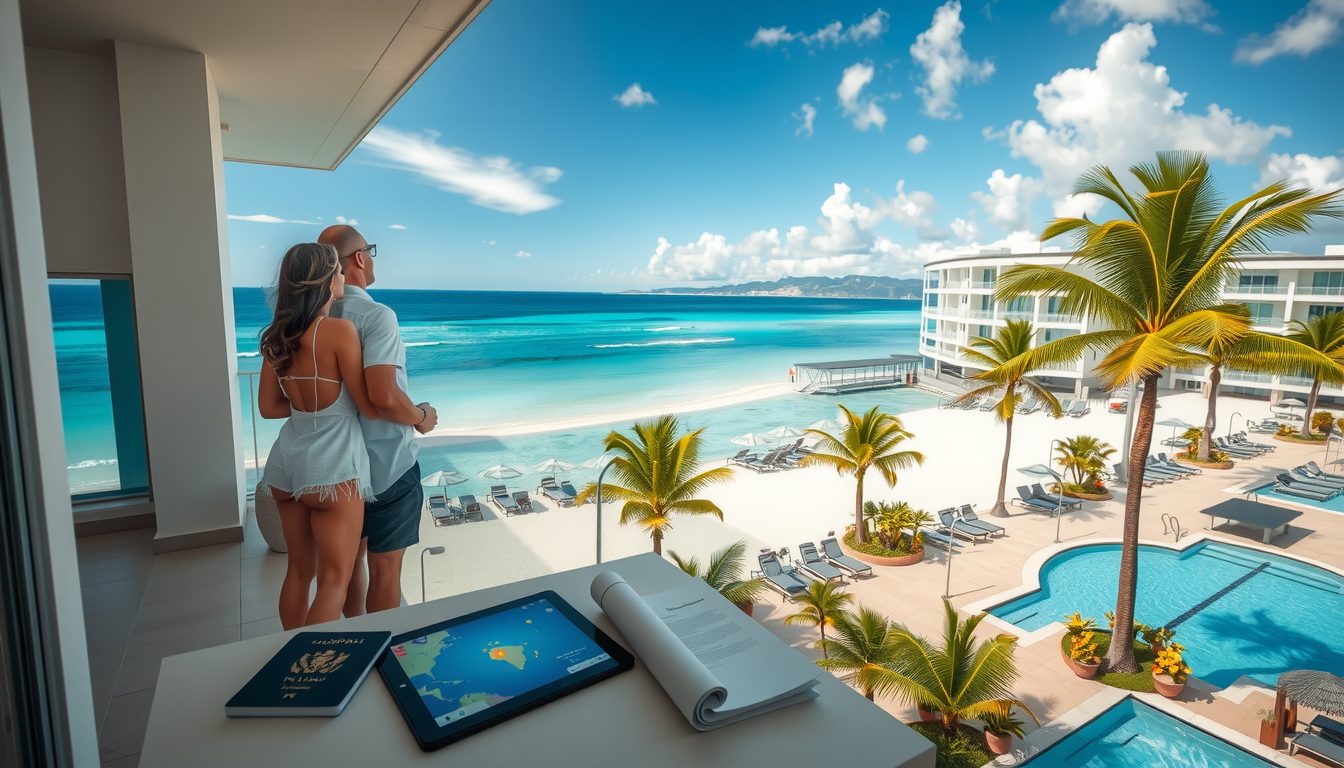

Planning a Caribbean vacation during hurricane season does not have to feel risky.
Some islands sit outside the main storm corridor, giving you calmer weather and fewer disruptions even in peak months.
That geographical advantage translates into steadier weather, fewer trip-ending disruptions, and a calmer booking season even when the wider Atlantic is active.
This guide shows which islands are consistently the safest bets, why most storms miss them, and how to plan a smooth storm-season getaway without spending your vacation refreshing radar maps.
Understand The Hurricane Belt: Why It Shapes Caribbean Vacation Risk
The Atlantic hurricane season runs from June 1 through November 30 each year. (NOAA)
Activity is not evenly spread across that window.
Climatology places the seasonal peak around September 10, with most storms forming or tracking between mid-August and mid-October. (NOAA)
The “hurricane belt” is the broad swath of the Atlantic, Caribbean Sea, and Gulf of Mexico that sees the highest frequency of tropical storm and hurricane tracks. (NOAA)
It typically covers the northern and central Caribbean.
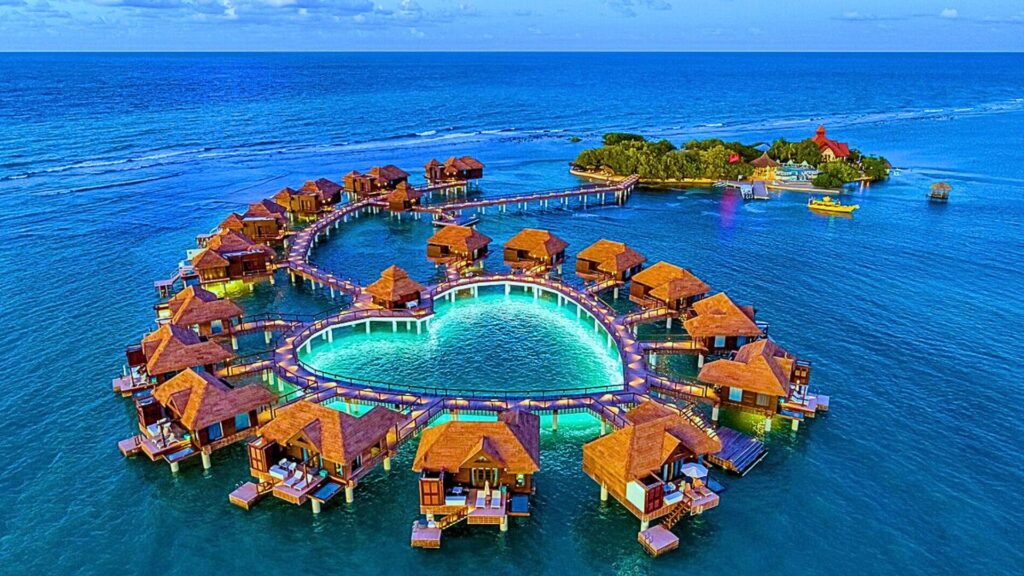
Paradise Is Calling Your Name
Explore Sandals & Beaches deals
That includes places like the Bahamas, Puerto Rico, Jamaica, the Dominican Republic, the U.S. Virgin Islands, Cuba, and much of the northern Lesser Antilles.
Islands that sit outside or below this belt are generally farther south, closer to South America.
Storms form in the tropical Atlantic and are pushed west by trade winds.
As they intensify, many curve north and northwest before reaching the far southern latitudes. (NOAA)
That is why the southern Caribbean is statistically calmer during hurricane season, even though it shares the same warm water and tropical feel travelers want.
One key nuance is that “rarely hit” does not mean “never affected.”
A storm can still bring outer rain bands, rough seas, or airline disruptions into safer islands.
You might also be routed through storm-prone hubs like Miami or San Juan, and those delays can ripple into missed resort nights.
Still, the odds of a direct strike, mandatory evacuation, or multi-day resort shutdown are meaningfully lower in these southern zones.
Pick Safer Caribbean Islands with the Lowest Hurricane Risk
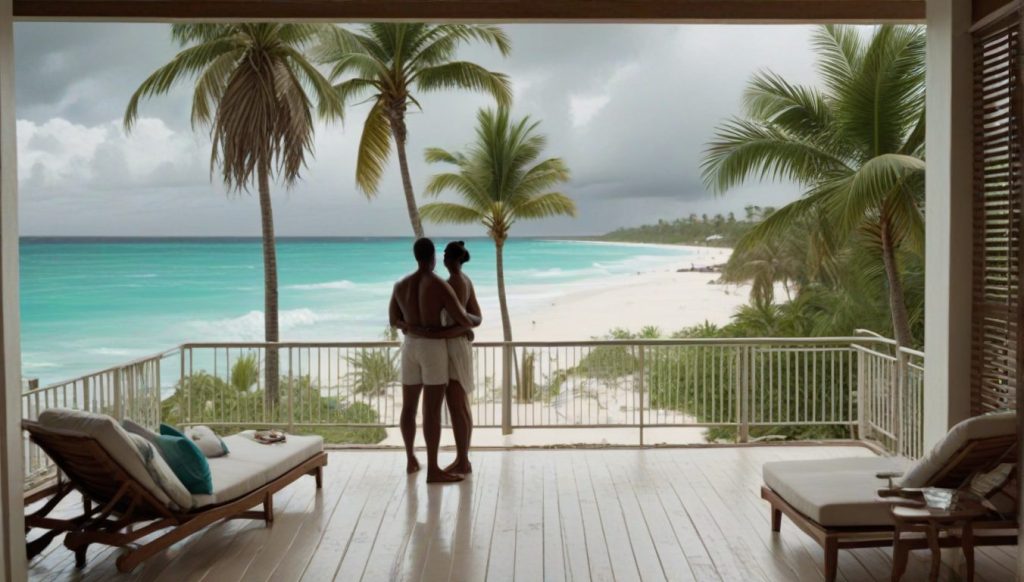
These destinations have the most consistent track record for avoiding major hurricane impacts.
They are not only safer during storm season.
They are also reliable year-round bets when you want to book with confidence.
Aruba
Aruba sits just north of Venezuela, well below the latitude where most Atlantic hurricanes travel.
Direct hurricane landfalls are extremely rare in modern records, and most storms pass hundreds of miles away. (ABC News)
What you get as a traveler is dependability.
Even in September, Aruba’s resorts, beaches, and tours usually operate on normal schedules, and the island’s arid climate keeps long rain disruptions limited compared with greener islands farther north. (The Weather Channel)
Aruba is also compact and easy to plan.
Palm Beach and Eagle Beach sit close to the main hotel corridor, and Oranjestad is a quick taxi or bus hop away.
That tight geography makes it simple to keep your days flexible if you see a breezy forecast.
If you want to lock in popular experiences without stressing about sudden weather pivots, booking a couple of key outings through GetYourGuide can help.
Many Aruba operators on the platform offer mobile tickets and generous cancellation windows, which means you can shift a sail, jeep tour, or snorkeling day if conditions change.
Escape the Chaos. Upgrade to Paradise.
See today’s exclusive offers
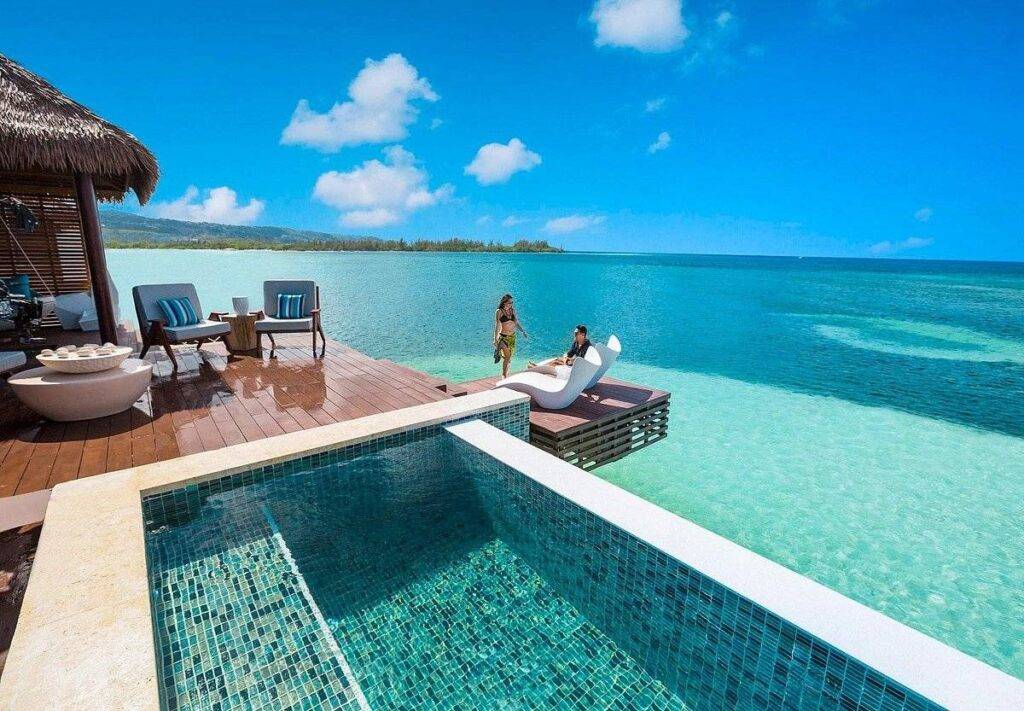
It is a practical way to protect your schedule without over-planning your whole week.
If you like exploring by wheels instead of shuttles, BikesBooking.com is useful here because Aruba’s beach road network is flat and friendly.
You can pre-arrange a beach cruiser or e-bike and ride from Palm Beach down toward Eagle Beach and the low-rise zones without needing a rental car.
That route logic saves parking hassle and keeps your day smooth even if a quick shower rolls through.
Bonaire
Bonaire sits in the same southern chain as Aruba and shares the same below-belt exposure.
It is famous for shore diving, and the reason divers love it is the same reason storm-season travelers do.
Conditions stay steady more often than not, so you can plan water time confidently even in peak months elsewhere.
Bonaire’s marine park is strongly protected, and many of the best reef sites are accessible right from shore.
That means you are not dependent on boat schedules or long transfers to have a full snorkel or dive week.
If a breezy day pops up, you can simply pick a leeward site and still get in the water.
For non-divers, Bonaire stays easygoing.
The salt flats, flamingo habitats, and slow-paced Kralendijk waterfront create a trip that is relaxing without being repetitive.
It is a natural fit for travelers who want calm days, short drives, and minimal weather drama.
Curaçao
Curaçao sits alongside Aruba and Bonaire in the ABC chain, and it benefits from the same southern latitude that keeps major hurricanes uncommon. (Frommer’s)
It is a great pick if you want a beach vacation with a real city base.
Willemstad’s colorful waterfront, walkable districts, and cafés along the harbor give you something to do even if you get a passing shower.
Storm season here usually looks like short rain bursts followed by clearing skies, not multi-day shutdown patterns.
That steadiness lets you schedule beach time at Playa Kenepa or a West Coast cove-hopping day without needing a backup plan for every morning.
Curaçao is also easy to blend self-guided days with guided culture trips.
A walking tour of Punda and Otrobanda, a rum and food crawl, or a beach-transfer bundle through GetYourGuide can anchor one or two days, while you keep the rest of the week loose.
That balance works beautifully in shoulder season, when you want structure without feeling locked in.
Find the Escape You’ve Been Craving.
Reveal limited‑time Caribbean deals
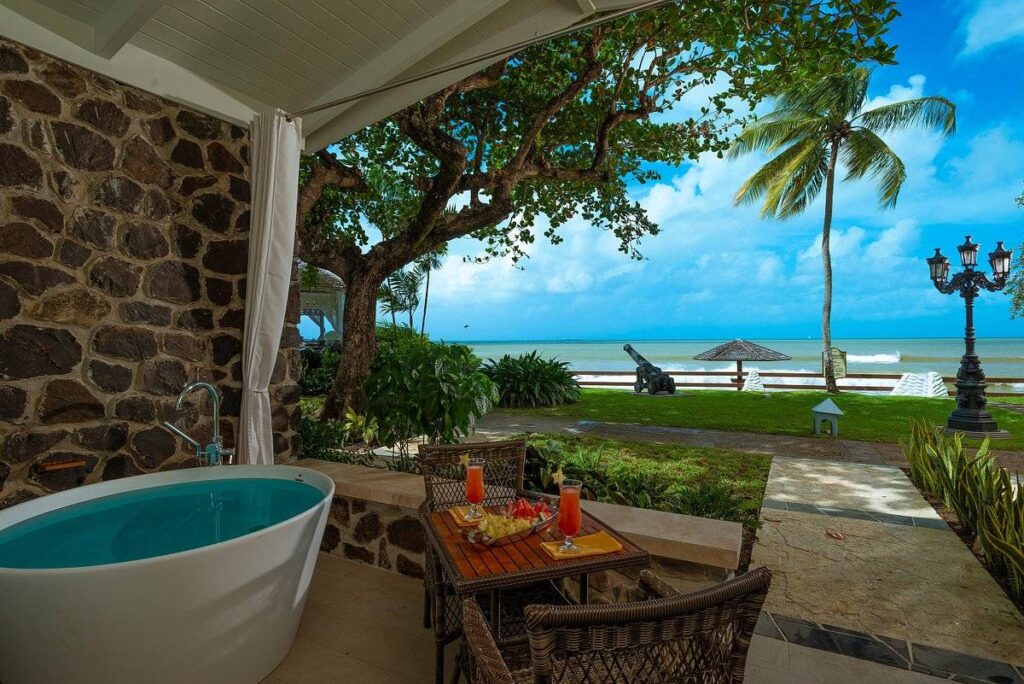
Trinidad And Tobago
These twin islands sit near the far southern edge of the Caribbean, very close to the South American coast. (Frommer’s)
Direct hurricane impacts are uncommon compared with the northern chain.
Trinidad is the cultural heartbeat, with a deep music, food, and festival scene, while Tobago leans quieter and beach-forward.
Because storms miss this latitude so often, you are not gambling with a nature-heavy itinerary or a late-summer escape.
If wildlife is part of your trip, this is one of the best places to go during peak storm months elsewhere.
Tobago’s rainforest paths, birding reserves, and seasonal turtle nesting create experiences that remain viable while other islands are watching the Atlantic nervously.
For travelers who want a resort week with real culture and nature depth, these islands are southern confidence plays.
Grenada
Grenada sits south enough that major hurricanes are less frequent than in the central and northern Caribbean, though rare direct hits can still happen.
As a traveler, you feel that in late summer.
The island stays lush and warm, but the weather pattern is usually more stable than islands farther north during the same weeks.
Grenada offers more than beach days.
Chocolate and spice estates, the underwater sculpture park, and rainforest waterfalls give you “experience” options that remain rewarding even if you get a brief rainy afternoon.
If you like to plan one or two bigger excursions ahead of time, book them with flexibility.
Look for providers that allow easy rescheduling so a short weather shift does not cost you the day.
Grenada is a strong pick for travelers who want scenery and culture without leaning into the riskiest part of the belt.
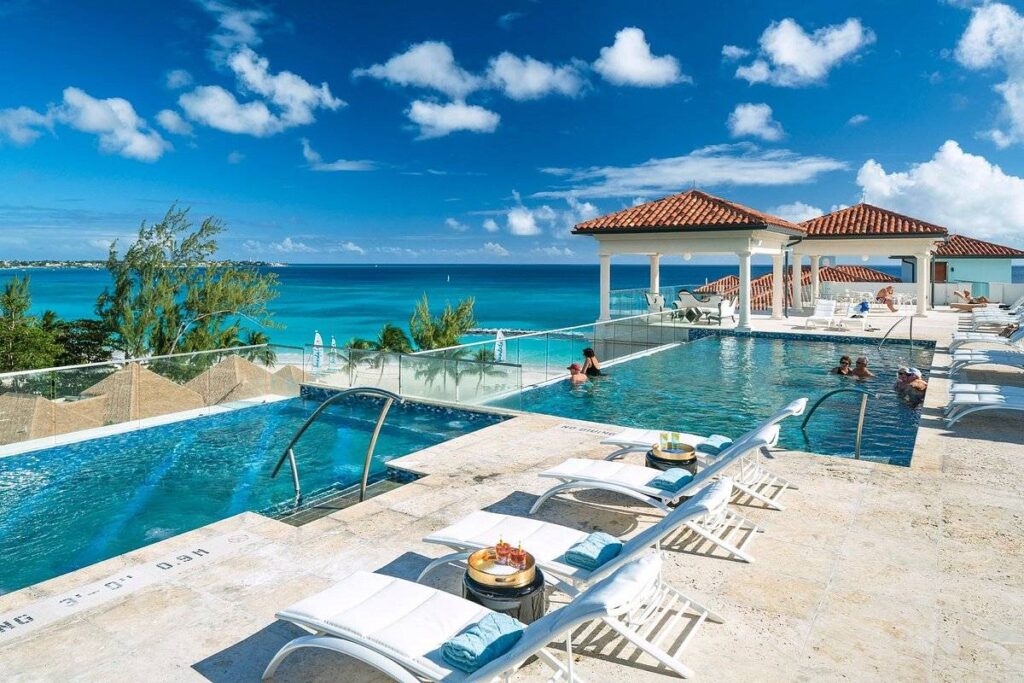
Turn Your Next Getaway into Magic.
Discover your perfect resort match
Barbados
Barbados sits near the edge of the hurricane corridor rather than fully below it, so the risk is low but not zero.
Historically, direct hits have been less common here than in many northern islands, and tourism systems are built to respond quickly to storms.
For travelers, Barbados is a “reliably good weather” island that also has depth.
Bridgetown’s UNESCO-listed core, rum heritage, Harrison’s Cave, and a strong food calendar mean you can build a week that is not just beach repetition.
September and early October often deliver high-season quality with fewer crowds, which is a sweet value zone for U.S. travelers.
Barbados is a smart middle-ground option when you want lower seasonal risk without going as far south as the ABC islands.
Anguilla
Anguilla is not as sheltered as the ABC islands, since it sits higher in the northern chain.
Still, it often sees fewer direct strikes than some nearby neighbors, and its resort calendar remains active through late summer and fall.
If your priority is a quieter luxury stay, Anguilla’s smaller scale works in your favor.
The beaches are calm and uncrowded, and the dining scene is excellent for an island its size.
Just plan with realistic expectations.
Anguilla is a lower-risk northern choice, not a near-zero-risk southern one.
Storm-season travel protection is still worth having here.
Sint Maarten
Sint Maarten is inside the active northern corridor, and it has taken major storms in past decades.
Its inclusion here is about resilience rather than pure geography.
The island rebuilt strongly after past hurricane impacts, and its airport, port, and tourism systems are designed to recover quickly.
Travelers who want nightlife, shopping, and a Dutch-French cultural blend often choose Sint Maarten in summer because prices soften while the island still feels lively.
If you pick it during peak months, keep flexible booking and storm-ready travel coverage front of mind.
This is a smart value play, not the safest statistical play.
Why Southern Caribbean Islands Stay Safer During Hurricane Season
Geography does most of the work.
Storms generally form in the warm tropical Atlantic and move westward with trade winds.
As they intensify, many curve north and northwest toward the central Caribbean, Gulf, or U.S. East Coast. (NOAA)
That curvature leaves the far southern islands below the most common track latitude.
History reinforces the pattern.
Aruba, Bonaire, and Curaçao have seen very few direct hurricane impacts compared with islands in the main corridor.
Recent seasons underline the contrast too.
On October 28, 2025, Hurricane Melissa made a catastrophic Category 5 landfall in Jamaica, causing widespread devastation.
Southern islands like Aruba and Curaçao remained outside the direct impact zone, showing again how storm tracks favor the central and northern chain. (Frommer’s)
The takeaway is not “storms cannot reach the south.”
It is that the probability of a direct landfall that closes resorts and ends trips is meaningfully lower.
Find The Best Time To Visit Safer Caribbean Islands For Value And Calm
Because these destinations stay calmer, hurricane season can work in your favor.
June through August is solid for families on school schedules.
The southern islands often feel less oppressive than rainforest-heavy islands in the same months because breezes and lower rainfall keep heat more comfortable. (The Weather Channel)
September and October are peak storm months elsewhere, but Aruba, Bonaire, and Curaçao typically stay steady. (NOAA)
That makes early fall a favorite for travelers who want quiet beaches and lower rates without high disruption odds.
November through April is high season across the Caribbean.
Prices rise and flights fill faster.
If you want a midpoint, shoulder season in May or late November often delivers the best balance of cost, crowd level, and weather comfort, especially on the ABC islands. (The Weather Channel)
Protect Your Trip: Why Insurance Still Matters For Safer Caribbean Islands
Choosing a low-risk island does not remove every storm-season complication.
Flights can still be delayed if your connection passes through Florida, Puerto Rico, or another airport inside the belt.
A storm that never touches Aruba can still shut down Miami for a day, and that delay can ripple into missed resort nights or extra hotel costs in transit.
That is why travel protection remains part of a smart plan.
A strong policy can cover trip cancellation or interruption, delays, missed connections, and emergency medical care.
Platforms like VisitorsCoverage or Insubuy are useful for comparing storm-season clauses side by side so you are not guessing about coverage details.
If your trip includes snorkeling, hiking, or other active pieces, providers like Ekta and World Nomads often pair storm disruption benefits with strong medical and activity protection.
And if weather causes major flight cancellations on routes that qualify under passenger-rights rules, Compensair can help you pursue airline compensation without spending hours chasing paperwork.
None of this is about expecting problems.
It is about keeping your trip financially stable if something happens on the way to a safer island.
Explore More: What Safer Caribbean Islands Offer Beyond Beaches
The reason these destinations are such smart storm-season picks is not only their latitude.
They also deliver full vacations without needing perfect weather every hour.
Aruba gives you Arikok National Park, desert-coast trails, and shipwreck snorkeling that still feels great on a breezy day.
Bonaire is built for shore diving, calm reefs, and nature-forward afternoons with flamingos and salt-flat views.
Curaçao pairs nightlife and culture in Willemstad with cove beaches and a growing art and food scene.
Barbados mixes surf coasts, caves, rum heritage, and festivals that keep the island lively outside winter.
Grenada adds spice estates, chocolate tours, underwater sculpture dives, and rainforest trails to the beach formula.
Trinidad and Tobago offer Carnival energy, deep birdwatching, and quiet Tobago bays that feel far removed from the party islands.
Anguilla leans into calm luxury, beach-hopping, and excellent dining without the mega-resort sprawl.
Sint Maarten delivers nightlife, shopping, and the memorable experience of Maho Beach plane landings, plus a lively dual-culture feel.
You are not choosing “safe but flat.”
You are choosing “safe and still worth flying for.”
Choose Smart: The Simplest Way to Pick Your Best Caribbean Island
If you want the lowest storm exposure and dependable late-summer weather, pick the ABC islands first.
If you want southern latitude with deeper culture and rainforest energy, add Grenada or Trinidad and Tobago.
If you want a low-risk middle-ground with strong tourism resilience, Barbados is your bridge option.
If you want northern luxury or nightlife value, Anguilla or Sint Maarten can work with extra flexibility and protection in place.
That decision logic keeps you realistic without turning storm season into a fear-based planning exercise.
Why Safer Caribbean Islands Are Your Smartest Bet For Hurricane Season
Picking an island outside the hurricane belt is not only about safety.
It is a strategy for having the vacation you actually planned.
You get quieter beaches, better pricing than winter high season, and a much higher chance your resort week stays intact from check-in to checkout.
Meanwhile, travelers aiming for the northern islands in September often pay similar money while carrying higher disruption odds.
So if you want a Caribbean trip that feels dependable during the Atlantic’s most active months, go south.
Build in travel protection for the flight chain, choose resorts with clear storm terms, and let the odds work for you instead of against you.
FAQ – Hurricane-Ready Caribbean Resort Travel: Protect Your August Booking
What core coverages should I buy to protect an August Caribbean resort booking?
Buy trip cancellation that reimburses prepaid, nonrefundable costs so you recover resort deposits and flights.
Choose trip interruption to reimburse unused nights and emergency transport if you must leave early.
Select emergency medical coverage with high limits to avoid island medical bills.
Add emergency evacuation coverage to secure air ambulance or repatriation when local care is insufficient.How and when do hurricane clauses actually trigger for cancellations or interruptions?
Hurricane clauses trigger only for qualifying, unforeseen named storms or official warnings defined in the policy.
Confirm the policy’s exact trigger language so you can act and file a valid claim when conditions meet the stated criteria.
Buy the policy on the day you make your first trip deposit to preserve hurricane-related triggers and CFAR eligibility.Should I add Cancel For Any Reason CFAR for an August trip?
Add CFAR if you want flexible cancellation for comfort or personal reasons and partial reimbursement of prepaid costs.
Verify the CFAR purchase window and required cancellation timing so you meet eligibility rules.
Use CFAR when forecast uncertainty or headlines would otherwise force a stressful last-minute choice.What medical and evacuation limits are recommended for Caribbean resort travel?
Aim for at least $100,000 in emergency medical coverage to avoid out-of-pocket island treatment costs.
Choose evacuation coverage of $250,000 or more to cover inter-island air ambulance or transfers to higher-level care.
Match limits to your planned activities and the remoteness of your destination to ensure adequate protection.How should I document and file a claim if a storm disrupts my resort vacation?
Document everything by saving airline notices, resort emails, official evacuation orders, and photos of damage or outages.
Contact your insurer promptly and submit the documented evidence following their claim checklist.
Keep receipts for emergency hotels, meals, and transport to support delay or interruption claims.Can I rely on resort or airline policies instead of travel insurance during hurricane season?
Do not rely solely on resort or airline goodwill because vendor policies vary and rarely guarantee full reimbursement.
Use insurance as a contractual remedy that reimburses covered losses and supports evacuation and medical costs.
Treat insurance as the financial safety net that secures your prepaid investment.How does trip delay coverage help when major hubs are affected by tropical weather?
Trip delay reimburses essentials like meals, hotels, and transport when flights are delayed for a qualifying period.
Delays often occur in hub cities even if your island is unaffected, so delay coverage prevents surprise expenses.
Confirm the qualifying delay threshold and per-day limits before you travel.Which providers or platforms are best for comparing hurricane-ready plans?
Use comparison platforms that display storm clauses, CFAR options, and full limit details so you can match coverage to prepaid costs.
Prioritize providers known for strong medical and evacuation posture if health security is your top concern.
Compare purchase windows, exclusions, and claim processes to choose the policy that fits your trip profile.What immediate steps should I take if a storm track threatens my August trip?
Monitor official weather sources and your insurer’s guidance and contact your resort and airline early to learn their protocols.
Document all communications and consider CFAR if you purchased it and your comfort threshold is crossed.
Use your policy’s emergency assistance line to coordinate medical or evacuation needs.How can I reduce stress and financial risk when booking an August Caribbean resort?
Buy coverage the day you make your first deposit so hurricane triggers remain valid.
Insure the full prepaid trip cost so cancellation and CFAR limits match reality.
Prepare a disruption kit with chargers, medications, snacks, and a flashlight to stay comfortable during delays.