
Don’t Let One Problem Ruin Your Vacation
A few seconds now protects the trip you’ve already invested so much into.
Short Excerpt
- Caribbean storm exposure varies sharply by location, making the southern Caribbean especially useful when reducing hurricane risk is a major planning priority.
- Aruba, Bonaire, Curaçao, Grenada, and Trinidad and Tobago combine relatively favorable geography with resorts, beaches, culture, diving, and outdoor experiences.
- Barbados can also be worth considering, although its hurricane exposure is higher than the ABC islands and no Caribbean destination is completely protected from tropical systems.
Quick Take
- Aruba, Bonaire, and Curaçao stand out because their southern locations place them well below many common Atlantic hurricane tracks.
- Aruba is strongest for a traditional luxury-resort vacation, while Bonaire favors diving and Curaçao balances beaches with culture and sightseeing.
- Grenada offers lush scenery and upscale resorts farther south, while Trinidad and Tobago pair lower historical hurricane exposure with deeper cultural and nature experiences.
- Barbados remains an attractive hurricane-season option, but travelers should distinguish its comparatively favorable location from the still-lower exposure of the ABC islands.
- Flexible bookings and suitable travel protection remain valuable because lower storm risk cannot eliminate medical emergencies, flight disruptions, heavy rain, or unusual tropical weather.
Which Caribbean Resort Areas Give You the Best Combination of Lower Storm Risk and a Great Vacation?
Hurricane season doesn’t have to mean canceled Caribbean plans.
Some destinations sit outside the main hurricane belt or have historically low storm activity, making them reliable choices for travelers who want peace of mind.
These islands combine safety with cultural richness, excursions, and luxury resorts — proving that a storm‑safe vacation can still be adventurous and unforgettable.
Choose these low‑risk islands with luxury resorts, vibrant culture, and calm escapes — all outside the hurricane belt.
With fewer crowds and off‑season rates, these destinations turn storm anxiety into stress‑free confidence.
From Aruba’s desert landscapes and nightlife to Bonaire’s world‑class diving, Curaçao’s colorful culture, Barbados’ rum heritage, Grenada’s spice plantations, and Trinidad & Tobago’s music‑driven festivals, these destinations consistently rank among the Caribbean’s safest resort areas for storm‑season travel.
Aruba – Desert Beauty and Storm‑Safe Luxury
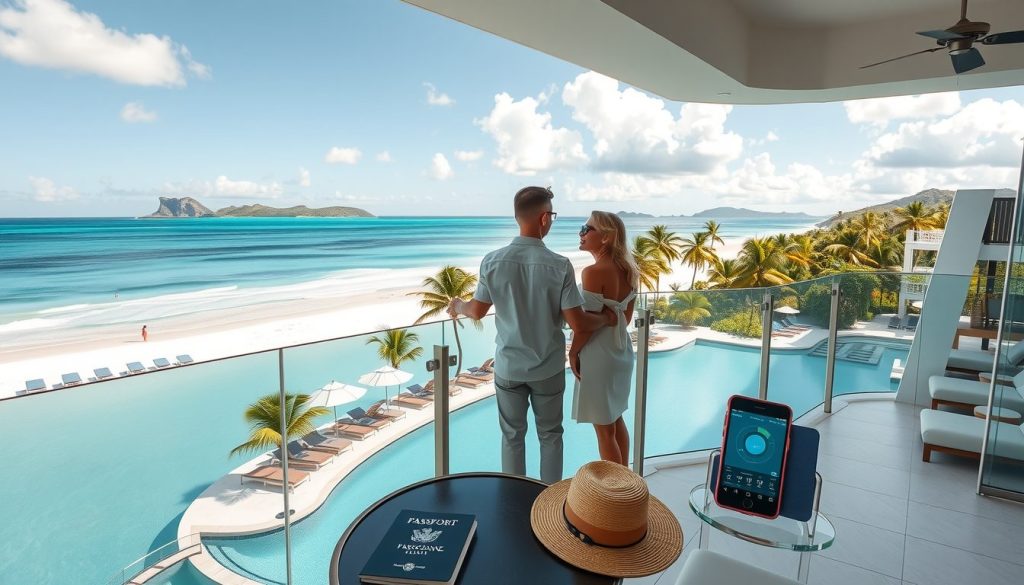
Aruba is one of the driest islands in the Caribbean, averaging just 15 inches of rain annually.
Its southern location keeps it well outside the hurricane belt, making it one of the most reliable choices year‑round.
Beyond its beaches, travelers can explore Arikok National Park’s desert landscapes, snorkel at Tres Trapi with sea turtles, or dive the Antilla shipwreck.
Paradise Is Calling Your Name
Explore Sandals & Beaches deals
Evenings bring Dutch‑Caribbean cuisine, casinos, and live music along Palm Beach.
Stay Here for Stress‑Free Luxury:
- The Ritz‑Carlton Aruba
- Hyatt Regency Aruba Resort Spa & Casino
- Divi Aruba All Inclusive
Bonaire – Diving Paradise with Calm Seas
Bonaire is a diver’s dream, with calm seas and protected reefs.
Its marine park offers more than 80 dive sites accessible from shore, while mangrove kayaking and flamingo spotting at Goto Lake add eco‑friendly adventure.
In Rincon, Bonaire’s oldest town, visitors can experience traditional music, festivals, and cuisine that reflect the island’s cultural roots.
Stay Here for Stress‑Free Luxury:
- Buddy Dive Resort
- Harbour Village Beach Club
- Delfins Beach Resort Bonaire
Curaçao – Colorful Culture and Coastal Adventures
Curaçao blends Dutch colonial charm with Caribbean flair, and its southern position makes it a safe bet during hurricane season.
Willemstad’s UNESCO‑listed pastel streets provide a cultural backdrop, while Shete Boka National Park offers dramatic coastal hikes and blowholes.
October brings music and food festivals that celebrate Afro‑Caribbean heritage, adding cultural depth to a storm‑safe vacation.
Stay Here for Stress‑Free Luxury:
- Baoase Luxury Resort
- Avila Beach Hotel
- Sunscape Curaçao Resort, Spa & Casino
Barbados – Rum, Culture, and Rare Storms
Barbados sits on the eastern edge of the Caribbean, and while storms occasionally brush past, direct hits are rare.
Visitors can tour the Mount Gay Rum Distillery, explore Harrison’s Cave by tram, or surf Bathsheba’s rugged Atlantic coast.
Carlisle Bay offers calm waters for snorkeling, while cultural performances and culinary events echo the island’s Crop Over traditions.
Escape the Chaos. Upgrade to Paradise.
See today’s exclusive offers
Stay Here for Stress‑Free Luxury:
- Sandy Lane
- Fairmont Royal Pavilion
- The Crane Resort
Grenada – The Spice Island
Grenada is lush, mountainous, and culturally rich. Its southern location reduces hurricane frequency, making it a safer choice.
Travelers can snorkel at the Underwater Sculpture Park, hike to waterfalls like Annandale Falls, or tour spice plantations that give the island its nickname.
In St. George’s, colorful markets and colonial architecture provide a vibrant cultural experience.
Stay Here for Stress‑Free Luxury:
- Spice Island Beach Resort
- Silversands Grenada
- Mount Cinnamon Resort & Beach Club
Trinidad & Tobago – Cultural Energy and Natural Beauty
These twin islands, located far south near Venezuela, are rarely affected by hurricanes.
Trinidad’s Asa Wright Nature Centre offers rainforest birdwatching, while Tobago’s coral reefs and the Nylon Pool sandbar provide idyllic water experiences.
Visitors can immerse themselves in steel‑drum music, Carnival‑style festivals, and vibrant street food culture, making the islands as culturally rich as they are storm‑safe.
Stay Here for Stress‑Free Luxury:
- Hyatt Regency Trinidad
- Magdalena Grand Beach & Golf Resort (Tobago)
- Coco Reef Resort & Spa
Real Scenarios: Why Insurance Still Matters
Even in low‑risk destinations, disruptions can happen.
| Event | Impact on Travelers | Source |
|---|---|---|
| Hurricane Maria (Puerto Rico, 2017) | Tourists evacuated or stranded as resorts collapsed; mass infrastructure failure disrupted vacations. | France24 |
| Medical emergencies in Jamaica | Visitors faced sudden hospitalizations and costly evacuations, highlighting the need for insurance. | U.S. Embassy in Jamaica |
| Hurricane Dorian (Bahamas, 2019) | More than 1,400 flights canceled; tourists stranded as airports and resorts shut down. | CNBC |
Insurance Response – How to Protect Yourself in These Situations
- VisitorsCoverage – Protection When Nature Forces a Change
- Covers prepaid costs, rebooking, and trip interruption during storm evacuations.
- Ekta – Medical Security When the Unexpected Happens
- Provides hospitalization and evacuation coverage for sudden medical emergencies.
- Insubuy – Stability When Flights and Plans Collapse
- Covers meals, hotels, and rebooked flights during mass cancellations.
- Compensair – Extra Relief When Airlines Fail You
- Secures compensation from airlines for delays and cancellations, complementing broader coverage.
FAQ – Choosing Caribbean Islands with the Lowest Storm Risk for a Relaxing Resort Escape
Which Caribbean islands truly sit outside the main hurricane belt and offer the most reliable weather?
Aruba, Bonaire, and Curaçao sit well south of the hurricane belt, giving them historically low storm activity.
Aruba’s dry climate and southern position keep weather disruptions rare, while Bonaire’s calm seas and protected reefs make conditions stable for divers.
Curaçao’s southern latitude offers similar reliability, allowing travelers to plan trips without constantly monitoring storm forecasts.
These islands provide dependable conditions even during peak hurricane months.How does Aruba’s climate reduce storm‑season worries for travelers?
Aruba averages only about 15 inches of rain per year, making it one of the driest islands in the region.
Its southern location keeps it well outside typical storm paths, so travelers can expect consistent sunshine and calm conditions.
This reliability matters when planning excursions like exploring Arikok National Park, snorkeling at Tres Trapi, or enjoying evenings along Palm Beach without weather‑related interruptions.Why is Bonaire considered a safe choice for divers during hurricane season?
Bonaire’s marine environment remains stable because the island rarely experiences major storms.
Its protected reefs and more than 80 shore‑accessible dive sites offer predictable underwater conditions.
Even beyond diving, activities like mangrove kayaking or visiting Goto Lake for flamingo spotting benefit from the island’s calm weather patterns, making outdoor plans easier to keep.What makes Curaçao appealing for travelers who want culture and low storm risk?
Curaçao blends cultural depth with dependable weather.
Willemstad’s UNESCO‑listed pastel streets, Shete Boka’s dramatic coastline, and October’s Afro‑Caribbean festivals all thrive in an environment with minimal hurricane exposure.
Travelers can confidently schedule cultural events, hikes, and coastal adventures without the uncertainty common in northern Caribbean islands.How does Barbados manage to offer cultural experiences despite occasional storm brushes?
Barbados sits on the eastern edge of the Caribbean, where direct hits are uncommon.
This allows visitors to enjoy experiences like touring the Mount Gay Rum Distillery, exploring Harrison’s Cave, or snorkeling in Carlisle Bay with relatively low disruption risk.
Even though storms can pass nearby, the island’s infrastructure and location help maintain trip stability for most travelers.Why do Grenada’s southern location and terrain matter for storm‑season travel?
Grenada’s position in the southern Caribbean reduces hurricane frequency, and its mountainous, lush terrain supports activities that rely on predictable weather.
Travelers can hike to waterfalls like Annandale Falls, tour spice plantations, or explore St. George’s markets with fewer concerns about sudden storm impacts.
The island’s natural and cultural attractions remain accessible throughout most of the season.How do Trinidad & Tobago’s southern latitudes contribute to their storm‑safe reputation?
These islands sit far south near Venezuela, where hurricanes rarely reach.
This allows travelers to enjoy rainforest birdwatching at the Asa Wright Nature Centre, Tobago’s coral reefs, or Carnival‑style festivals without the typical seasonal anxiety.
Their cultural energy and outdoor experiences remain dependable even when northern islands face peak storm activity.What types of resort experiences remain dependable in low‑risk islands during hurricane season?
Resorts in Aruba, Bonaire, Curaçao, Barbados, Grenada, and Trinidad & Tobago maintain consistent operations because weather disruptions are uncommon.
Guests can expect reliable access to beaches, diving, cultural tours, and nightlife.
Properties like The Ritz‑Carlton Aruba, Buddy Dive Resort, Baoase Luxury Resort, Sandy Lane, Silversands Grenada, and Magdalena Grand Beach & Golf Resort typically operate without the frequent closures seen in higher‑risk regions.Why does travel insurance still matter even when visiting low‑risk islands?
Even in storm‑safe destinations, unexpected events can disrupt travel—medical emergencies, airline cancellations, or rare weather anomalies.
Providers such as VisitorsCoverage, Ekta, Insubuy, and Compensair offer coverage for situations like sudden hospitalizations, mass flight cancellations, or rebooking needs.
Insurance adds a practical safety net that protects prepaid costs and keeps travel plans flexible.How can travelers plan excursions confidently in these low‑risk Caribbean destinations?
Planning becomes easier because outdoor activities—diving, hiking, cultural festivals, rum tours, or coastal adventures—are less likely to be canceled.
Travelers can build itineraries around experiences like Bonaire’s shore dives, Curaçao’s music festivals, Barbados’ cave tours, or Grenada’s spice plantations with greater certainty.
This reliability helps maximize time on the island and reduces the stress of last‑minute changes.