
Don’t Let One Problem Ruin Your Vacation
A few seconds now protects the trip you’ve already invested so much into.
Tropical storms are part of the Caribbean’s seasonal rhythm, but they don’t have to ruin your vacation.
If you’re traveling between June and November, you’re in hurricane season—yet safety and calm are still possible.
That doesn’t mean you should cancel your plans or panic.
It means you should travel smarter.
The Caribbean still delivers warm water, quieter resorts, and better pricing in these months.
Your job is to understand the real risks, choose a destination with favorable odds, and protect your investment against the ripple effects storms can create.
This guide explains what actually happens when a tropical storm threatens a resort, which islands stay safest over long storm histories, and how planning partners like VisitorsCoverage, World Nomads, Ekta, Insubuy, and Compensair help you stay protected, flexible, and calm.
What Tropical Storm Season Really Means for Caribbean Resort Travelers
Atlantic hurricane season runs from June 1 through November 30 every year. (NOAA)
The most active stretch is typically August through October, with September often producing the highest number of systems. (NOAA)
Storms form when very warm ocean water combines with unstable air and low wind shear, often beginning far out in the tropical Atlantic and moving west before curving north. (NOAA)
For 2025, NOAA projected an above-normal season, forecasting 13 to 19 named storms, 6 to 10 hurricanes, and 3 to 5 major hurricanes. (NOAA)
That does not mean your resort will see a direct hit.
Paradise Is Calling Your Name
Explore Sandals & Beaches deals
Direct landfalls on any one island remain relatively uncommon.
What is more common is disruption through flight hubs, regional swells that cancel boat trips, or a near-miss that creates a day or two of wind and rain.
Your planning goal is not perfection.
It is to reduce your odds of a direct impact and protect yourself from indirect fallout.
What Resorts Actually Do When Tropical Storms Approach
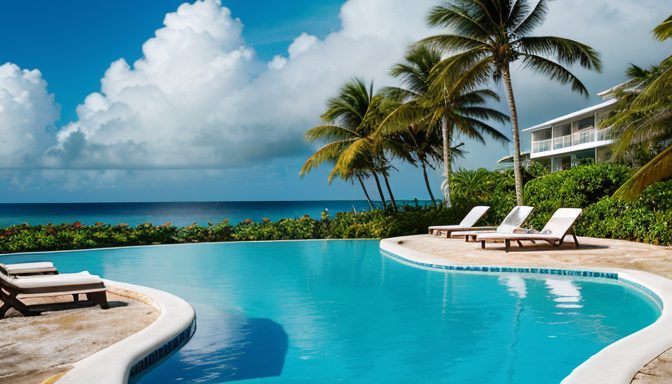
Caribbean resorts are not new to tropical weather.
Most operate with detailed storm protocols designed to keep guests safe and informed.
Here’s what typically happens, in real-world order.
Monitoring And Alerts.
Resorts track National Hurricane Center updates days in advance and notify guests early if a system is projected to pass near the island. (NOAA)
You’ll usually get emails, app notices, and on-property briefings before conditions change.
Operations Adjustments.
If winds rise or heavy rain is expected, properties secure beachfront furniture, close exposed pools, and pause water excursions until seas settle.
Indoor entertainment and dining are expanded, and staff shift into storm-support roles.
Shelter And Supplies.
Well-run resorts maintain generators, water reserves, medical kits, and food stock to stay comfortable through power or supply interruptions.
This is standard practice across most established islands in hurricane season.
Escape the Chaos. Upgrade to Paradise.
See today’s exclusive offers
Evacuation Protocols.
If authorities issue a mandatory evacuation for coastal areas, resort teams coordinate transport and relocation.
This is rare, but resorts train for it because they must.
Booking Flexibility.
Many resorts offer rebooking windows or future credits if a major storm is projected.
Full refunds are less common unless the resort closes officially.
That last part matters the most.
Resorts are prepared for safety.
They are not designed to absorb every guest’s financial loss.
So if you want reliable reimbursement when plans change, you need coverage that you control.
Safer Caribbean Destinations for Storm Season—and Why They Matter
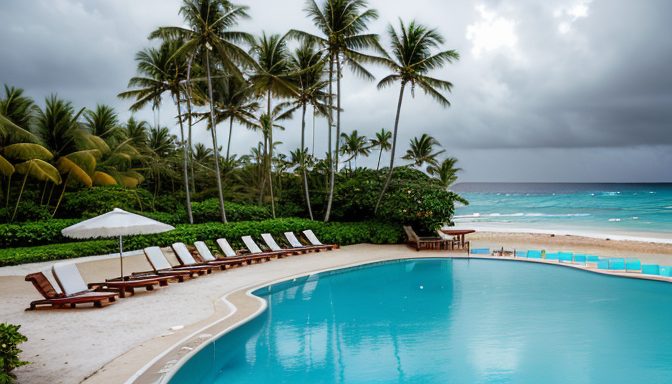
Storm safety begins with geography.
The Caribbean “hurricane belt” runs through the central and northern islands, then curves toward the U.S. coastline as storms track north. (Frommer’s)
Islands deep in that corridor see more frequent passes over time.
Higher-risk zones include the Bahamas, Puerto Rico, Jamaica, the Dominican Republic, the U.S. Virgin Islands, and the northern Caribbean coasts near Mexico. (U.S. News Travel)
Farther south, things change.
The southern Caribbean sits below the latitude where most Atlantic hurricanes travel, and long historical records show fewer direct impacts there.
Lower-risk choices for resort travelers include:
No island is storm-proof.
But if you want to tilt the odds toward a smooth vacation between late August and October, these southern destinations are the strongest foundation.
Find the Escape You’ve Been Craving.
Reveal limited‑time Caribbean deals
How Travel Insurance Turns Storm Risk into a Managed Expense
Even on safer islands, indirect disruption happens.
A storm that never reaches Aruba can still shut down Miami, San Juan, or another hub you fly through, and that is how resort travelers most often lose nights. (NOAA)
A strong hurricane-aware policy can include:
- Trip cancellation when covered storm triggers affect your destination or flights. (NOAA)
- Trip interruption if you must leave early. (NOAA)
- Delay and missed connection coverage for reroutes and overnights. (NOAA)
- Emergency medical care and evacuation if you need help during disrupted conditions.
Some plans also let you add Cancel For Any Reason, which can reimburse about 50% to 75% of non-refundable costs if you cancel for personal comfort reasons.
CFAR must be added soon after your first trip payment, so it’s something you decide early, not once a forecast forms.
Think of insurance as your financial seatbelt.
Your island choice reduces risk.
Your policy handles what you cannot control.
How Planning Partners Protect Your Caribbean Resort Trip During Storm Season
Each partner shines in a specific part of hurricane-season protection.
Here’s how to use them in a way that actually helps you.
VisitorsCoverage: Flexible Protection And CFAR Options
VisitorsCoverage is valuable because it lets you compare multiple carriers in one place.
Hurricane triggers vary by insurer, so side-by-side visibility saves you from guessing which policies truly cover storm disruption. (Reuters)
Many plans offered through VisitorsCoverage include covered-reason cancellation and interruption for storms.
A large share also allow CFAR add-ons when purchased within the required early window.
That combination matters most in higher-risk zones.
If you book Jamaica or the Bahamas in September, you want the ability to cancel if warnings are issued, or even if you simply decide you don’t feel comfortable traveling that week.
VisitorsCoverage is a solid way to find that match efficiently, without reading a dozen policy PDFs line by line.
Turn Your Next Getaway into Magic.
Discover your perfect resort match
World Nomads: Best For Excursion-Heavy Resort Trips
World Nomads fits travelers who combine resort stays with activities.
If your plan includes diving days, rainforest hikes, island food tours, or multiple paid excursions, you want coverage that treats those experiences as part of the trip, not an afterthought. (Money)
In storm season, the most common benefit is interruption and activity protection.
If seas cancel a prepaid snorkel trip and a vendor can’t refund, eligible reimbursement keeps that loss from coming out of your pocket.
If evacuation conditions lead to injury or medical needs, emergency benefits help you access care without panic.
World Nomads makes particular sense for islands like Grenada and Barbados, where excursion value is a major part of why people go.
Ekta: Affordable Essentials Without CFAR
Ekta is popular for travelers who want core protection at a lighter daily cost.
Plans generally include cancellation for covered reasons, interruption, medical care, and evacuation.
What Ekta does not include is CFAR.
So Ekta works best when your comfort comes from strong baseline coverage and smart destination choice, rather than needing emotional cancel-anytime flexibility.
If you are heading to Aruba, Bonaire, or Curaçao, Ekta is an efficient way to backstop the trip without overspending.
Insubuy: Fast Comparison For Families And Groups
Insubuy aggregates plans from major insurers and lets you filter quickly for hurricane-season triggers. (Reuters)
This is especially useful for group resort travel.
Families, wedding parties, or multi-room bookings can fall into chaos when people buy different plans with different storm rules.
Using Insubuy to select aligned coverage across the group helps prevent “some of us are reimbursed and some of us are not” problems later.
If coordination is part of your vacation, this tool keeps the protection side clean and predictable.
Compensair: Airline Compensation Support When Rules Apply
Compensair helps travelers pursue airline compensation under passenger-rights laws like EU261 when their itinerary qualifies.
Their model is no-win, no-fee, and they handle the heavy lifting of the claim.
One important nuance in storm season is that severe weather is often treated as an “extraordinary circumstance,” which can limit compensation eligibility. (Bott and Co)
Even so, Compensair can be worthwhile because some disruptions still qualify depending on how the airline handled the situation. (The Points Guy)
The practical way to use Compensair is as a second recovery path.
Your travel policy covers hotels, meals, and missed nights right away.
Compensair helps you chase any additional airline compensation you may be owed on top of that.
That pairing is especially useful for international routes into Aruba, Curaçao, or Trinidad where EU261 rules might apply.
Resorts That Shine During Storm Season—And Why They’re Safer Picks
No resort can “control” a storm.
But some are better positioned and better practiced for smooth guest care when tropical weather forms.
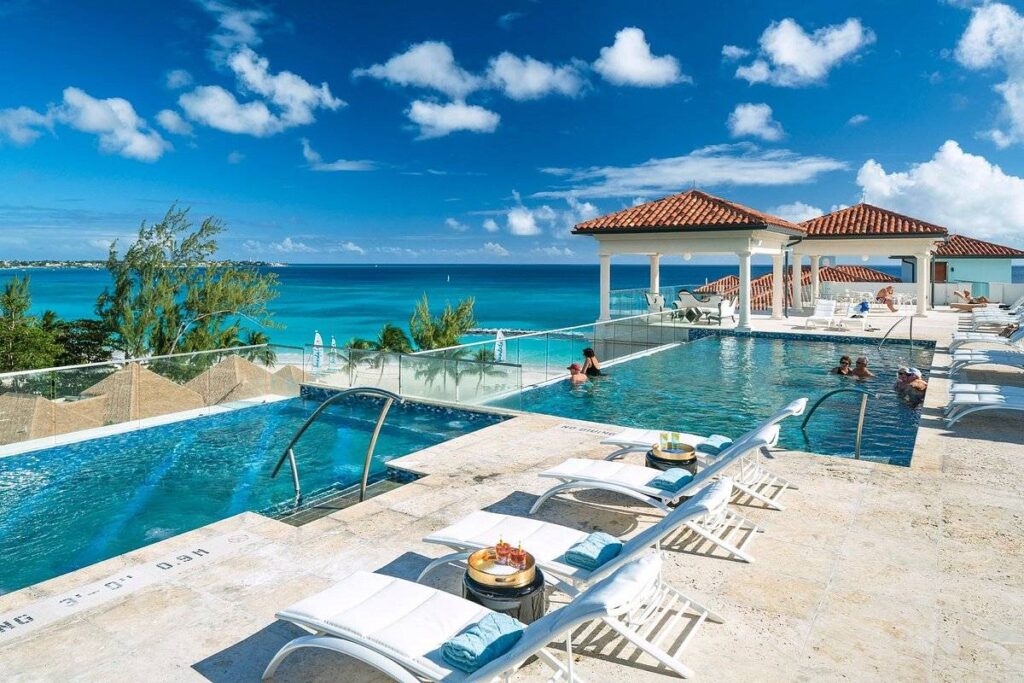
These properties are commonly cited for dependable operations and favorable storm-season geography:
- Hyatt Regency Aruba Resort Spa & Casino in Aruba. (Seven Corners)
- Baoase Luxury Resort in Curaçao. (Frommer’s)
- The Crane Resort in Barbados. (U.S. News Travel)
- Silversands Grenada in Grenada. (Frommer’s)
- Magdalena Grand Beach & Golf Resort in Tobago. (Baldgirlwilltravel)
They share two things that matter most.
They sit on islands with lower long-term direct-impact odds.
They are used to running clear procedures and stable guest support during the July-to-October window.
If you want storm-season confidence, this is the kind of resort profile you should look for.
Real Storm Scenarios—and How Resorts and Insurance Save Your Vacation
Picture the trip you’re actually taking.
That is how you decide what coverage you want.
Storm Alert Before Arrival.
You’re booked in Curaçao and a system forms days before departure.
Your resort offers a rebooking window.
Covered-reason cancellation can reimburse flights or prepaid activities if storm triggers are met, so you’re not left holding non-refundable pieces. (Reuters)
Mid-Stay Evacuation.
A storm shifts toward the central Caribbean.
Authorities recommend coastal departures and your resort coordinates relocation.
Interruption benefits can cover unused nights, meals, and transport changes so safety doesn’t become a personal loss. (Reuters)
Flight Cancellation Through A Hub.
Your island is calm, but your connection route is wiped out.
Delay coverage handles hotel and meal costs, and Compensair becomes the follow-up tool if your itinerary qualifies for airline compensation. (Reuters)
Excursion Loss.
Your resort cancels a prepaid water activity due to swell.
If the operator can’t refund, eligible activity reimbursement can recover that cost. (Money)
Emotional Cancellation.
Nothing official has formed, but you don’t feel comfortable traveling those weeks.
CFAR, if purchased early, gives you a clean way out with partial reimbursement rather than a total loss. (InsureMyTrip)
The pattern is consistent.
Safer islands reduce likelihood.
Coverage protects value.
Together, they make hurricane-season resort travel feel stable instead of risky.
How to Travel Smarter During Caribbean Storm Season
Hurricane season is not a reason to avoid the Caribbean.
It is a reason to plan like a pro.
Choose a far-southern island where long-term storm odds are lower. (Frommer’s)
Book a resort with modern build standards and clear storm procedures.
Then protect what you paid for, especially flights and non-refundable nights.
VisitorsCoverage and Insubuy help you compare hurricane-aware plans early, World Nomads supports activity-rich resort trips, Ekta covers essentials at a lighter cost, and Compensair is your airline-rights backstop when routes qualify. (Reuters)
Do those three things, and June-to-November travel stops feeling like a gamble.
It becomes a smart way to get a quieter, more affordable Caribbean resort vacation, with your money and peace of mind secure.
FAQ – Is Storm Season Caribbean Resort Travel Really Worth The Risk
How Does Caribbean Hurricane Season Actually Affect Resort Vacations Day To Day?
Most resort vacations during Caribbean hurricane season are shaped more by indirect disruption than by direct hits.
Storms can close flight hubs like Miami or San Juan, create swells that cancel boat trips, or bring a day or two of wind and rain to otherwise calm islands.
This matters because your biggest vulnerability is usually lost nights or rerouted travel, not catastrophic damage at your resort.
Planning with that in mind—choosing safer southern islands and backing your trip with storm-aware coverage—turns a vague fear into a manageable, clearly defined risk.What Do Caribbean Resorts Actually Do When a Tropical Storm Approaches?
Caribbean resorts follow structured protocols when tropical systems form.
They monitor National Hurricane Center updates, alert guests early, secure outdoor areas, pause water activities, and shift staff into storm-support roles.
Many maintain generators, water reserves, medical kits, and food stock so guests stay comfortable through short power or supply interruptions.
In rare evacuation scenarios, resort teams coordinate transport and relocation under local authority guidance.
For travelers, this means safety is treated as routine operational practice, not improvisation.Which Caribbean Islands Offer Lower Long‑Term Hurricane Risk for Resort Stays?
Southern Caribbean islands such as Aruba, Bonaire, Curaçao, Trinidad and Tobago, Barbados, and Grenada sit below the main hurricane belt and historically see fewer direct impacts.
Over time, storms tend to curve north through higher‑risk zones like the Bahamas, Puerto Rico, Jamaica, the Dominican Republic, and the northern Caribbean coasts near Mexico.
Choosing one of these southern destinations doesn’t remove all risk, but it tilts the odds toward a smoother stay between late August and October.
That geographic advantage is the foundation of smarter storm‑season planning.How Can Travel Insurance Turn Storm Risk into a Predictable Expense Instead of a Crisis?
Travel insurance reframes storm risk as a financial problem you can plan for.
Strong policies cover trip cancellation when named storms affect your destination or flights, trip interruption if you must leave early, and delays or missed connections when hubs shut down.
Many also include emergency medical care and evacuation, and some offer Cancel For Any Reason options that reimburse a portion of non‑refundable costs if you simply decide not to travel.
When you combine a safer island choice with hurricane‑aware coverage, you protect both your safety and your wallet against the most common storm‑season scenarios.How Do Planning Partners Like VisitorsCoverage, World Nomads, Ekta, Insubuy, And Compensair Fit Together?
Each planning partner plays a distinct role in storm‑season protection.
VisitorsCoverage and Insubuy let you compare multiple insurers and filter for hurricane triggers, which is crucial when booking higher‑risk islands like Jamaica or the Bahamas.
World Nomads suits resort trips built around excursions—diving, rainforest hikes, food tours—because it treats prepaid activities as part of the trip value.
Ekta focuses on affordable essentials without Cancel For Any Reason, making sense for lower‑risk islands such as Aruba, Bonaire, or Curaçao.
Compensair sits on top as an airline‑rights tool, helping you pursue compensation under rules like EU261 when your route qualifies. Used together, they create a layered safety net.Which Specific Resorts Are Known for Handling Storm Season Smoothly, And Why?
Resorts like Hyatt Regency Aruba Resort Spa & Casino in Aruba, Baoase Luxury Resort in Curaçao, The Crane Resort in Barbados, Silversands Grenada in Grenada, and Magdalena Grand Beach & Golf Resort in Tobago are frequently cited for dependable storm‑season operations.
They share two advantages: they sit on islands with lower long‑term direct‑impact odds, and they run clear procedures for guest communication, backup power, and on‑property safety when tropical weather forms.
Choosing properties with this profile means you’re not just betting on geography—you’re also trusting teams that practice storm response every year.What Are Realistic Storm‑Season Scenarios Resort Travelers Should Plan For?
Realistic scenarios include a storm forming before arrival on an island like Curaçao, a mid‑stay evacuation from a central Caribbean destination, a flight cancellation through a major hub while your island stays calm, or a canceled water excursion due to swell.
Emotional cancellation is another scenario—nothing official has formed, but you no longer feel comfortable traveling.
In each case, the combination of resort policies and insurance benefits—rebooking windows, interruption coverage, delay benefits, activity reimbursement, and Cancel For Any Reason—determines whether you absorb the loss or convert it into a rescheduled stay or partial refund.How Should Families or Groups Coordinate Storm‑Season Coverage for Caribbean Resort Trips?
Families and groups should aim for aligned coverage rather than a patchwork of different policies.
Using comparison tools like Insubuy to select similar hurricane triggers and benefits across all travelers helps avoid situations where some guests are reimbursed and others are not.
This is especially important for weddings, multi‑room bookings, or large family gatherings at resorts in places like Barbados or Grenada.
Coordinated protection keeps logistics simpler when plans change—everyone follows the same rules, files similar claims, and adjusts dates together instead of negotiating separate outcomes.When Does Cancel For Any Reason Coverage Make Sense for Caribbean Storm‑Season Travel?
Cancel For Any Reason coverage makes the most sense when you’re booking higher‑risk islands or emotionally sensitive trips.
If you reserve a September stay in Jamaica or the Bahamas and know that warnings or intense media coverage could change your comfort level, CFAR gives you a structured way to back out with partial reimbursement.
It must be purchased soon after your first trip payment, so it’s a front‑loaded decision rather than a last‑minute add‑on.
For travelers who value emotional flexibility as much as physical safety, CFAR is often the difference between feeling trapped by a forecast and feeling in control.What Core Steps Turn June‑To‑November Caribbean Resort Travel from a Gamble into a Smart Plan?
Three core steps shift storm‑season travel from gamble to strategy.
First, choose a far‑southern island—Aruba, Bonaire, Curaçao, Trinidad and Tobago, Barbados, or Grenada—where long‑term storm odds are lower.
Second, book a resort with modern build standards and clear storm procedures, including backup power and guest communication plans.
Third, protect flights and non‑refundable nights with hurricane‑aware insurance found through tools like VisitorsCoverage or Insubuy, adding World Nomads, Ekta, or Compensair where they fit your itinerary.
When you do all three, storm season becomes a way to access quieter, more affordable Caribbean resort stays without treating your investment as a roll of the dice.