
Don’t Let One Problem Ruin Your Vacation
A few seconds now protects the trip you’ve already invested so much into.
Short Excerpt
- Hurricane season runs from June through November, but choosing the right Caribbean island can reduce the odds of a direct storm disrupting your resort stay.
- Aruba, Bonaire, Curaçao, Trinidad and Tobago, Barbados, and Grenada stand out for comparatively lower long-term hurricane exposure and strong resort options.
- Smart planning goes beyond geography by combining a well-run resort with flexible booking terms, storm procedures, and suitable travel protection.
Quick Take
- Aruba, Bonaire, Curaçao, and Trinidad and Tobago offer some of the strongest geographic advantages because they sit well south of many common Atlantic hurricane tracks.
- Barbados and Grenada also provide lower-risk alternatives compared with much of the northern Caribbean, although their storm histories differ from the ABC islands.
- Hyatt Regency Aruba, Baoase Luxury Resort, The Crane Resort, Silversands Grenada, and Magdalena Grand Beach & Golf Resort pair favorable locations with established resort infrastructure.
- Resort safety procedures typically include weather monitoring, guest alerts, secured outdoor areas, backup systems, and evacuation coordination when authorities require it.
- Flexible reservations and travel protection remain important because a storm can disrupt your connecting airport or flights even when your resort island is unaffected.
- June, July, and parts of November can offer attractive value, while August through October generally require closer attention to tropical activity.
Where Should You Stay In The Caribbean To Reduce Hurricane-Season Risk?
Hurricane season in the Caribbean is real, but it doesn’t have to derail your vacation plans.
Many islands stay calm even in peak months, and the right resort plus smart coverage can turn storm season into a stress-free escape.
Your job is simple: choose safer destinations, book resorts with clear protocols, and protect your investment before you travel.
Here’s how to do it—and why June-to-November can be one of the best-value windows for Caribbean resort stays.
When Hurricane Season Hits the Caribbean—and What It Means for Travelers
Hurricane season runs from June 1 through November 30 every year. (noaa.gov)
The most active stretch is usually August through October, with September often producing the highest number of storms. (noaa.gov)
Early season (June–July) tends to be quieter, which is why you often see strong resort deals then.
Late season (November) usually tapers, but storms can still form, so it’s not a zero-risk month. (noaa.gov)
For 2025, NOAA projected an above-normal Atlantic year with 13–19 named storms, 6–10 hurricanes, and 3–5 major hurricanes. (noaa.gov)
Even in busy seasons, direct hits on any single island remain relatively uncommon, and impacts cluster by region.
That is why your destination choice matters more than your travel month.
Safest Caribbean Islands for Hurricane Season—and Why They’re Your Best Bet
Geography is your strongest hurricane-season advantage.
Most Atlantic hurricanes travel through a northern corridor, then curve toward the Gulf or the U.S. coast. (noaa.gov)
Islands in the far southern Caribbean sit below that main track, so direct hurricane landfalls are dramatically less frequent over long records.
Here are the islands with the most consistent low-exposure history.
Paradise Is Calling Your Name
Explore Sandals & Beaches deals
Aruba
Aruba sits well south of the primary hurricane path, just above Venezuela. (ABC News)
Direct hurricane hits are extremely rare here, and modern records show only fringe effects from systems passing far north. (ABC News)
Aruba’s climate is also notably dry, so even in late summer, weather tends to be short showers rather than multi-day washouts.
Bonaire
Bonaire shares the same southern latitude advantage as Aruba and Curaçao.
Storm tracks rarely dip far enough south to strike directly, which is why Bonaire stays steady through peak months.
For resort travelers, that means reef days and shore snorkeling remain dependable even when Atlantic headlines look busy.
Curaçao
Curaçao sits on the southern fringe of the belt and has a long history of rare direct hurricane impacts.
Most storms turn north before reaching its latitude, and the island’s infrastructure is built for tropical resilience. (U.S. News Travel)
If you want beaches plus a city base that still feels calm in September, Curaçao is a strong pick.
Trinidad And Tobago
These islands sit near the southern edge of the Caribbean, close to South America.
Direct hurricane landfalls are uncommon here because most Atlantic systems curve north before reaching this latitude. (U.S. News Travel)
It is one of the best choices for travelers who want near-normal summer weather odds even in peak season.
Barbados
Barbados lies a bit closer to the storm corridor than the ABC islands, but it still ranks lower-risk than much of the northern chain.
Rare direct impacts can happen, but the long-run frequency is lower than islands farther north.
Resorts here are used to operating smoothly through late summer, and there are plenty of sheltered attractions if you get a breezy afternoon.
Grenada
Grenada is another southern Caribbean island with lower direct-hit odds than the northern corridor.
It has seen notable storms historically, but its latitude still keeps long-run exposure lower than islands in the main belt.
For resort travelers, the bonus is variety.
Rainforest hikes, spice estate visits, and calm bays give you a great week even if one day turns gray.
About other islands you may hear listed as “safer.”
Some guides also mention places like St. Lucia or Antigua as relatively safer compared with the far northern chain.
They do sit south-ish and have many good seasons, but they are not as consistently low-exposure as the ABC islands or Trinidad and Tobago, so it’s smart to plan with slightly more flexibility there.
Best Caribbean Resorts for Storm Season—Trusted Picks for Calm Travel
A safer island reduces your odds of a direct hit.
A well-run resort reduces your stress if weather shifts.
Here are resorts that pair favorable geography with dependable operations and guest support.
Hyatt Regency Aruba Resort Spa & Casino (Aruba)
This Palm Beach resort benefits from Aruba’s very low hurricane exposure and dry summer climate. (ABC News)
Because Aruba rarely faces direct storm threats, resort operations typically run on normal schedules even in September.
If you plan to book catamarans, island tours, or snorkel days, pre-booking through GetYourGuide is a practical time-saver.
You avoid on-site queues, lock a slot in smaller shoulder-season groups, and keep mobile tickets ready if you want to pivot your day around a passing shower.
Baoase Luxury Resort (Curaçao)
Baoase sits on a calm, sheltered stretch of Curaçao’s coast, and the island’s long-run storm history keeps direct hurricane threats rare.
That combination makes this a strong boutique choice for late-summer trips.
If your stay includes diving or multiple paid excursions, World Nomads fits naturally because it is designed for trips where activities are part of the experience, not an add-on.
Interruption and medical benefits matter most when you’re doing more than lounging.
Escape the Chaos. Upgrade to Paradise.
See today’s exclusive offers
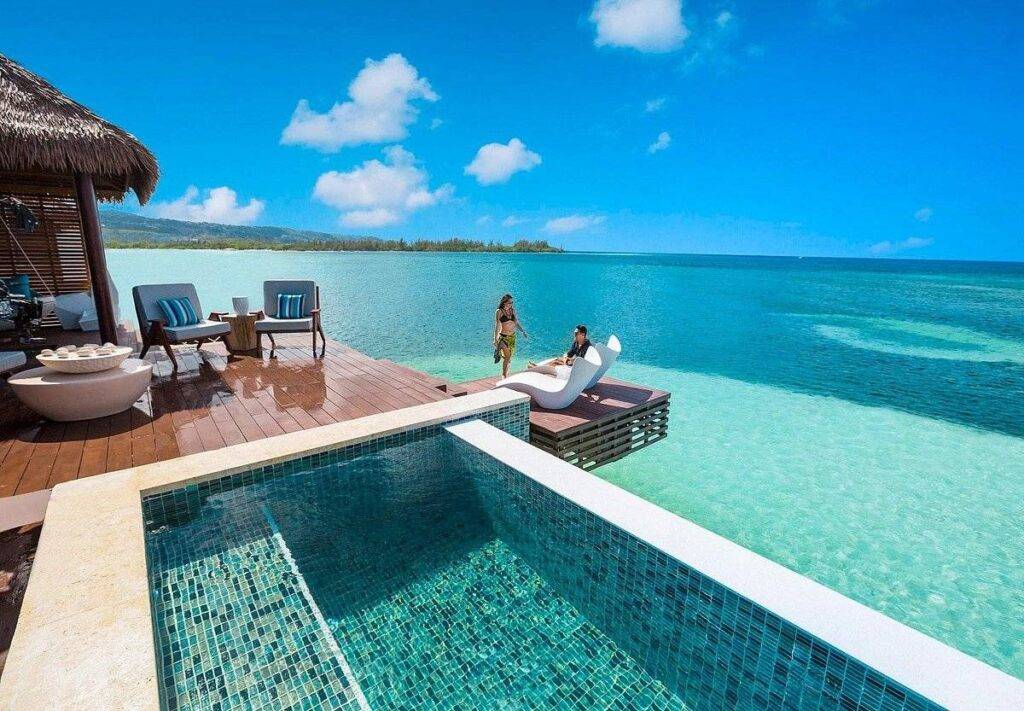
The Crane Resort (Barbados)
The Crane’s elevated position and Barbados’s comparatively lower storm frequency make it a dependable hurricane-season resort pick.
Even when Atlantic weather is active elsewhere, Barbados commonly sees short showers rather than prolonged disruptions.
If you want strong essentials coverage without pushing your budget, Ekta can be a sensible backstop for a Barbados resort week, covering covered-reason cancellation, interruption, and medical needs.
Ekta does not offer Cancel For Any Reason upgrades, so think of it as a strong basics lane rather than maximum flexibility.
Silversands Grenada (Grenada)
Silversands benefits from Grenada’s southern latitude, which lowers direct-impact odds relative to the northern Caribbean.
Grenada also gives you multiple non-beach experiences that keep your week valuable if seas turn rough for a day.
Silversands is a great fit for families and small groups.
Using Insubuy to align coverage across multiple rooms is useful here because group trips can get expensive fast if one disruption affects everyone. (Reuters)
Magdalena Grand Beach & Golf Resort (Tobago)
Tobago sits in one of the least hurricane-exposed parts of the Caribbean.
Magdalena Grand pairs that latitude advantage with a large on-site footprint, so even if you catch a rainy stretch, there’s enough to do without feeling boxed in.
Flight disruption is the most likely storm-season issue here, usually through your connection hub, not the island itself.
Compensair can help you pursue airline compensation when your route and circumstances qualify, while your travel policy covers meals, lodging, and rebooking costs right away.
Severe weather is often treated as an extraordinary circumstance for airline payouts, so compensation is not guaranteed, but it can be worth pursuing when eligibility applies.
What Resorts Actually Do When Storms Approach—and Why Safety Isn’t the Issue
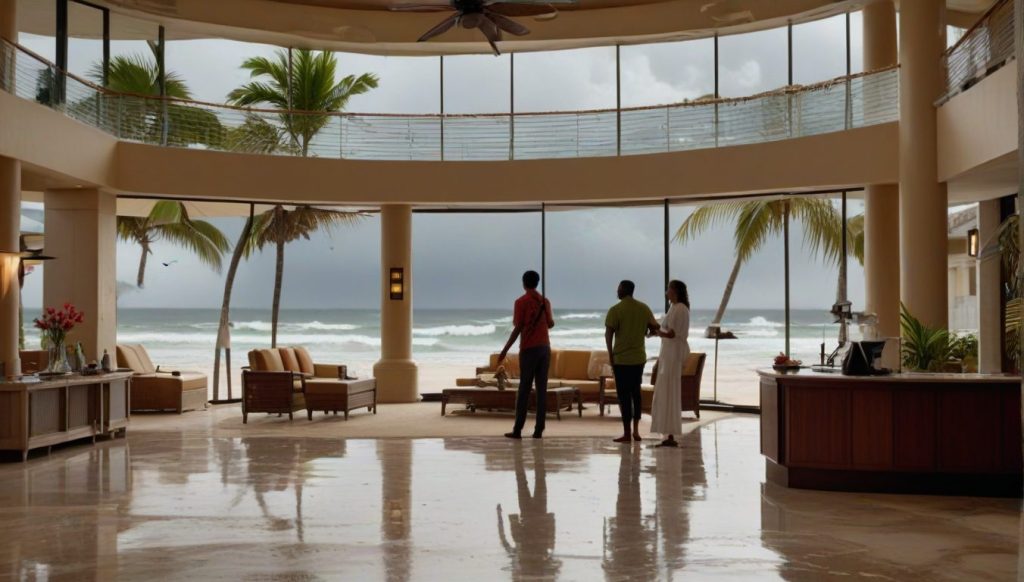
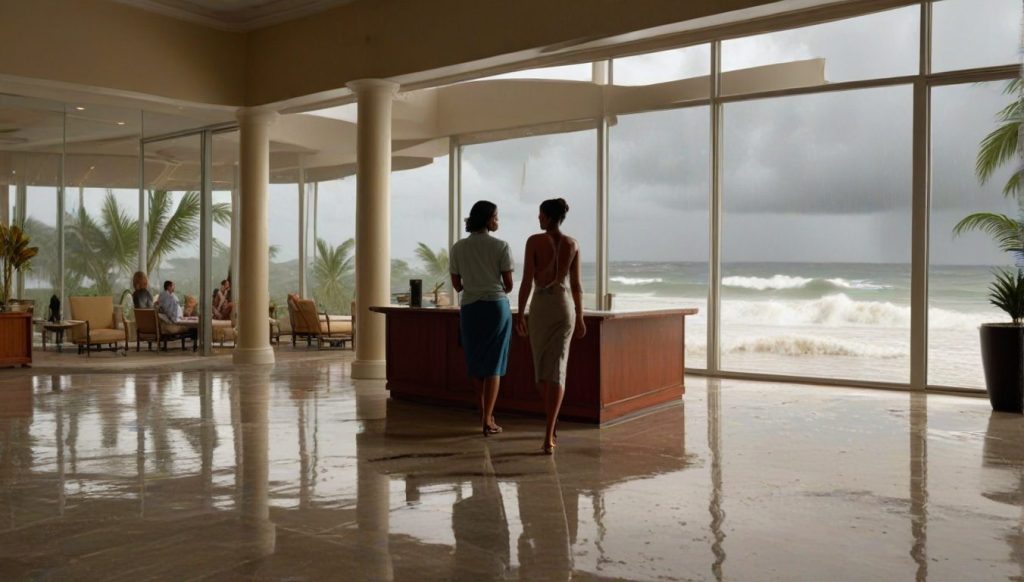
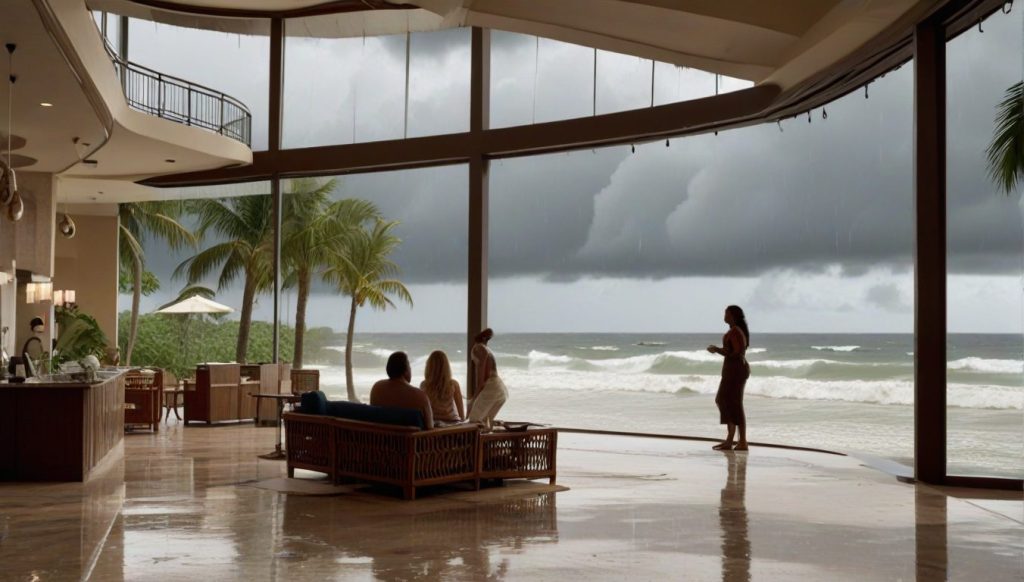
Resorts in this region are trained for tropical weather.
Most follow the same playbook.
They monitor storms early and send guest alerts as forecasts sharpen. (noaa.gov)
They secure beach areas, pause water excursions, and shift entertainment indoors if winds and seas build.
They maintain supplies and backup systems to stay comfortable through short interruptions.
Find the Escape You’ve Been Craving.
Reveal limited‑time Caribbean deals
If local authorities require evacuation, resort teams coordinate transport and sheltering. (noaa.gov)
The money part is what travelers misunderstand.
Most resorts only refund fully if the property closes officially, and otherwise lean on credits or rebooking offers.
So if reimbursement matters to you, you want coverage in place before travel.
How Travel Insurance Turns Storm Risk into a Managed Expense
A safer island lowers risk but doesn’t remove it.
A storm can shut down your connection city even while your resort stays calm. (Reuters)
That can cost you nights and excursions unless you have protection.
VisitorsCoverage is useful for hurricane season because it lets you compare plans and see which carriers clearly cover storm-related cancellation and interruption.
Some plans also offer Cancel For Any Reason upgrades, which can reimburse a large portion of non-refundable costs if you cancel for personal comfort, but they must be bought soon after your first trip payment.
World Nomads is built for travelers who want resort time plus activities, giving you a solid safety net for excursion cancellations and medical needs.
Ekta keeps baseline protection affordable for low-risk islands, even without CFAR.
Insubuy helps families and groups align coverage terms across multiple rooms so one disruption doesn’t create a refund mess. (Reuters)
Compensair is your airline-rights backstop when rules apply to your itinerary, especially on eligible international routes.
Turn Your Next Getaway into Magic.
Discover your perfect resort match
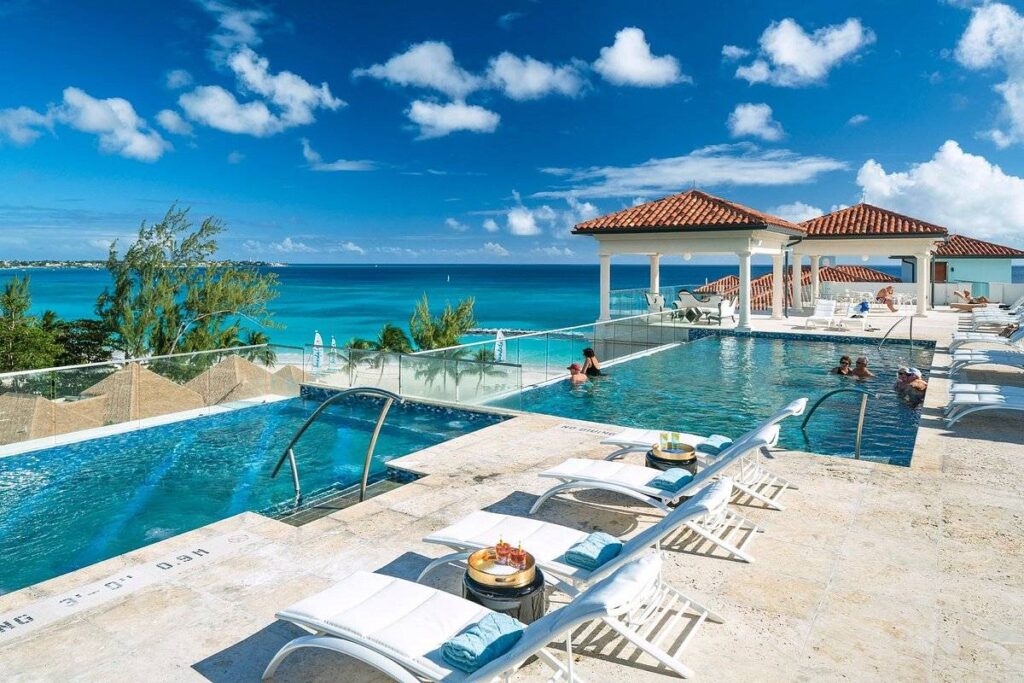
How to Book Safer Caribbean Resorts During Hurricane Season
You don’t have to avoid the Caribbean during hurricane season.
You just have to book with strategy.
Choose far-southern islands like Aruba, Bonaire, Curaçao, Trinidad and Tobago, Barbados, and Grenada because their long-run storm exposure is lower. (Frommer’s)
Pick resorts with dependable operations and clear storm procedures.
Then protect what you paid for with hurricane-aware coverage, especially if you’re flying through busy hubs. (Reuters)
Do that, and June-to-November travel becomes a smart way to enjoy quieter resorts, better prices, and a Caribbean week that feels calm instead of uncertain.
FAQ – Staying Safe At Caribbean Resorts During Hurricane Season
How Risky Is It to Visit the Caribbean Between June and November?
Hurricane season brings higher storm activity from June through November, with the most active stretch usually in August, September, and October.
Even in busy years, direct hits on any single island are relatively uncommon, and impacts tend to cluster by region rather than affecting the entire Caribbean at once.
This matters because it shifts the focus from avoiding the whole season to choosing islands with historically lower exposure and planning for possible disruptions.
When you understand that risk is uneven, you can use storm-season deals without feeling like you are gambling your entire trip.Which Caribbean Islands Offer the Steadiest Weather During Hurricane Season?
Far‑southern islands such as Aruba, Bonaire, Curaçao, Trinidad and Tobago, Barbados, and Grenada have a long record of fewer direct hurricane landfalls.
Many Atlantic systems curve north before reaching these latitudes, so these destinations often experience brief showers rather than prolonged storm impacts.
For travelers, that means beach days, snorkeling, and city exploring are more likely to go ahead as planned, even when headlines mention storms elsewhere.
Choosing from this group is one of the most practical ways to enjoy quieter resorts and better prices while keeping weather risk manageable.How Do Specific Resorts Like Hyatt Regency Aruba or Baoase Handle Storm Season?
Resorts such as Hyatt Regency Aruba Resort Spa & Casino and Baoase Luxury Resort in Curaçao pair favorable geography with structured operations for tropical weather.
In Aruba, the dry climate and very low hurricane exposure mean the Hyatt typically runs on normal schedules, even in September, so planned catamaran trips or snorkel outings rarely face full cancellation.
Baoase benefits from Curaçao’s history of rare direct hits and sheltered coastline, giving guests a calm base even when the wider Atlantic looks active.
When you choose properties that combine location advantages with clear procedures, you reduce both the odds of disruption and the stress if forecasts change.What Makes Resorts Like the Crane in Barbados and Silversands Grenada Good Choices in Storm Season?
The Crane Resort in Barbados sits at an elevated position on an island with comparatively lower storm frequency, so even when systems form, they more often bring short showers than multi‑day washouts.
Silversands Grenada benefits from Grenada’s southern latitude and offers a mix of calm bays, rainforest hikes, and spice estate visits, which keeps your week meaningful even if one day turns gray.
These resorts illustrate a key principle: look for properties that combine structural advantages with varied on‑site and nearby experiences.
That way, you are not relying on perfect beach weather every single day for the trip to feel worthwhile.How Do Resorts Typically Respond When a Storm Approaches Nearby Waters?
When forecasts show a storm approaching, Caribbean resorts follow a well‑rehearsed playbook.
Staff monitor official updates, send guest alerts as tracks and timing become clearer, secure beach areas, pause water excursions, and move entertainment indoors if winds or seas build.
Many properties maintain backup power, stocked supplies, and communication plans so short interruptions feel organized rather than chaotic.
If local authorities call for evacuation, resort teams coordinate transport and sheltering.
Understanding this routine helps you see that safety is usually well managed; the bigger question for you is how refunds, credits, and extra costs will be handled.What Should I Know About Resort Refunds and Credits If Weather Disrupts My Stay?
Most resorts only offer full refunds when the property officially closes, and otherwise lean on credits or rebooking options.
That means a trip can be shortened or shifted without automatically triggering cash reimbursement, especially if the resort remains open but your flights or comfort level change.
Before booking, it is wise to ask for written confirmation of how the resort handles storm‑related changes, including any flexible‑date policies or credit rules.
Clear documentation gives you leverage if you need to adjust plans and helps you decide whether additional travel insurance is necessary to protect non‑refundable costs.How Can Travel Insurance Brands Like VisitorsCoverage, World Nomads, Ekta, And Insubuy Help During Hurricane Season?
VisitorsCoverage lets you compare policies and see which plans explicitly cover storm‑related cancellation and trip interruption, making it easier to match coverage to your risk tolerance.
World Nomads is built for travelers who combine resort stays with activities such as diving or excursions, so it supports both medical needs and paid outings that might be canceled.
Ekta focuses on strong essentials—cancellation, interruption, and medical coverage—at an affordable level, which can work well for lower‑risk islands like Aruba or Barbados.
Insubuy is especially useful for families or small groups staying at places like Silversands Grenada, because it helps align coverage terms across multiple rooms so one disruption does not create a patchwork of different refund outcomes.What Role Does Compensair Play If My Flights Are Delayed or Canceled by Storms?
Compensair focuses on airline compensation when your route and circumstances meet eligibility rules, particularly on certain international flights.
During hurricane season, the most common issue is disruption at your connection hub rather than at islands like Tobago, where resorts such as Magdalena Grand Beach & Golf Resort may remain fully operational.
While severe weather is often treated as an extraordinary circumstance—meaning compensation is not guaranteed—it can still be worth checking whether your situation qualifies.
Pairing this with a travel insurance policy that covers meals, lodging, and rebooking costs gives you two layers of protection: one for immediate expenses and one for potential airline payouts.How Should I Plan Flights and Daily Activities to Minimize Storm‑Related Stress?
You can reduce stress by booking flights with longer connection windows and, when possible, routing through hubs that are less exposed to peak storm tracks.
Once at the resort, pre‑booking excursions through platforms like GetYourGuide for places such as Hyatt Regency Aruba helps you secure smaller group slots and manage your schedule around passing showers.
For more activity‑heavy stays at boutique properties like Baoase in Curaçao, pairing those plans with coverage from World Nomads or similar providers ensures that cancellations do not turn into major financial losses.
Thinking about logistics and protection together makes your trip more resilient if the forecast shifts.What Packing and Planning Steps Make a Hurricane‑Season Caribbean Trip Feel Calm Instead of Uncertain?
Thoughtful preparation turns storm season into a more predictable experience.
Packing essentials such as medications, key documents, portable chargers, a flashlight, and waterproof storage for valuables ensures you can adapt if power flickers or plans change.
Choosing islands like Aruba, Bonaire, Curaçao, Trinidad and Tobago, Barbados, or Grenada, then booking resorts with clear procedures—such as The Crane, Silversands Grenada, or Magdalena Grand—gives you a structurally safer base.
Adding travel insurance that covers weather‑related cancellation and interruption rounds out the plan.
Together, these steps let you focus on enjoying quieter resorts and better prices rather than worrying about every forecast update.