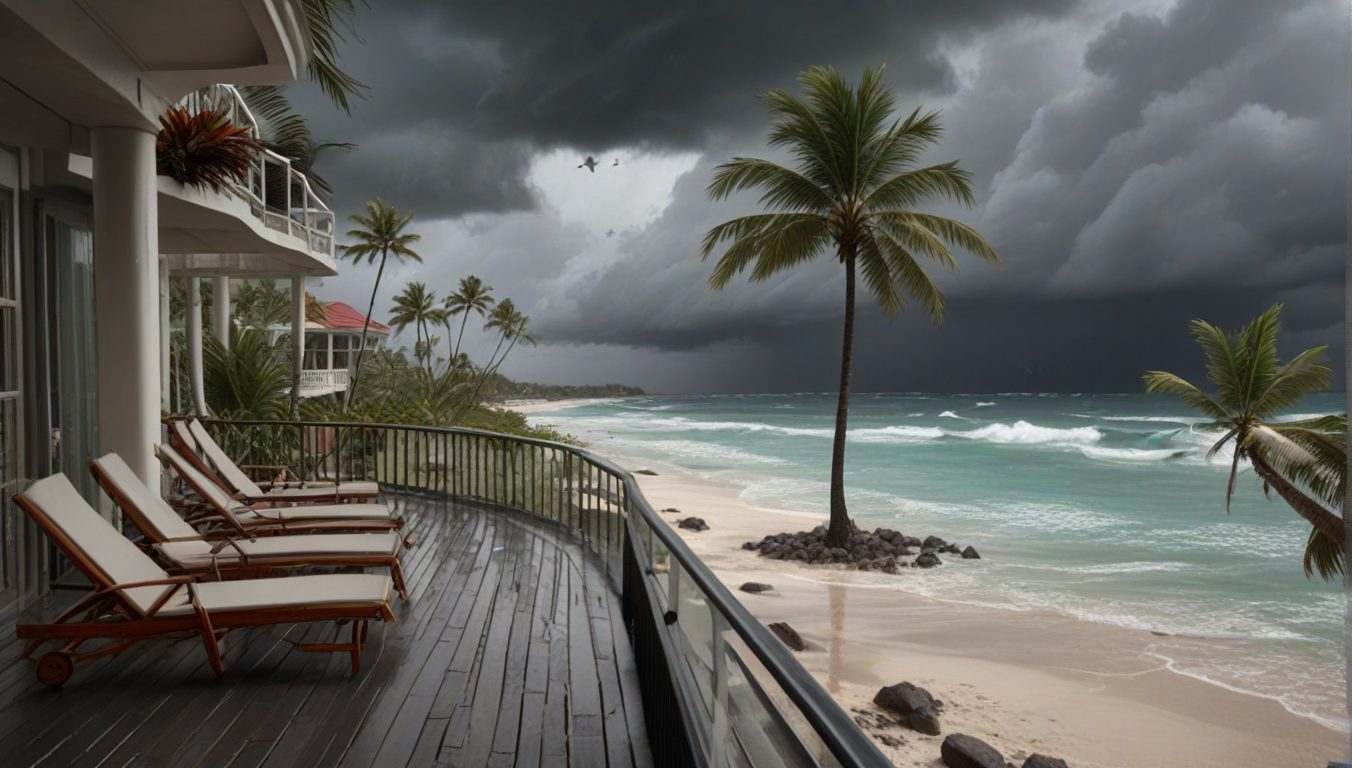


Don’t Let One Problem Ruin Your Vacation
A few seconds now protects the trip you’ve already invested so much into.
If you’re planning a Caribbean resort vacation between June and November, it’s normal to wonder how often hurricanes actually hit the places you’re considering.
The truth?
Direct landfalls are rare, but risk varies sharply by island—and indirect disruptions happen more often than you think.
The goal isn’t to pretend storms don’t exist.
Your job is to understand the odds, choose safer destinations, and protect your investment against ripple effects.
Here’s how to travel smarter, not scared, and keep your Caribbean trip stress-free.
When Hurricane Season Hits the Caribbean—and Why Timing Matters
Atlantic hurricane season officially runs from June 1 to November 30. (noaa.gov)
The most active stretch is typically August through October, with September often producing the highest share of storms. (noaa.gov)
Early season (June and July) is usually calmer, and late season (November) often tapers, but storms can still form in any of these months. (noaa.gov)

Paradise Is Calling Your Name
Explore Sandals & Beaches deals
A typical Atlantic season averages about 14 named storms, 7 hurricanes, and 3 major hurricanes over the 1991–2020 climate period. (noaa.gov)
For 2025, NOAA’s seasonal outlook projected an above-normal year with 13 to 19 named storms, 6 to 10 hurricanes, and 3 to 5 major hurricanes, while also stressing that landfall location can’t be predicted months in advance. (The Washington Post)
That last part matters.
A busy season does not automatically mean your resort island gets hit.
Most hurricanes curve north or pass between islands, and only a small subset make direct landfall in the Caribbean each year. (AOML)
How Often Hurricanes Really Hit Caribbean Resorts—And What That Means for You
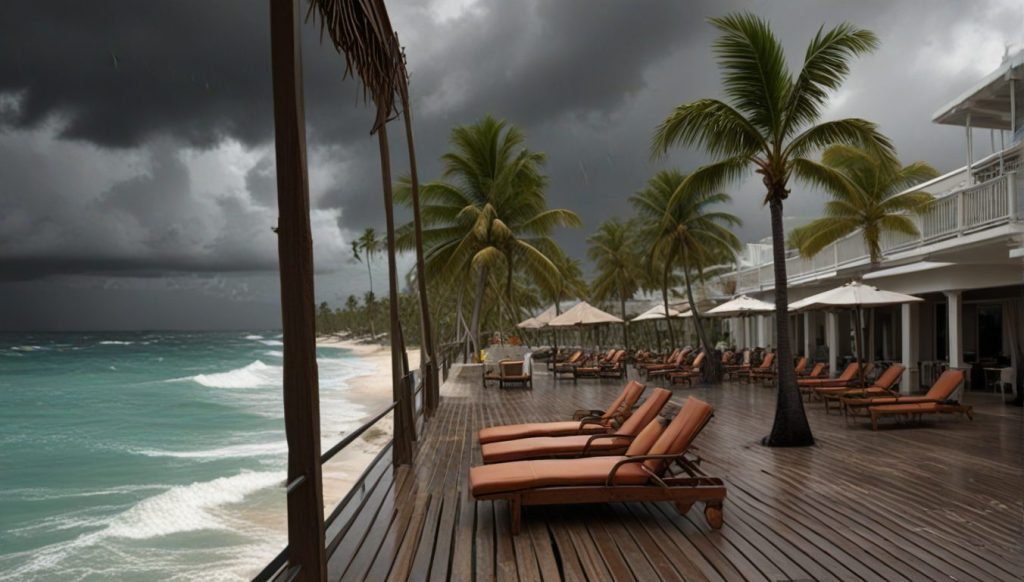
Here’s the simplest accurate way to think about it.
Caribbean landfalls are relatively infrequent on a per-island basis, but they cluster by region. (AOML)
Some islands see meaningful hurricane impacts every few years.
Others may go decades without a direct hit.
And in many seasons, most resorts across the region never experience a landfall at all. (AOML)
A realistic frequency picture
Most Caribbean islands do not get a direct hurricane landfall every year.
Over long records, many islands average something closer to a direct hurricane once every several years to a couple of decades, depending on where they sit relative to storm tracks.
“Near-miss” impacts are more common than direct hits.
You’re more likely to see a windy day, rough seas, or a one-day excursion pause from a passing system than a full resort evacuation. (noaa.gov)
Escape the Chaos. Upgrade to Paradise.
See today’s exclusive offers
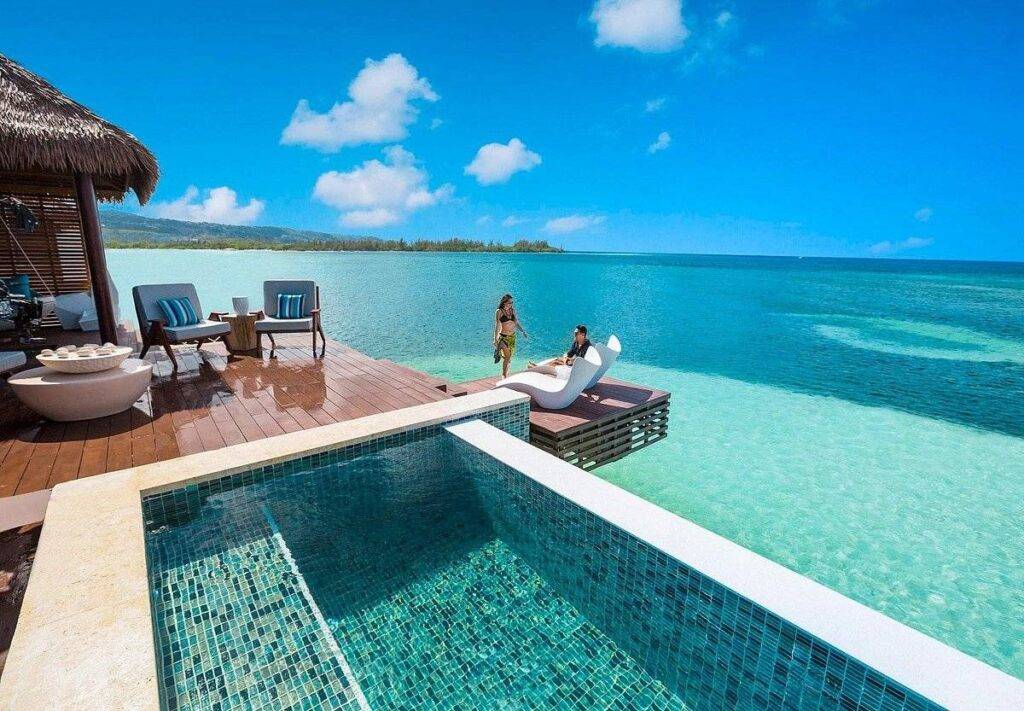
Safe-zone islands have dramatically lower direct-hit history.
StormCarib’s long-run climatology shows the far southern islands, including the ABC chain and Trinidad, have seen only a small handful of named storms pass near them over 150+ years, with essentially no major hurricane landfalls in that zone. (Stormcarib)
Even hyperactive years don’t hit most resorts.
The 2020 Atlantic season produced 30 named storms, yet landfalls were still concentrated in certain corridors, and most Caribbean resort islands were not directly struck. (NOAA Institutional Repository)
The key mental model for travelers
Think of hurricane risk as a regional probability, not a seasonal guarantee.
Your odds depend far more on which island you choose than on the fact that storms exist during your travel month.
Which Caribbean Islands Face the Highest Risk—and Which Stay Safer
Storm patterns create clear tiers of exposure.
Higher-Risk Zones
These areas sit inside the main hurricane corridor and see more frequent direct and close-pass impacts over time. (AOML)
- Bahamas.
- Puerto Rico.
- Jamaica.
- Eastern Dominican Republic.
- U.S. Virgin Islands.
- Cuba.
- Cancún and Riviera Maya.
A real-time reminder of this regional reality is Hurricane Melissa, which made a historic Category 5 landfall in Jamaica on October 28, 2025. (AP News)
Events like that are not annual on a single island, but they happen often enough in the northern belt that you should plan with flexibility there.
Lower-Risk Zones
These islands sit well south or near the edge of typical hurricane tracks and have much lower direct-hit histories. (Stormcarib)
A quick nuance worth keeping honest.
Find the Escape You’ve Been Craving.
Reveal limited‑time Caribbean deals
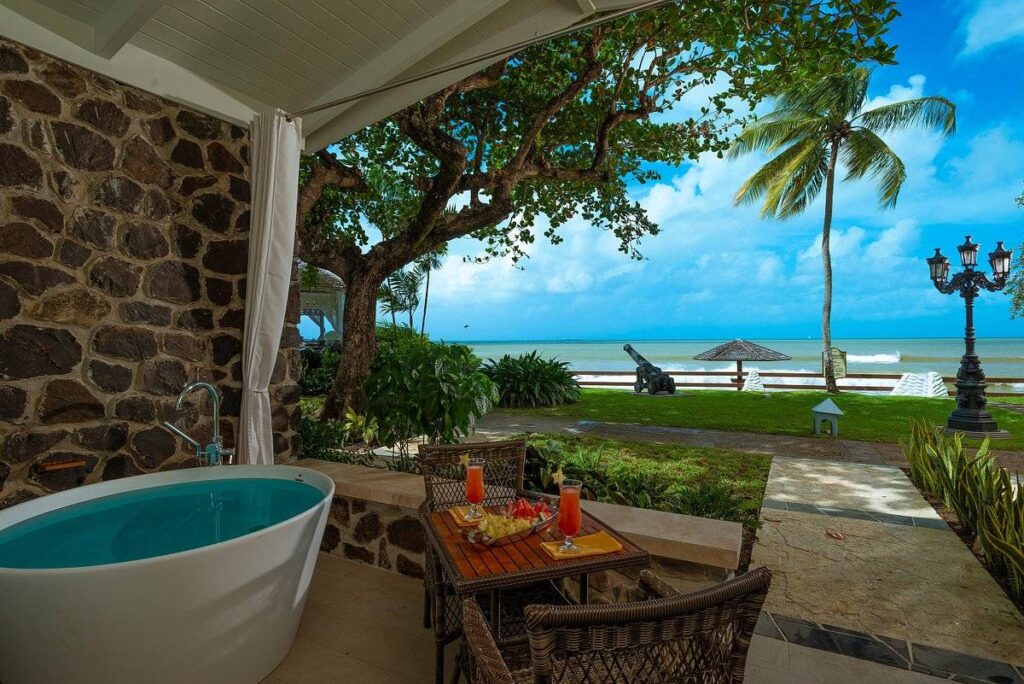
The ABC islands are on the southern fringe of the belt rather than completely outside it, so they can feel tropical-storm effects on rare occasions, but direct hurricane landfalls remain extremely uncommon there.
For resort travelers, that difference is practical.
You’re choosing islands where the long-run odds of a direct hurricane disruption during your stay are far lower than the northern chain.
What Resorts Actually Do When Hurricanes Approach
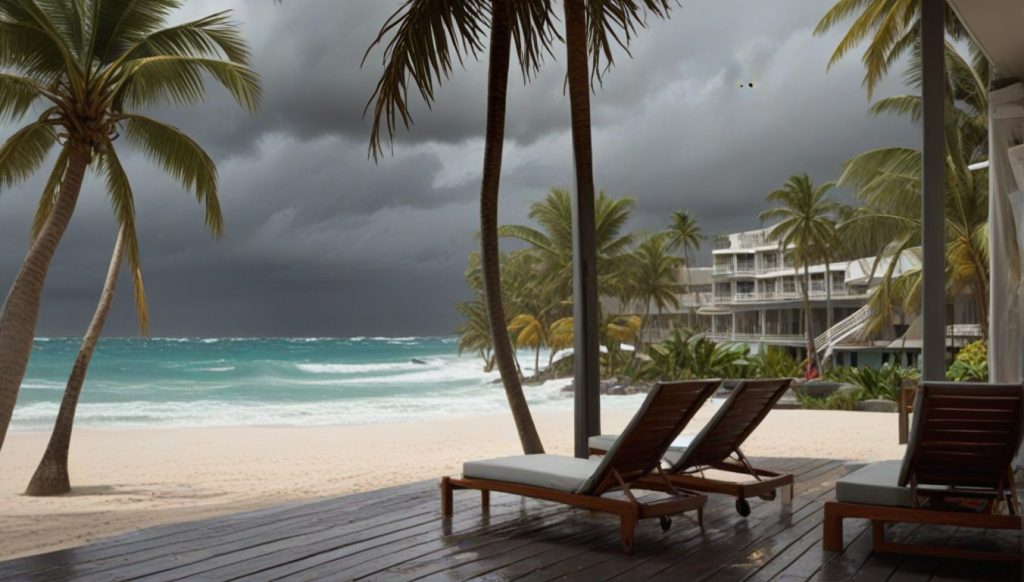
Caribbean resorts run storm plans every year.
Here’s what typically happens in the real world.
Resorts monitor forecasts early and send guest alerts as soon as a system might approach. (noaa.gov)
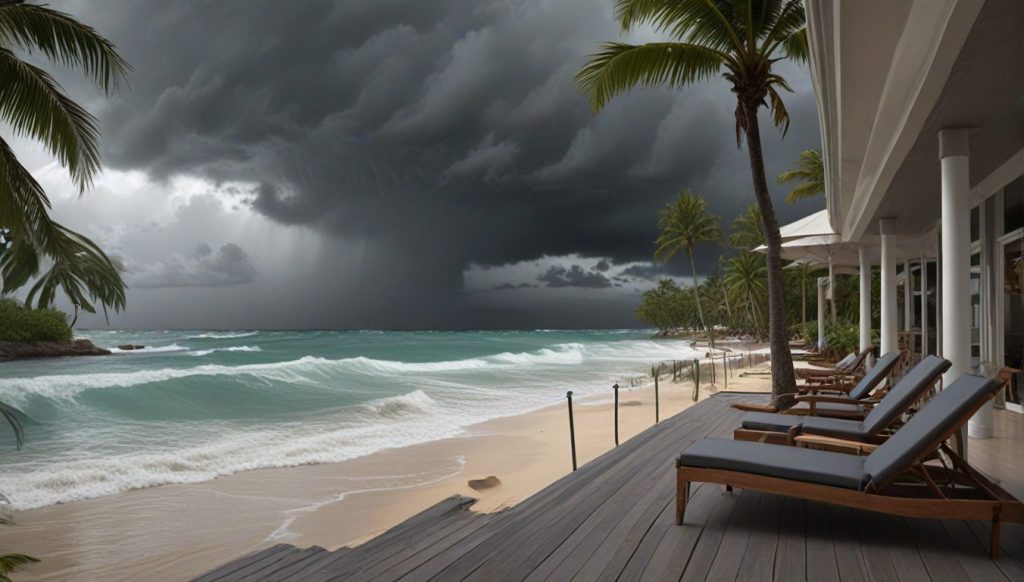
They secure beachfront areas, pause water activities as seas build, and shift dining and programming indoors if conditions get rough.
Most established properties maintain generators, water reserves, medical kits, and staff training to operate through short disruptions.
If authorities issue a mandatory evacuation, resorts coordinate relocation, which is rare but planned for.
Turn Your Next Getaway into Magic.
Discover your perfect resort match
The financial reality matters most.
Many resorts rely on force-majeure clauses, so full cash refunds usually happen only if the property closes officially.
If they stay open, you’ll often get credits or rebooking offers rather than full refunds.
That is why insurance belongs in your plan.
How Travel Insurance Turns Hurricane Risk into a Managed Expense
Even when your island stays calm, hurricanes can still disrupt travel through flight hubs.
That’s the most common way travelers lose nights and money in storm season. (The Washington Post)
A strong hurricane-aware policy can cover:
Trip cancellation when covered storm triggers affect your destination or flights.
Trip interruption if you must leave mid-stay.
Delay and missed connection costs.
Emergency medical care and evacuation.
Optional Cancel For Any Reason upgrades on some plans, purchased early, for personal-comfort flexibility.
How Planning Partners Protect Your Caribbean Resort Trip During Hurricane Season
VisitorsCoverage: Flexible Protection With CFAR Options
VisitorsCoverage helps because it lets you compare multiple insurers in one place.
Storm triggers vary by carrier, so seeing policies side by side keeps you from guessing.
If your resort closes before arrival due to a warning, covered-reason cancellation can reimburse your non-refundable costs.
If a system forces an early departure, interruption coverage helps with unused nights and transport changes.
And if you want emotional flexibility for higher-risk islands, some plans found through VisitorsCoverage allow CFAR when bought within the early purchase window.
That makes it especially useful for Jamaica, Puerto Rico, or the Bahamas in September.
You’re not panicking.
You’re planning for the known risk corridor.
World Nomads: Best For Excursion-Heavy Resort Trips
World Nomads is designed for travelers who mix resort days with activities.
If your trip includes diving, hikes, or guided tours, their coverage aligns with the way you actually spend money. (noaa.gov)
If seas cancel a prepaid snorkel day and the operator can’t refund, eligible cancellation reimbursement protects that cost.
If evacuation conditions create medical needs, emergency benefits keep care accessible without major financial exposure.
This fits naturally for Grenada, Barbados, or Saint Lucia-style itineraries where the trip value lives in experiences outside the resort gates.
Ekta: Affordable Essentials For Lower-Risk Islands
Ekta is a good lane for budget-minded travelers who still want core hurricane-season protection.
Coverage typically includes covered-reason cancellation, interruption, medical care, and evacuation.
Independent reviews note Ekta does not provide CFAR on their travel plans, so think of it as strong essentials rather than maximum flexibility.
For travelers choosing Aruba, Bonaire, or Curaçao, that pairing often feels just right.
Low direct-hit odds plus affordable baseline protection.
Insubuy: Plan Comparison For Families And Groups
Insubuy aggregates plans from major insurers and lets you filter quickly for storm coverage and trip style.
That is particularly helpful for group resort trips.
When everyone books under aligned terms, you avoid messy refund gaps if something forces a change.
If you’re coordinating multiple rooms or a destination wedding, this aggregation makes hurricane-season planning cleaner and more predictable.
Compensair: Airline Compensation When Rules Apply
Compensair helps travelers pursue airline compensation on eligible routes, especially those covered by EU passenger-rights rules.
Weather is often treated as an extraordinary circumstance, so compensation is not guaranteed, but some disruptions still qualify depending on airline handling and route rules.
The smart way to view Compensair is as a second recovery path.
Insurance covers your immediate costs.
Compensair helps you chase any additional airline payout you may be owed on top of that.
Real Hurricane Risk—and How to Travel Confidently
Caribbean hurricanes are not a daily reality for resorts.
They are a seasonal possibility that concentrates in specific northern corridors.
Most travelers who visit during hurricane season will never experience a direct hit.
Some will deal with a flight disruption or a weather-paused excursion.
And a small fraction will face a true resort shutdown or evacuation. (NOAA Institutional Repository)
If you want calmer odds, pick far-southern islands like Aruba, Bonaire, Curaçao, Trinidad and Tobago, Barbados, or Grenada.
If you want your money protected no matter what happens en route, lock in hurricane-aware travel protection early through VisitorsCoverage or Insubuy.
Use World Nomads for activity-rich trips, lean on Ekta for affordable essentials, and keep Compensair as your flight-rights backstop when the rules fit your routing.
That’s how you travel smarter, not scared.
FAQ – Is Hurricane Season Caribbean Resort Travel Really A Smart Bet?
How Often Do Hurricanes Actually Make Direct Landfall on Caribbean Resort Islands?
Direct landfalls on individual Caribbean resort islands are relatively infrequent.
Long‑term records show many islands experience a direct hurricane only once every several years to a couple of decades, depending on their position in the storm corridor.
More often, systems curve north or pass between islands, leaving most resorts untouched in a given season.
This matters because your personal risk is shaped less by the existence of hurricane season and more by which island you choose and how you plan around regional patterns.What’s The Real Difference Between Higher‑Risk and Lower‑Risk Caribbean Hurricane Zones?
Higher‑risk zones sit squarely in the main hurricane corridor and see more frequent direct and close‑pass impacts over time.
That includes the Bahamas, Puerto Rico, Jamaica, eastern Dominican Republic, the U.S. Virgin Islands, Cuba, and Mexico’s Cancún and Riviera Maya.
Lower‑risk zones—Aruba, Bonaire, Curaçao, Barbados, Grenada, and Trinidad and Tobago—lie well south or near the edge of typical tracks and have dramatically fewer direct hits, with StormCarib data showing only a small handful of named storms near the far‑southern islands over 150+ years.
Choosing between these tiers is one of the most powerful decisions you make.How Should I Interpret a “Busy” Atlantic Hurricane Season When I’m Booking a Resort Stay?
A busy season increases overall storm numbers but does not guarantee your resort island will be hit.
NOAA’s outlooks, like the above‑normal 2025 forecast with 13–19 named storms and 6–10 hurricanes, describe basin‑wide activity, not specific landfall locations.
In practice, storms cluster along certain paths, and many islands see no direct landfall even in hyperactive years such as 2020.
The practical takeaway is to treat seasonal forecasts as a signal to plan carefully—pick safer islands and lock in coverage—rather than as a reason to assume your chosen resort is doomed.What Do Resorts Actually Do When a Hurricane or Strong Tropical Storm Approaches?
Resorts in the Caribbean run storm plans every year.
They monitor forecasts early, send guest alerts when a system might approach, secure beachfront areas, pause water activities as seas build, and move dining and entertainment indoors if conditions deteriorate.
Established properties maintain generators, water reserves, medical kits, and staff training to operate through short disruptions.
If authorities issue a mandatory evacuation, resorts coordinate relocation, which is rare but planned for.
Understanding these steps helps you see that safety is handled through routine procedures rather than last‑minute improvisation.Why Do Near‑Miss Hurricanes Matter for Resort Travelers Even When There’s No Direct Hit?
Near‑misses matter because they create the disruptions most travelers actually feel.
A passing system can bring rough seas, a windy day, or a temporary pause on excursions without ever making landfall on your island.
It can also shut down flight hubs like Miami or San Juan, causing delays, missed connections, and lost nights even if your resort stays calm.
Planning for these ripple effects—through flexible bookings and hurricane‑aware insurance—protects your time and money against the more common, indirect impacts of storm season.How Can Travel Insurance Turn Hurricane Risk into a Managed Expense Instead of a Financial Shock?
Travel insurance turns hurricane risk into a set of defined, reimbursable scenarios.
Strong policies cover trip cancellation when covered storm triggers affect your destination or flights, trip interruption if you must leave mid‑stay, delay and missed connection costs, and emergency medical care and evacuation.
Optional Cancel For Any Reason upgrades, purchased early, add emotional flexibility when you’re uneasy about higher‑risk islands like Jamaica or the Bahamas.
When you combine these benefits with smart destination choices, you shift storm season from “hope nothing happens” to “I know how my money is protected if something does.”How Do Planning Partners Like VisitorsCoverage, World Nomads, Ekta, Insubuy, And Compensair Work Together for Hurricane Season Trips?
Each partner covers a different part of the risk landscape.
VisitorsCoverage lets you compare multiple insurers and see hurricane triggers and CFAR options side by side, which is crucial for northern‑belt destinations.
World Nomads fits excursion‑heavy itineraries in places like Grenada, Barbados, or Saint Lucia, where diving, hikes, and tours are a big part of trip value.
Ekta offers affordable essentials—cancellation, interruption, medical, evacuation—without CFAR, a natural match for lower‑risk islands such as Aruba, Bonaire, or Curaçao.
Insubuy helps families and groups align coverage terms across multiple rooms or wedding parties.
Compensair then acts as a secondary path to pursue airline compensation on eligible routes when disruptions occur.What Kinds of Real‑World Hurricane Season Scenarios Should Caribbean Resort Travelers Plan For?
Real‑world scenarios range from mild to serious.
You might face a flight delay or cancellation because a storm hits a hub while your island stays sunny, lose a prepaid excursion to rough seas, or spend a day indoors as rain bands pass.
Less often, a resort may close temporarily or authorities may order an evacuation, as seen with events like Hurricane Melissa’s Category 5 landfall in Jamaica.
Planning for all of these—through destination choice, resort selection, and layered insurance—means you’re ready for both the common inconveniences and the rare high‑impact events.How Should Families or Groups Coordinate Hurricane‑Season Protection for Multi‑Room Caribbean Resort Trips?
Families and groups benefit from aligned coverage rather than a patchwork of different policies.
Using aggregators like Insubuy to filter for storm triggers and similar benefits across all travelers helps avoid situations where some guests are reimbursed and others are not.
This is especially important for destination weddings or multi‑room bookings in places like Barbados or Grenada.
When everyone shares comparable terms—cancellation rules, interruption coverage, delay benefits—it becomes much easier to adjust dates, rebook, or file claims together if a storm forces changes.What Core Steps Turn June‑To‑November Caribbean Resort Travel from a Gamble into a Smart Plan?
Three core steps make hurricane‑season resort travel strategic instead of risky.
First, treat risk as regional probability and choose far‑southern islands—Aruba, Bonaire, Curaçao, Trinidad and Tobago, Barbados, or Grenada—if you want calmer odds.
Second, book established resorts that maintain generators, emergency supplies, and clear storm procedures so operational safety is baked in.
Third, secure hurricane‑aware travel insurance early through comparison tools like VisitorsCoverage or Insubuy, adding World Nomads, Ekta, or Compensair where they fit your itinerary.
Taken together, these choices let you enjoy quieter, better‑value Caribbean stays while knowing you’ve deliberately managed both physical and financial risk.