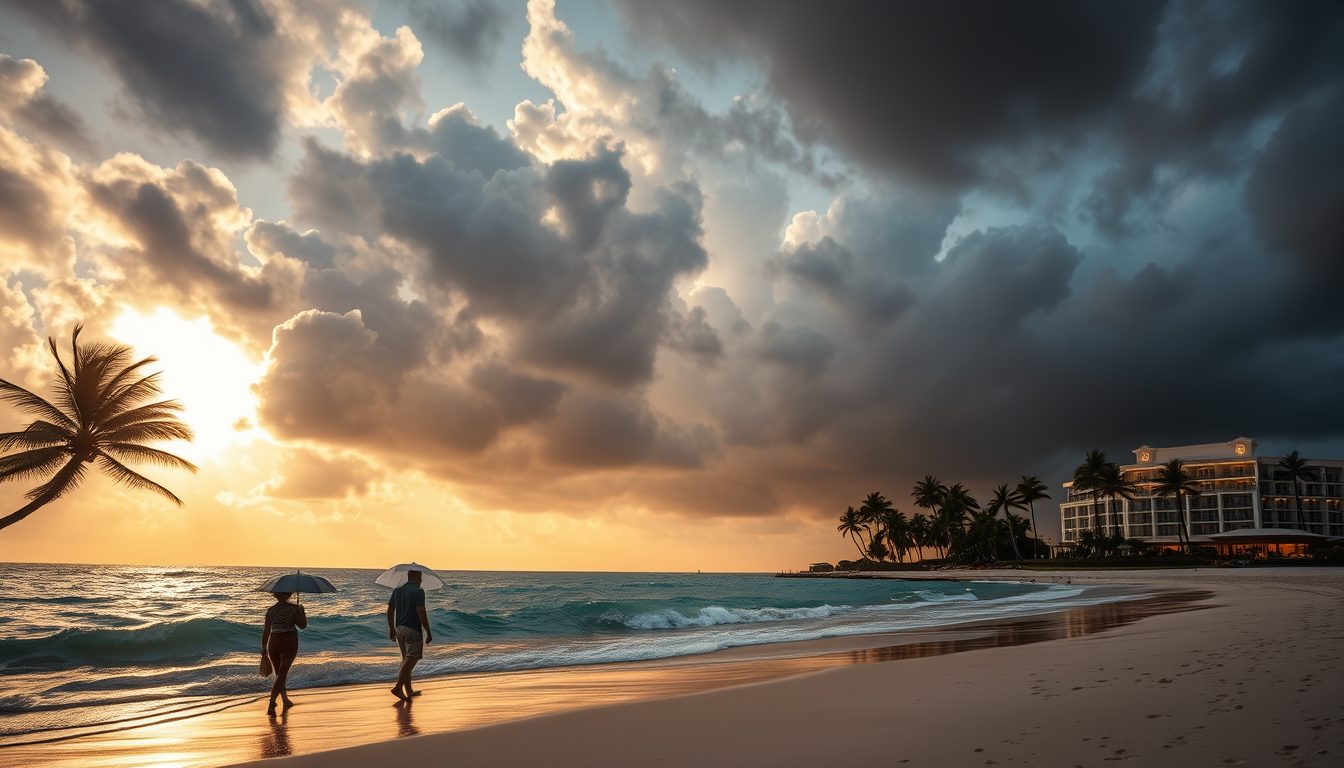


Don’t Let One Problem Ruin Your Vacation
A few seconds now protects the trip you’ve already invested so much into.
September in the Caribbean is a gamble worth understanding.
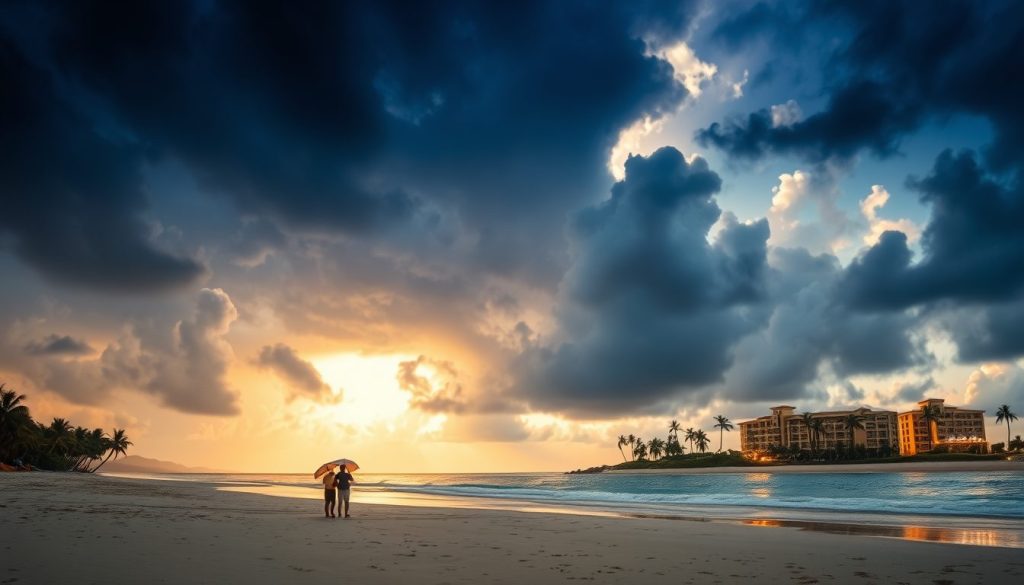
It’s the month where golden beach days meet sudden tropical downpours.
Resorts stay open, prices drop, and the sea stays warm—but so does the risk of hurricanes.
Knowing what to expect helps you plan smarter, pack better, and travel with confidence.
This isn’t about avoiding risk—it’s about managing it and making the most of the season.
Feel the Heat: What September Weather Really Brings
September consistently delivers hot, humid days, warm seas, and a heightened risk of tropical storms.
Travelers should use this knowledge to plan their daily rhythm: mornings for excursions, afternoons for shade or indoor activities, and evenings for breezy outdoor dining.
- Warm temperatures: Average highs range from 83°F to 92°F (28°C–33°C) across most islands.
- High humidity: Expect sticky conditions, especially in the afternoons.
- Frequent rain showers: Short, heavy downpours are common, often followed by sunshine.
- Hurricane risk: September is statistically the most active month for tropical storms and hurricanes.

Paradise Is Calling Your Name
Explore Sandals & Beaches deals
Pick Your Island Wisely: Regional Weather Risks and Rewards
Because the Caribbean is vast, weather conditions vary by sub‑region.
Travelers can use these differences to choose destinations strategically: risk‑averse travelers should lean south, while deal‑seekers can take advantage of northern discounts.
- Eastern Caribbean (Barbados, St. Lucia, Martinique): Warm (85°F–88°F), with frequent showers but also long sunny breaks.
- Greater Antilles (Cuba, Jamaica, Dominican Republic, Puerto Rico): Hotter (up to 94°F), with higher hurricane exposure.
- Bahamas & Turks and Caicos: Warm (83°F–88°F), with good beach days but elevated storm risk.
- Southern Caribbean (Aruba, Curaçao, Bonaire): More stable, with “good” weather ratings — warm (85°F–86°F) and less rain.
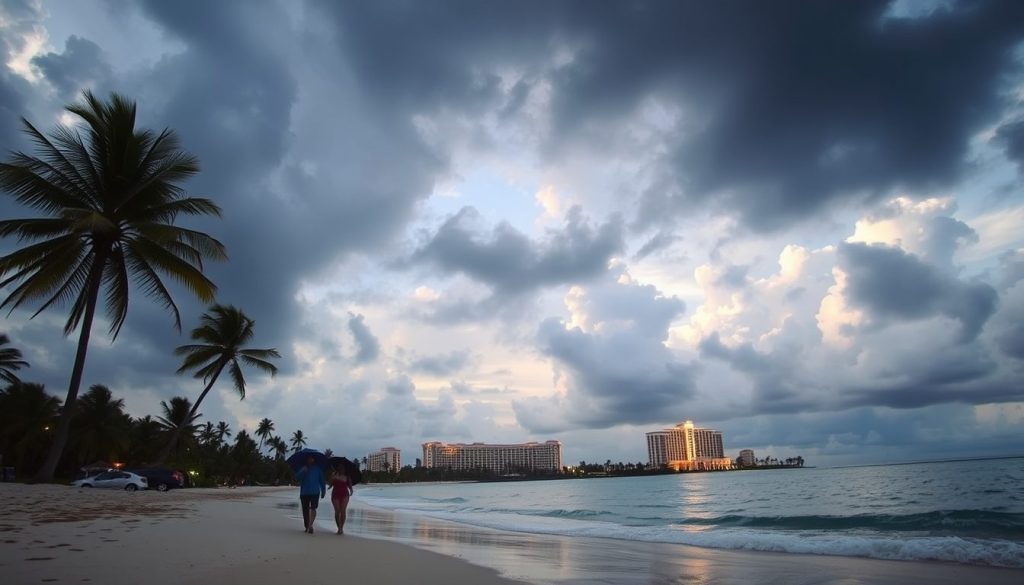
Decide If September Travel Is Right for You
Forecasts only matter if they’re translated into guest experience.
Resorts are prepared with covered dining, indoor entertainment, and hurricane protocols.
Guests should decide whether they’re comfortable with flexible itineraries or if they need guaranteed stability.
- Beach time is still plentiful: Even with rain, showers are often brief.
- Storm monitoring is essential: Resorts follow strict hurricane protocols, and guests should stay alert to advisories.
- Travel flexibility helps: Booking changeable flights and having insurance ensures peace of mind.
Escape the Chaos. Upgrade to Paradise.
See today’s exclusive offers

Protect Your Trip: Why Insurance Is Non-Negotiable in September
September’s forecast comes with the highest hurricane risk, which means financial protection is as important as sunscreen.
Resort hurricane guarantees may cover your room, but they won’t reimburse flights, excursions, or medical emergencies.
- Decision point: If you’re booking September travel without insurance, you’re gambling. With layered coverage, you turn hurricane season into a manageable inconvenience.
VisitorsCoverage — Protection When Nature Forces a Change
VisitorsCoverage reimburses unused nights, deposits, and prepaid excursions if a hurricane warning or evacuation interrupts your stay.
- How to use this: Buy if you’re prepaying a resort package. It ensures you don’t lose your investment if storms force cancellations.
Ekta — Medical Security When the Unexpected Happens
Ekta covers hospital care, prescriptions, and emergency evacuation if you fall ill or are injured during a storm relocation.
- How to use this: Essential if you or a family member has health vulnerabilities. It ensures medical care even if local systems are strained.
Insubuy — Stability When Flights and Plans Collapse
Insubuy reimburses extra hotel nights, meals, and rebooking fees when flights are canceled.
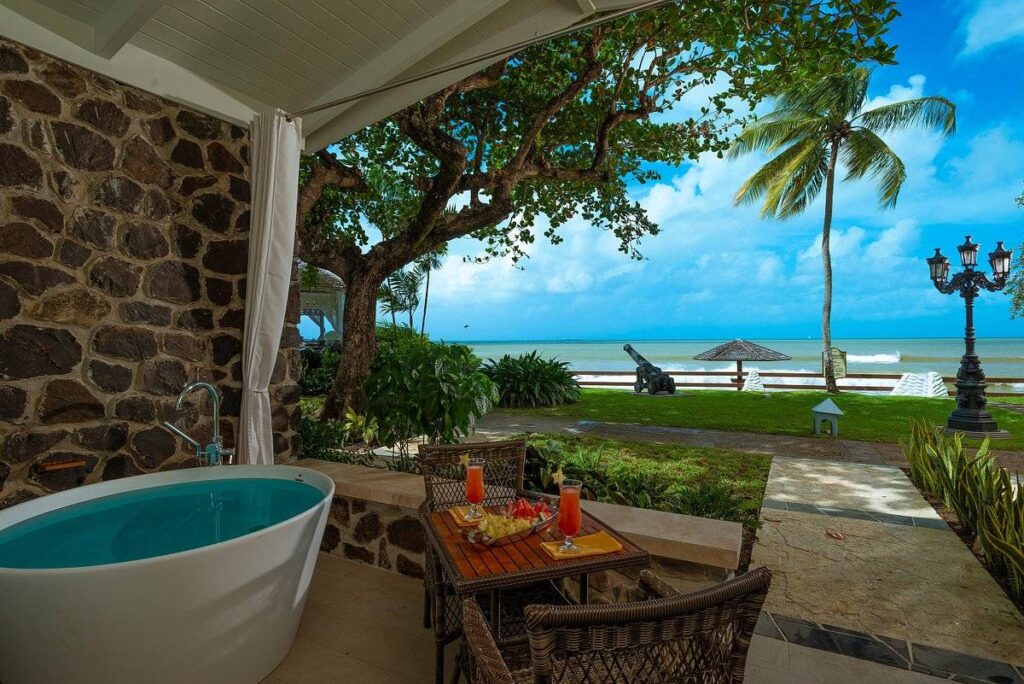
Find the Escape You’ve Been Craving.
Reveal limited‑time Caribbean deals
- How to use this: Critical if you’re flying through storm‑prone hubs like Miami or San Juan. It prevents out‑of‑pocket costs during delays.
Compensair — Extra Relief When Airlines Fail You
Compensair pursues cash compensation from airlines for cancellations or long delays.
- How to use this: File after your trip if your flight was disrupted. It adds a post‑event payout on top of insurance reimbursements.
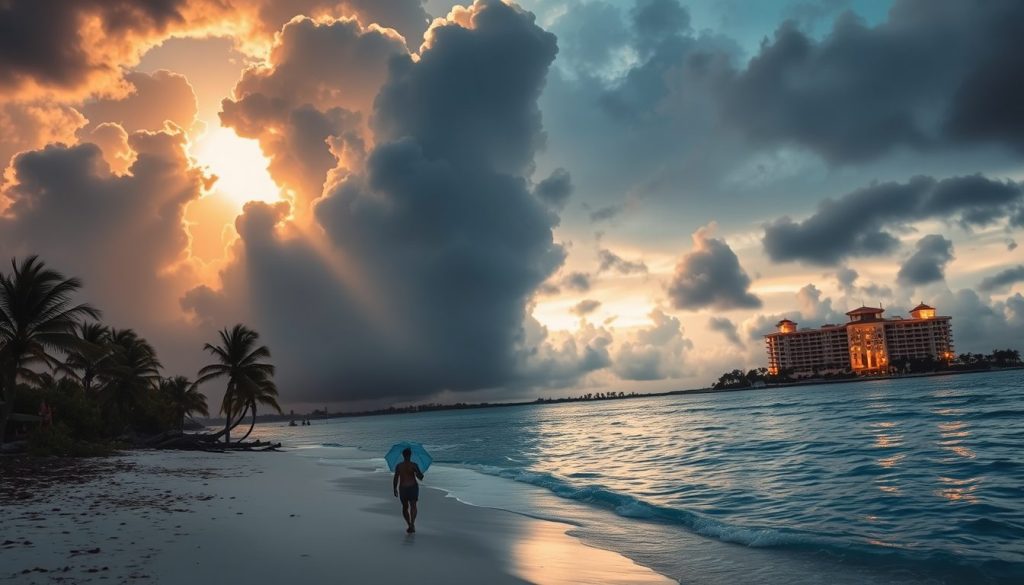
Learn From the Storms: Real September Travel Outcomes
Looking back at past Septembers shows how forecasts play out in real life.
These examples help you decide whether September’s trade‑offs are worth it.
- 2017 (Irma & Maria): Resorts in Puerto Rico and the Virgin Islands closed for weeks; insured travelers recovered costs, uninsured travelers did not.
- 2020: Many southern Caribbean islands (Aruba, Curaçao) enjoyed stable weather while northern islands faced storms.
- 2024 (Beryl): Jamaica and Barbados saw evacuations but reopened quickly thanks to improved infrastructure.
Decision use: If you’re risk‑averse, choose southern islands. If you’re budget‑driven, northern islands can still work — but only with insurance.
Plan Smart, Travel Confident: Your September Prep Checklist
Preparation is the difference between a stressful trip and a smooth one.
Travelers who prepare for September’s variability enjoy the best of both worlds: lower prices and peace of mind.
- Check long‑range forecasts via the Caribbean Climate Centre.
- Book flexible flights that allow no‑fee changes.
- Confirm resort hurricane policies before arrival.
- Buy travel insurance at booking — once a storm is named, new policies may exclude it.
- Pack essentials (medications, chargers, waterproof pouch for documents).
Decision use: If you’re willing to prepare, September can be rewarding. If you want zero hassle, pick another month.
Turn Your Next Getaway into Magic.
Discover your perfect resort match

FAQ – Is September Worth The Risk For Caribbean Travel
Is September really a good time to book a Caribbean trip, or is the hurricane risk too high?
September can work very well for Caribbean travel if you treat it as a trade‑off instead of a gamble.
You get lower prices, quieter resorts, and warm seas, but you also face the most active hurricane period of the year.
The key is to pair destination choice with flexible bookings and solid insurance so that storms become a logistical issue, not a financial disaster.
If you’re willing to adapt plans and monitor forecasts, September can deliver a rewarding trip at a better value than peak season.Which Caribbean islands make the most sense in September if I want less hurricane risk but still good beach weather?
Southern Caribbean islands such as Aruba, Curaçao, and Bonaire are strong choices for September because they sit outside the main hurricane belt.
They typically offer warm temperatures, relatively stable conditions, and fewer direct storm hits compared with northern islands.
This doesn’t remove all weather variability, but it shifts the odds in favor of consistent beach days.
Travelers who are cautious about storms but still want September pricing often start their search with these southern destinations.How different is the September weather between northern islands like Jamaica or the Bahamas and southern islands like Aruba?
Northern islands in the Greater Antilles and Bahamas tend to be hotter and more exposed to tropical systems in September, with highs that can reach the mid‑90s and a higher chance of storm activity.
Southern islands such as Aruba and Curaçao usually see slightly milder heat, less rain, and fewer direct hurricane impacts.
In practice, this means northern destinations may offer bigger discounts but require stronger backup plans and insurance, while southern destinations trade some savings for more predictable conditions.What does a typical September day in the Caribbean feel like in terms of heat, humidity, and rain?
Most September days are hot, humid, and punctuated by short, intense showers rather than all‑day rain.
Highs commonly fall between 83°F and 92°F, with sticky afternoons that can feel draining if you stay in direct sun.
Brief downpours often roll through and then give way to sunshine, which is why many travelers plan outdoor excursions in the morning, retreat to shade or indoor spaces in the afternoon, and enjoy outdoor dining once temperatures ease in the evening.How should I decide if I personally can handle the weather and storm risk in September?
Start by asking how much flexibility you’re comfortable with.
If you can adjust daily plans around heat and showers, accept the possibility of flight changes, and build in insurance, September is usually manageable.
If you need firm guarantees on weather and schedules—for example, for a once‑in‑a‑lifetime event or tight work constraints—another month may fit better.
Thinking in terms of your tolerance for disruption helps you match your expectations to what September realistically delivers.What kinds of travel insurance or protections matter most for September trips to the Caribbean?
For September, you want coverage that addresses both storms and their ripple effects.
VisitorsCoverage can reimburse unused nights, deposits, and prepaid excursions if a hurricane warning or evacuation cuts your stay short, which protects the money you’ve already committed to the resort.
Ekta focuses on medical needs, including hospital care and emergency evacuation, which is especially important if you or a family member has health vulnerabilities.
Insubuy helps with extra hotel nights, meals, and rebooking fees when flights are canceled, while Compensair can pursue cash compensation from airlines after major delays or cancellations.
Together, these options turn a potential financial loss into a manageable inconvenience.Why is it so important to buy insurance before a storm is officially named?
Once a storm is named, many policies treat it as a known event and exclude new coverage related to that system.
Buying insurance at the time of booking ensures that future storms are still considered unforeseen, which keeps hurricane‑related cancellations and interruptions eligible for reimbursement.
In practical terms, waiting until forecasts look ominous can close the door on the very protections you’re hoping to secure, so early purchase is part of smart September planning.What can past September storms like Irma, Maria, and Beryl teach me about planning my own trip?
Historical storms show how different regions respond when weather turns severe.
In 2017, hurricanes Irma and Maria forced long closures in places like Puerto Rico and the Virgin Islands, and travelers with insurance recovered far more of their costs than those without it.
In 2020, many southern islands such as Aruba and Curaçao experienced relatively stable conditions while northern areas dealt with more storms, highlighting the value of destination choice.
Beryl in 2024 led to evacuations in Jamaica and Barbados but also demonstrated how improved infrastructure can speed reopening.
Looking at these outcomes helps you see that both location and preparation strongly influence how disruptive a storm becomes for your trip.How should I structure my bookings and logistics to stay flexible during September in the Caribbean?
Flexibility starts with flight and resort choices.
Opt for airfares that allow changes with low or no fees, and confirm your resort’s hurricane policies before you commit, including how they handle rebooking or credits if a storm approaches.
Pair those decisions with insurance that covers both trip interruption and added costs from delays.
Checking long‑range forecasts from regional climate centers, keeping an eye on daily updates, and avoiding overly rigid itineraries all help you adapt quickly if conditions shift.What should I pack differently for a September Caribbean trip compared with a standard sunny‑season vacation?
Packing for September means planning for both heat and disruption.
Light, breathable clothing and sun protection still matter, but you also benefit from a compact emergency kit that includes medications, chargers, and a waterproof pouch for important documents.
A lightweight rain jacket or poncho helps you move comfortably during sudden downpours, and organizing essentials so they’re easy to grab makes it simpler to respond if you need to change rooms, relocate, or navigate airport delays.
This kind of packing turns weather surprises into minor adjustments instead of major stress.