


Don’t Let One Problem Ruin Your Vacation
A few seconds now protects the trip you’ve already invested so much into.
Short Excerpt
- August can unlock lower Caribbean resort prices, smaller crowds, and major cultural events, but those savings come with greater hurricane-season uncertainty.
- Aruba, Bonaire, Curaçao, and Trinidad and Tobago offer lower historical storm exposure than destinations such as Jamaica, Puerto Rico, the Bahamas, and the Dominican Republic.
- The strongest August strategy combines careful island selection with flexible bookings, appropriate travel protection, and a willingness to change plans if forecasts deteriorate.
Quick Take
- August resort rates can be substantially lower than winter prices, making upscale Caribbean properties more accessible for travelers willing to accept additional weather risk.
- Aruba, Bonaire, Curaçao, and Trinidad and Tobago are among the stronger choices when reducing hurricane exposure is a priority.
- Antigua Carnival, Grenada Spice Mas, and Barbados Crop Over can add cultural value that travelers would not experience during the winter high season.
- Travelers with rigid dates, expensive nonrefundable reservations, or significant medical concerns should weigh August savings more carefully.
- Refundable rooms and flights give you more freedom to pivot if a tropical system begins threatening your destination.
- Start watching relevant forecasts about five to seven days before departure rather than making major decisions from distant storm projections.
When Booking A Caribbean Resort In August Can Save You Money Without Ruining The Vacation
October in the Caribbean is a gamble.
It’s peak hurricane season, and storms can disrupt flights, close resorts, or cancel excursions.
But it’s also the cheapest time to visit, with deep discounts and quiet beaches.
Some islands are safer than others, especially those outside the hurricane belt.
Insurance can protect your trip, your money, and your peace of mind.
This guide helps you decide if October is a smart play—or a storm-season misstep.
Why October Travel Can Derail Your Caribbean Escape
August is technically “off‑season,” but that label hides some of its biggest advantages.
Resorts slash rates to attract travelers, meaning you can often book luxury properties for half the price of peak winter months.
Families benefit from school vacations, making August one of the few windows for extended trips.
And for those who value authenticity, August is when islands host vibrant festivals, from Antigua’s Carnival to Grenada’s Spice Mas.
The trade‑off is weather uncertainty.
While storms are possible, many islands — particularly in the southern Caribbean — experience only brief afternoon showers and plenty of sunshine.

Paradise Is Calling Your Name
Explore Sandals & Beaches deals
For travelers willing to plan smartly, August can deliver a luxury‑for‑less experience that feels like discovering a secret season.
- Lower costs: Resorts and flights are significantly cheaper.
- Cultural immersion: August coincides with major festivals and local events.
- Family‑friendly timing: School holidays allow for longer stays.
- Quieter atmosphere: Fewer tourists mean more space at beaches and pools.
Best for you if: You want luxury at a discount and don’t mind planning around weather risks.
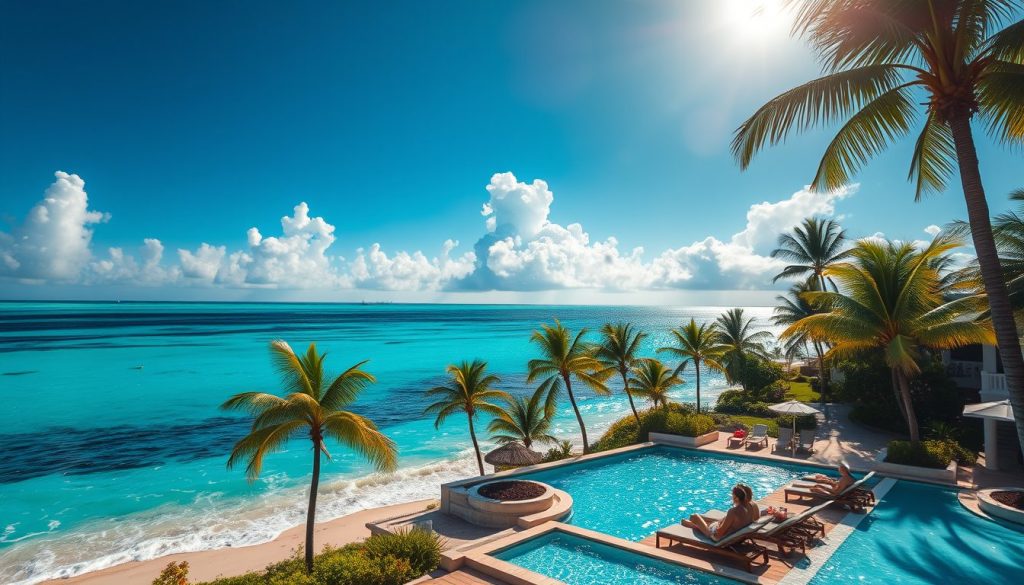
The Weather Reality: What August Really Looks Like
When people hear “August in the Caribbean,” they often picture constant storms.
The reality is more nuanced.
While August is part of hurricane season, the majority of days are still sunny and hot, with rain often arriving in short bursts.
The risk is not daily rain, but the possibility of a major storm disrupting travel.
Geography matters. Islands like Aruba, Curaçao, and Bonaire sit outside the main hurricane belt and see minimal storm activity.
Others, like Jamaica or Puerto Rico, face higher risk.
By choosing wisely, you can dramatically reduce your exposure.
- Southern Caribbean safety: Aruba, Curaçao, Bonaire, and Trinidad & Tobago are lower‑risk.
- Peak storm zones: Bahamas, Jamaica, Puerto Rico, and Dominican Republic face higher odds.
- Temperature: Expect highs in the upper 80s to low 90s °F (30–33°C).
- Rainfall: Afternoon showers are common, but often brief.
Best for you if: You want to balance sunshine with smart island selection.
When October Travel Backfires: Risks That Cancel Your Trip
August isn’t for everyone.
If you’re traveling with infants, elderly relatives, or anyone with medical needs, the unpredictability of storms can add unnecessary stress.
Similarly, if your trip is nonrefundable and you lack insurance, the financial risk outweighs the savings.
- High‑risk islands: Bahamas, Jamaica, Puerto Rico in late August.
- Low flexibility: No wiggle room to change flights or dates.
- Medical concerns: Travelers needing reliable access to care.
- No insurance: Prepaid packages without coverage.
Choose this path if: You can’t afford disruption or financial loss.
Escape the Chaos. Upgrade to Paradise.
See today’s exclusive offers

When October Delivers: Resort Perks That Reward Risk-Takers
For flexible, adventurous travelers,
August can be a golden opportunity. Imagine booking a five‑star resort in Aruba for half the winter price, enjoying empty beaches, and experiencing Carnival celebrations without the crowds.
If you’re insured, adaptable, and excited by cultural immersion, August is not just “worth it” — it’s a smart play.
- Lower‑risk islands: Aruba, Curaçao, Bonaire.
- Festival season: Antigua Carnival, Grenada Spice Mas, Barbados Crop Over.
- Budget advantage: Luxury resorts at off‑season rates.
- Flexibility: Willingness to adjust plans if weather shifts.
Best for you if: You want value, culture, and flexibility.

Insurance That Saves Your Trip When October Storms Hit
Insurance is the pivot point for August travel.
Without it, you’re exposed to losing prepaid nights or flights.
With it, you gain peace of mind.
- VisitorsCoverage: Reimburses prepaid resort nights if storms force closure.
- Ekta: Covers medical emergencies during storm disruptions.
- Insubuy: Pays for meals, hotels, and rebooking if flights are canceled.
- Compensair: Pursues airline compensation after delays or cancellations.
Best for you if: You want to enjoy August savings without carrying the financial risk.
Find the Escape You’ve Been Craving.
Reveal limited‑time Caribbean deals
Don’t Cancel Yet: Safer Ways to Salvage Your Caribbean Vacation
If you’re hesitant about August but don’t want to skip the Caribbean, consider pivots.
- Shift dates: Early December offers similar prices with lower storm risk.
- Change geography: Southern Caribbean or even Bermuda.
- Flexible bookings: Refundable rooms and flights.
- Decision windows: Monitor forecasts 5–7 days out before committing.
Best for you if: You want to travel but prefer a lower‑risk setup.
What to Do When a Storm Disrupts Your Caribbean Resort Stay
Even if you go, preparation is key.
- Communication plan: Save resort, airline, and embassy contacts.
- Packing: Waterproof pouch, meds, power bank, rain jacket.
- Money: Cash buffer + working cards.
- Activity sequencing: Outdoor excursions early, indoor activities later.
- Insurance docs: Keep policy numbers handy.
Best for you if: You want to stay calm and proactive during disruptions.
What Really Happens When October Storms Derail Your Resort Plans
- Forecast cone includes your island: Confirm resort policy, hold backup flights, set a 72‑hour cutoff.
- Airline cancels outbound flight: Rebook, claim meals/hotel, salvage trip if arrival still viable.
- Resort shelter‑in‑place: Follow instructions, secure essentials, document for claims.
- Partial evacuation inland: Move calmly, keep receipts, monitor reopening.
Choose this when: You want a clear action plan.
Turn Your Next Getaway into Magic.
Discover your perfect resort match
FAQ – Is October Too Risky for a Caribbean Resort Stay?
How risky is October for Caribbean resort travel compared to other times of year?
October falls in the heart of hurricane season, so the main risk is disruption rather than constant bad weather.
Storms can force resort closures, cancel flights, or shut down excursions, which matters if you have nonrefundable bookings or tight schedules.
At the same time, October often brings lower prices and quieter resorts, so the tradeoff is clear: you accept higher disruption risk in exchange for savings and fewer crowds.
Travelers who value flexibility and can adjust plans quickly tend to benefit most from October travel.Which Caribbean islands offer the lowest storm risk if I still want to travel in October?
Islands like Aruba, Curaçao, Bonaire, and Trinidad & Tobago sit outside the main hurricane belt and generally see fewer major storms.
That makes them strong options if you want October’s lower prices without constantly worrying about cancellations.
Choosing these destinations can significantly reduce the chance that your resort stay is interrupted, even though no island is completely risk‑free.
In practice, this means you can focus more on planning your activities and less on contingency plans.Are there Caribbean islands I should be more cautious about visiting in October?
Yes, some islands face higher storm odds in October, including the Bahamas, Jamaica, Puerto Rico, and the Dominican Republic.
These destinations can still deliver great trips, but the likelihood of flight disruptions or resort closures is higher than in the southern Caribbean.
If you’re traveling with infants, older relatives, or anyone with medical needs, that added uncertainty can be stressful.
For those with rigid schedules or nonrefundable packages, choosing a lower‑risk island or a different month may be the safer call.How do October’s resort prices and crowds compare to peak winter months?
October typically brings deep discounts and fewer guests compared to the busy winter season.
Luxury beachfront resorts that are expensive in January or February may be available at much lower rates, and common spaces like pools and beaches feel quieter.
This can be appealing if you care more about space and value than peak‑season buzz.
The practical takeaway is that October lets you stretch your budget further—but you need to weigh that against the higher chance of weather‑related changes.What kind of travel insurance actually helps when October storms hit the Caribbean?
Travel insurance becomes crucial in October because it can cover costs that resort policies alone do not.
Plans from providers such as VisitorsCoverage, Ekta, Insubuy, and Compensair can reimburse prepaid resort nights, cover medical emergencies, pay for extra meals and hotels during delays, and pursue airline compensation after cancellations.
This matters when a storm forces you to change plans at the last minute and you’re facing multiple unexpected expenses.
Choosing a policy with trip cancellation, trip interruption, and emergency medical coverage gives you a financial safety net that matches October’s higher risk profile.When does October travel stop making sense for a Caribbean resort stay?
October becomes a poor choice if you have no flexibility and high sensitivity to disruption.
Travelers with nonrefundable packages, strict work schedules, or family members who need reliable access to medical care may find the stress and potential losses outweigh the savings.
High‑risk islands like the Bahamas, Jamaica, and Puerto Rico add another layer of uncertainty.
In those situations, shifting to a lower‑risk month or choosing a safer destination is often the more practical decision.Is there a better time than October to get similar prices with less storm risk?
Early December often offers a useful compromise: prices can still be relatively low, but hurricane risk has dropped compared to October.
You may not see the absolute rock‑bottom rates of peak storm season, yet you gain more stability for flights and resort operations.
For travelers who want value but feel uneasy about October’s volatility, this timing can be a smart pivot.
It lets you keep a “luxury‑for‑less” mindset without constantly monitoring storm cones.How should I prepare if I decide to keep my October Caribbean resort booking?
Preparation starts with communication and essentials.
Save contact details for your resort, airline, and local embassy, and keep your insurance policy numbers handy.
Pack items that help during disruptions—such as a waterproof pouch, medications, a power bank, and a light rain jacket—so you can manage short‑notice changes.
It also helps to schedule outdoor excursions earlier in the trip and leave indoor or flexible activities for later, in case forecasts shift.
These steps don’t remove risk, but they make you more resilient if a storm affects your stay.What should I do if a storm disrupts my October resort trip while I’m already on the island?
Your response depends on how the disruption unfolds.
If the forecast cone suddenly includes your island, confirm your resort’s policy, look at backup flight options, and set a personal cutoff for leaving—often around 72 hours before expected impact.
If your airline cancels your outbound flight, focus on rebooking, documenting expenses, and using insurance or compensation services like Compensair to recover costs.
In shelter‑in‑place or partial evacuation scenarios, follow resort instructions, keep receipts, and track communications for future claims.
Thinking through these scenarios in advance turns a chaotic situation into a series of manageable decisions.Can October still be a good time for a Caribbean resort stay if I’m flexible and insured?
For travelers who can adapt quickly and carry solid insurance, October can be surprisingly rewarding.
Lower‑risk islands such as Aruba, Curaçao, and Bonaire offer warm weather with fewer storms, and off‑season pricing makes high‑end resorts more accessible.
If you’re comfortable adjusting flights or activities around changing forecasts, you can enjoy quieter beaches and more personal space at the property.
The key is accepting that you’re trading certainty for value—when you plan for that tradeoff, October can feel less like a gamble and more like a calculated choice.