


Don’t Let One Problem Ruin Your Vacation
A few seconds now protects the trip you’ve already invested so much into.
Caribbean resorts are known for turquoise waters and white-sand beaches—but they also operate in one of the world’s most hurricane-prone regions.
When storms threaten, resorts don’t improvise.
They follow formal evacuation policies rooted in national disaster frameworks and hospitality industry manuals.
These protocols prioritize guest safety, legal compliance, and rapid recovery.
Understanding how these systems work helps travelers feel reassured, even when the forecast turns dangerous.
Understand the Framework Behind Resort Evacuation Protocols
Evacuation policies at Caribbean resorts don’t exist in isolation — they are carefully designed frameworks that combine government mandates, industry best practices, and property‑specific procedures.
Before a single guest is moved, resorts rely on layered guidance that ensures consistency, legality, and safety.
These structures explain who makes the call, what standards are followed, and how resorts align with national disaster agencies.
- National frameworks: The CDEMA Model National Evacuation Policy provides guidelines for small‑scale, community, and national evacuations. Resorts align their internal plans with these standards.
- Industry manuals: The Hurricane Management Guide for Hotels and Resorts outlines phases of planning, preparation, survival, and aftermath. Resorts adapt these to their property layouts and guest volumes.
- Local coordination: Resorts work with municipal emergency managers, airports, and embassies to ensure evacuation routes and shelters are accessible.
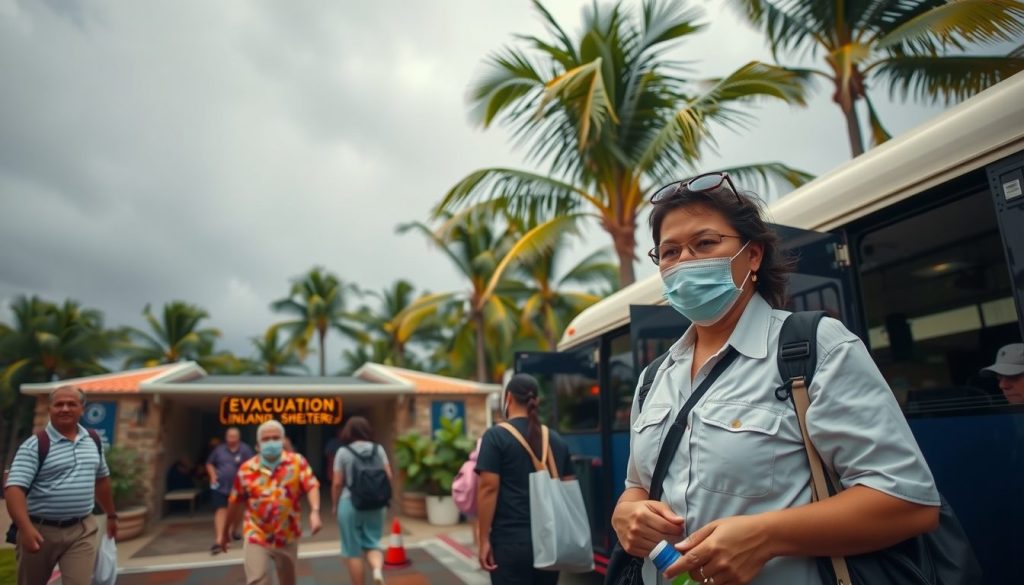
Know When Resorts Decide to Evacuate Guests
Resorts don’t evacuate guests lightly.
Moving hundreds of people requires precision, resources, and coordination with local authorities.
That’s why policies clearly define the conditions that trigger an evacuation.

Paradise Is Calling Your Name
Explore Sandals & Beaches deals
These triggers are conservative by design, ensuring resorts act early enough to protect guests before conditions deteriorate.
- Government orders: If authorities issue a mandatory evacuation, resorts must comply immediately.
- Storm surge risk: Low‑lying beachfront properties may evacuate earlier than inland resorts.
- Infrastructure threats: If power, water, or medical systems are compromised, resorts may relocate guests.
- Guest safety thresholds: Resorts often have internal triggers (e.g., sustained winds above a certain speed) that prompt evacuation to inland shelters.
See How Resorts Move Guests Safely During Storms
Once the decision is made, the focus shifts to execution.
Resorts must move guests quickly, calmly, and safely — often under worsening weather conditions.
Evacuation procedures are designed to minimize confusion, prioritize vulnerable guests, and ensure everyone knows exactly where to go.
The following steps illustrate how resorts translate policy into action.
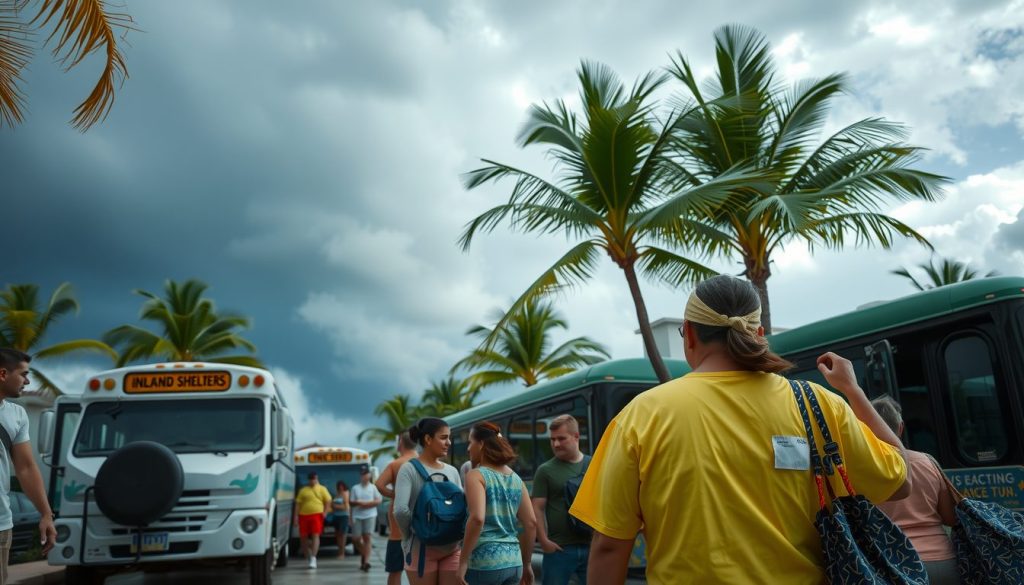
- Shelter‑in‑place vs. relocation: Some resorts move guests into reinforced ballrooms or basements; others transport them inland to partner hotels or government shelters.
- Transportation coordination: Buses, vans, and in some cases ferries are pre‑contracted to move guests quickly.
- Medical priority: Guests with mobility issues, chronic conditions, or special needs are prioritized for early evacuation.
- Communication: Guests receive multilingual briefings, printed instructions, and SMS/email updates.
Watch Resorts Rebuild and Reopen After the Storm
Evacuation is only the first half of the story.
Once the storm passes, resorts must transition from emergency mode to recovery mode.
This involves assessing damage, restoring utilities, and gradually reopening services.
Escape the Chaos. Upgrade to Paradise.
See today’s exclusive offers

Recovery policies are designed to balance speed with safety, ensuring guests can return without risk while also protecting the resort’s long‑term operations.
- Damage assessment: Engineering teams inspect roofs, utilities, and water systems.
- Guest return: If safe, guests are brought back from inland shelters.
- Phased reopening: Restaurants, pools, and excursions resume gradually.
- Long‑term rebuilding: Severely damaged resorts invest in hurricane‑resistant upgrades.
Protect Your Wallet When Storms Disrupt Your Vacation
Even when resorts handle evacuations flawlessly, travelers often face unexpected costs.
Flights may be canceled, prepaid nights may go unused, and inland relocations can add expenses.
Resort policies protect your safety, but insurance protects your wallet.
That’s why pairing evacuation protocols with the right coverage is essential for a stress‑free recovery.
VisitorsCoverage — Protection When Nature Forces a Change
VisitorsCoverage is the most direct answer to the question: “Will I lose money if my resort evacuates me?”
Their trip cancellation and interruption benefits reimburse you for unused resort nights, prepaid excursions, and non‑refundable deposits if a hurricane warning or evacuation order forces you to leave.
If your resort closes for repairs or you’re relocated inland, VisitorsCoverage ensures you don’t absorb the financial hit.
Example: if you booked a 7‑night stay in Barbados and had to evacuate after 3 nights, VisitorsCoverage reimburses the 4 unused nights plus any prepaid activities.
Find the Escape You’ve Been Craving.
Reveal limited‑time Caribbean deals
Ekta — Medical Security When the Unexpected Happens
Ekta is less about refunds and more about keeping you safe if health issues arise during an evacuation.
Imagine being relocated inland to a government shelter where medical resources are stretched thin.
If you suffer an asthma attack, injury, or illness, Ekta covers hospital care, prescriptions, and even emergency medical evacuation if local facilities can’t handle your case.
In short, Ekta ensures that a hurricane evacuation doesn’t turn into a medical crisis you must face alone.
Insubuy — Stability When Flights and Plans Collapse
Insubuy shines when the evacuation disrupts your air travel.
Airlines often cancel flights preemptively when storms approach, leaving travelers stranded. Insubuy reimburses extra hotel nights, meals, and rebooking fees while you wait for flights to resume.
If you’re evacuated inland and your return flight is canceled, Insubuy covers the cost of staying safe and fed until you can get home.
It bridges the gap between resort evacuation policies (which only cover your stay) and airline unpredictability.
Compensair — Extra Relief When Airlines Fail You
Compensair goes after the money airlines owe you but rarely pay without a fight.
If your flight is canceled, delayed more than three hours, or you’re denied boarding due to storm disruptions, Compensair files the claim and pursues compensation under EU261 or similar regulations.
This means that after the dust settles, you may receive additional cash compensation on top of your insurance reimbursements.
It’s the final layer of financial recovery that ensures airlines don’t walk away from their obligations.
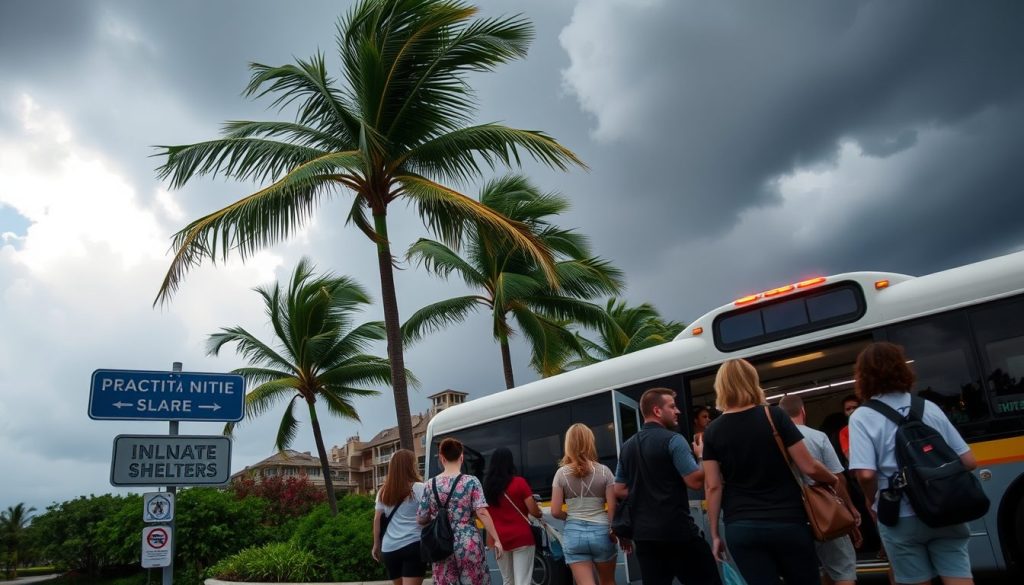
Learn What Past Hurricanes Taught Caribbean Resorts
Evacuation policies aren’t abstract — they’re tested in real storms.
By looking at how resorts responded during past hurricanes, travelers can see how protocols translate into action.
These examples highlight what worked, what challenges arose, and how resorts adapted their strategies.
Turn Your Next Getaway into Magic.
Discover your perfect resort match

The bullets below are included to give readers concrete, historical reference points that prove evacuation policies are not just theory but lived practice across the Caribbean.
- Hurricane Irma (2017): Resorts in Sint Maarten evacuated guests to inland shelters; many properties were destroyed, but lives were saved.
- Hurricane Maria (2017): Puerto Rico resorts coordinated mass evacuations with government agencies, then reopened in phases.
- Hurricane Beryl (2024): Resorts in Jamaica and Barbados executed partial evacuations, reopening within days thanks to improved infrastructure.
Plan Smarter: Travel Confidently with Evacuation Awareness
Travelers can reduce stress by preparing for the possibility of evacuation before they even arrive.
Knowing what to expect helps you act quickly and confidently if a storm develops.
These steps ensure you’re not caught off guard and that you can adapt smoothly if plans change.
- Check resort evacuation policies before booking.
- Ask about partner shelters or inland hotels used during evacuations.
- Book flexible flights that allow no‑fee changes.
- Buy travel insurance at booking — once a storm is named, new policies may exclude it.
- Keep essentials ready (medications, chargers, passports) in case of sudden relocation.
FAQ – How Caribbean Resorts Respond When Storms Threaten Your Vacation
What typically triggers a Caribbean resort to evacuate guests during hurricane season?
Resorts usually evacuate when a combination of government orders, rising storm surge risk, and threats to core infrastructure such as power, water, or medical systems appear.
Many properties also use internal safety thresholds, like sustained wind speeds or forecasted storm tracks, to act before conditions deteriorate.
Understanding these triggers helps travelers recognize that evacuations are based on structured policies, not panic, and that decisions are made to protect guests early rather than waiting until danger is obvious.How do national and industry frameworks influence the way Caribbean resorts plan evacuations?
Resort evacuation plans are built on top of formal frameworks like the CDEMA Model National Evacuation Policy and the Hurricane Management Guide for Hotels and Resorts.
These documents define how small‑scale, community, and national evacuations should work, and outline phases such as planning, preparation, survival, and aftermath.
Resorts adapt these standards to their own layouts and guest volumes, which means the procedures guests experience are part of a larger, coordinated system rather than improvised responses.Where are guests usually relocated when a resort decides to evacuate during a storm?
Guests may be moved into reinforced on‑site spaces like ballrooms or basements, or transported inland to partner hotels or government shelters, depending on the severity of the storm and the resort’s location.
Low‑lying beachfront properties are more likely to send guests away from the coast, while sturdier inland resorts may rely on shelter‑in‑place strategies.
Knowing these options in advance helps travelers picture what an evacuation actually looks like and reduces anxiety about “where everyone goes” when the forecast turns serious.How do Caribbean resorts handle transportation logistics when evacuating guests?
Transportation is usually pre‑contracted and coordinated with local authorities, using buses, vans, and sometimes ferries to move guests quickly and safely.
Resorts plan routes, timing, and staging areas before storms arrive so they can execute under pressure without confusion.
This planning matters because moving hundreds of people in worsening weather requires precision; travelers benefit when they understand that vehicles, drivers, and destinations are arranged long before anyone is asked to board an evacuation bus.What special steps do resorts take to protect guests with medical or mobility needs during an evacuation?
Guests with chronic conditions, mobility challenges, or other special needs are typically prioritized for early evacuation and given additional support.
Resorts stage medical staff, supplies, and coordination with local hospitals to ensure continuity of care if someone needs treatment during or after relocation.
For travelers who rely on medications, oxygen, or frequent monitoring, this priority handling can be the difference between a stressful disruption and a manageable, safe transition.What happens at a Caribbean resort after the storm passes and guests have been evacuated?
Once the storm moves on, resorts shift from emergency mode to recovery mode, starting with damage assessments of roofs, utilities, and water systems.
If conditions are safe, guests are brought back from inland shelters, and services like restaurants, pools, and excursions reopen in phases.
Severely damaged properties may invest in hurricane‑resistant upgrades before fully reopening.
For travelers, this phased approach explains why some amenities return quickly while others remain closed, and why a resort might delay new arrivals even if the weather has cleared.How can VisitorsCoverage help when a resort evacuation cuts a Caribbean vacation short?
VisitorsCoverage is designed to reimburse travelers for unused resort nights, prepaid excursions, and non‑refundable deposits when a hurricane warning or evacuation order forces an early departure.
If a seven‑night stay in Barbados ends after three nights due to an evacuation, the remaining four nights and prepaid activities can be claimed.
This matters because resort safety policies focus on physical protection, while VisitorsCoverage helps ensure the financial loss from a shortened trip doesn’t fall entirely on the traveler.In what situations does Ekta become especially important during a storm‑related evacuation?
Ekta is most valuable when health issues arise in the middle of an evacuation, particularly if guests are relocated to inland shelters where medical resources are stretched.
If someone experiences an asthma attack, injury, or sudden illness, Ekta can cover hospital care, prescriptions, and even emergency medical evacuation if local facilities are inadequate.
For travelers, this coverage turns a chaotic situation into one where medical decisions can be made based on need rather than cost or availability alone.How do Insubuy and Compensair help when flights are disrupted by a hurricane evacuation?
Insubuy focuses on the immediate costs of flight disruption—extra hotel nights, meals, and rebooking fees when airlines cancel or delay flights due to approaching storms.
Compensair, by contrast, pursues compensation from airlines under regulations like EU261 when flights are canceled, heavily delayed, or boarding is denied.
Together, they address both the short‑term expenses of being stranded and the longer‑term financial rights travelers may have, making it easier to recover from the air‑travel chaos that often accompanies resort evacuations.What practical steps should travelers take before booking a Caribbean resort during hurricane season?
Travelers should review resort evacuation policies, ask about inland shelter or hotel partnerships, and choose flexible flights that allow changes without heavy fees.
Buying travel insurance at the time of booking is critical, because once a storm is named, new policies may exclude it.
Keeping essentials like medications, chargers, and passports ready in a small bag ensures that if an evacuation is ordered, there’s no scramble to gather critical items.
These simple preparations turn a potential crisis into a manageable disruption and give travelers more control over how they respond if the forecast suddenly changes.