


Don’t Let One Problem Ruin Your Vacation
A few seconds now protects the trip you’ve already invested so much into.
Short Excerpt
- A hurricane warning does not automatically guarantee a resort refund, but the right booking terms can give you valuable options when weather disrupts your trip.
- Resort policies, booking channels, airline rules, and travel insurance all determine how much money you can recover or move to another trip.
- Knowing the cancellation triggers before you book can keep a weather emergency from becoming a financial one.
Quick Take
- Check exactly what triggers your resort’s hurricane cancellation, credit, or rebooking policy before making a nonrefundable reservation.
- Direct and third-party bookings can follow different change procedures, so know who controls your reservation.
- Travel insurance may cover qualifying hurricane-related cancellations, interruptions, delays, medical emergencies, or evacuations when policy requirements are satisfied.
- Airline refund rights are separate from resort policies and insurance benefits.
- Save booking terms, receipts, cancellation notices, resort messages, and airline communications if severe weather disrupts your plans.
Know What Triggers a Refund Before a Hurricane Forces Your Hand
Seeing a hurricane warning near your Caribbean resort can make canceling immediately feel like the safest financial decision.
The problem is that canceling on your own before understanding your reservation terms can sometimes cost you protections that might become available later.
Your resort may allow a refund, future credit, waived change fee, or new travel dates only after a specific event occurs, such as a property closure, evacuation order, or other condition defined in its policy.
A hurricane warning by itself does not guarantee that every resort will offer the same remedy.
How you booked can also affect the process.
A reservation made directly with the resort may be handled through its own customer-service team, while a stay purchased through an online travel agency can require you to work through that booking platform.
Neither method automatically gives you better protection in every situation, which makes the actual cancellation terms more important than the booking channel alone.
Travel insurance can provide another layer of financial protection when a covered hurricane-related event affects prepaid expenses, transportation, medical needs, delays, or an interrupted trip.
Coverage is still governed by the specific policy, including its covered reasons, exclusions, benefit limits, effective dates, and documentation requirements.
Timing matters because insurance purchased after a storm becomes a known event may not cover losses connected with that system.
Airfare creates another set of rules.
When an airline cancels a qualifying U.S. flight or makes a qualifying significant change and you decline the alternative transportation or other option offered, refund rights can apply even when weather caused the disruption.
That does not mean severe weather automatically entitles you to additional cash compensation, hotel expenses, meals, or other benefits beyond the refund rules that apply.
The strongest strategy is to understand each layer before trouble develops.
When you know what your resort promises, who controls the reservation, what your insurance actually covers, and what your airline must provide, you can make a hurricane cancellation decision based on your real options instead of fear of losing everything.
See How Resorts Respond When Hurricane Warnings Are Issued
- Direct bookings: Many resorts waive cancellation or change fees if the National Hurricane Center issues a warning for your destination.
- Third‑party bookings: If you booked through an OTA (Expedia, Priceline, etc.), their policies may differ. You’ll need to work through them, not the resort directly.
- Force majeure clauses: These legal provisions allow cancellations without penalty when events beyond control (like hurricanes) occur.
- Rebooking flexibility: Resorts often let you reschedule for a later date, though the same room type or rate may not be guaranteed.
Protect Your Entire Trip With Hurricane-Ready Insurance
Even if your resort waives cancellation fees, you’re rarely protected across the entire trip ecosystem.
Flights, prepaid excursions, airport transfers, and bundled packages often remain non‑refundable.
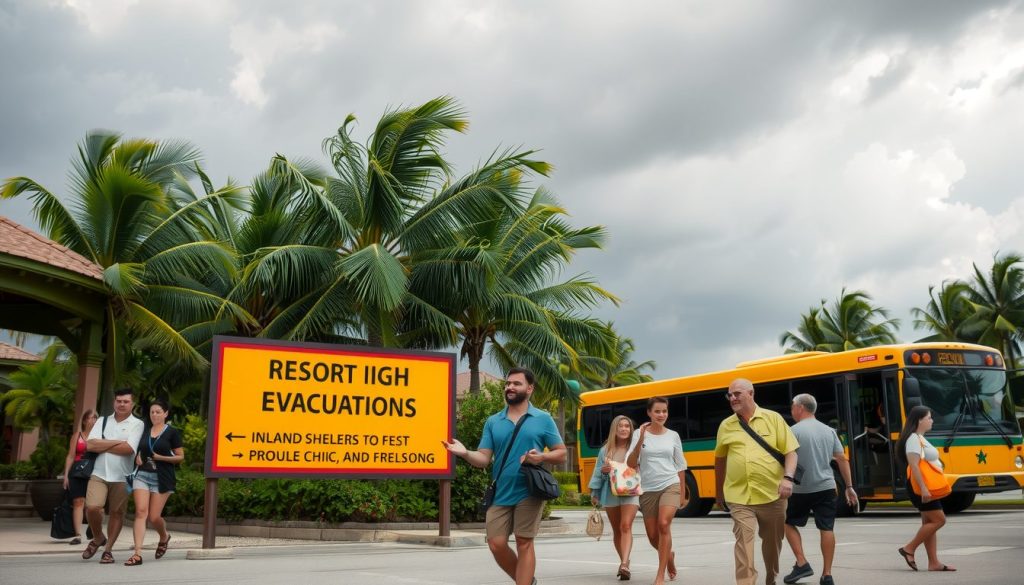
A hurricane warning can trigger cascading disruptions: airlines cancel flights, airports close, and excursions are suspended.

Paradise Is Calling Your Name
Explore Sandals & Beaches deals
Without insurance, you may still lose hundreds or thousands of dollars even if the resort itself is flexible.
Travel insurance is the only tool that closes those gaps.
It transforms a hurricane warning from a financial disaster into a manageable inconvenience.
The right policy reimburses prepaid, non‑refundable costs, covers rebooking expenses, and protects you if you’re stranded or need medical care.
Here’s how the providers you’ve locked protect you in this exact scenario:
VisitorsCoverage — Protection When Nature Forces a Change
VisitorsCoverage offers trip cancellation and interruption coverage.
If a hurricane warning is issued and you decide not to travel, or if your resort closes, VisitorsCoverage reimburses prepaid, non‑refundable costs.
This is the primary shield for “Can I cancel?” scenarios.
Ekta — Medical Security When the Unexpected Happens
Ekta focuses on international medical coverage and evacuation.
If you travel and a storm escalates into a medical emergency (injury, illness, or evacuation), Ekta ensures you’re covered.
While not cancellation‑focused, it protects the health side of hurricane disruptions.
Insubuy — Stability When Flights and Plans Collapse
Insubuy provides strong trip delay and rebooking benefits.
If your flight is canceled due to a hurricane warning, Insubuy reimburses meals, hotels, and alternative transport.
It bridges the gap between resort flexibility and airline rigidity.
Escape the Chaos. Upgrade to Paradise.
See today’s exclusive offers

Compensair — Extra Relief When Airlines Fail You
Compensair pursues airline compensation for cancellations or delays.
If your flight is canceled because of a hurricane warning, Compensair ensures you don’t leave money on the table.
It’s the after‑the‑fact recovery tool that complements insurance.

Learn What Past Hurricanes Taught Travelers and Resorts
- Hurricane Irma (2017): Many resorts waived cancellation fees, but travelers without insurance lost money on flights.
- Hurricane Maria (2017): Puerto Rico resorts closed for weeks; insured travelers recovered prepaid costs, uninsured travelers did not.
- Hurricane Beryl (2024): Resorts in Jamaica reopened quickly, but flight cancellations stranded travelers — those with Insubuy and Compensair coverage recovered costs.
Plan Smarter: Travel Confidently With Hurricane Awareness
- Check resort hurricane policies before booking.
- Book flexible flights that allow no‑fee changes.
- Buy travel insurance at booking — once a storm is named, new policies may exclude it.
- Enroll in STEP for real‑time government alerts.
- Pack a resilience kit with essentials in case you must shelter in place.
FAQ – What Determines Whether You Can Cancel a Resort Stay Without Losing Money?
What Should You Do First When a Hurricane Warning Affects Your Resort Destination?
Start by reviewing your reservation terms before canceling anything.
Then contact the resort or booking company and ask which hurricane provisions are currently active and what options are available.
Request written confirmation of any refund, credit, waived penalty, or rebooking arrangement you accept.
Keeping those details in writing can prevent confusion if policies or availability change as the storm approaches.Does a Hurricane Warning Automatically Let You Cancel a Resort Stay for Free?
No.
Each resort or booking provider determines which circumstances trigger its cancellation, refund, credit, or rebooking provisions.
Some policies may require a resort closure, evacuation order, transportation shutdown, or another specifically defined event.
Read the actual terms rather than assuming an official warning automatically eliminates every cancellation penalty.Is Booking Directly with a Resort Better During a Hurricane?
Booking directly can simplify communication because you may be able to work with the resort without involving another company.
That does not guarantee a more generous refund or hurricane policy.
Third-party reservations can have their own cancellation terms and may require changes to be processed through the booking platform.
Compare the actual rate conditions and weather policies before deciding which booking method gives you the flexibility you want.What Happens If You Book Through Expedia, Priceline, or Another Travel Site?
You will generally need to follow the cancellation and change procedures attached to that reservation.
The resort may not be able to modify a booking that was created and paid for through another company.
Weather waivers or special accommodations can still be available, but the booking platform may need to process them.
Keep both the resort policy and the third-party reservation terms accessible so you know whom to contact first.Can a Force Majeure Clause Let You Cancel Without a Penalty?
It can affect your options, but force majeure language does not automatically guarantee a penalty-free cancellation.
The contract determines which events qualify and what rights each party receives when those events occur.
A hurricane, airport closure, government restriction, or evacuation order may fall within the provision depending on how the agreement is written.
Review the actual clause and ask the resort how it applies to your reservation before relying on it.Can Travel Insurance Reimburse a Hurricane-Related Resort Cancellation?
It can when the loss results from a covered reason and all other policy requirements are satisfied.
Trip-cancellation benefits may apply differently depending on whether the resort becomes uninhabitable, transportation is disrupted, an evacuation is ordered, or another covered event occurs.
Canceling simply because you are uncomfortable with the forecast may not qualify under standard coverage.
Check the policy before making an irreversible cancellation decision.When Should You Buy Travel Insurance for Hurricane Protection?
Buying coverage soon after making your initial trip payment can preserve options that may not remain available later.
Once a storm becomes a known event under an insurer’s rules, a newly purchased policy may exclude losses connected with that system.
The exact point when an event becomes known or foreseeable can vary by insurer and policy.
Review purchase deadlines and effective dates rather than assuming hurricane coverage begins whenever you decide you need it.How Can VisitorsCoverage Help Protect a Prepaid Caribbean Trip?
VisitorsCoverage allows travelers to compare travel insurance plans that can include trip cancellation, interruption, delay, medical, evacuation, and other benefits.
Whether a hurricane-related expense qualifies depends on the individual policy rather than the comparison service itself.
Pay particular attention to covered cancellation reasons, exclusions, benefit limits, and rules involving severe weather.
Choose protection based on the prepaid costs and disruptions that would create the greatest financial problem for your trip.Where Does EKTA Fit into Hurricane-Season Travel Protection?
EKTA offers travel insurance products that can include medical and evacuation-related protection.
Those benefits can become important if illness, injury, or another covered medical emergency occurs while you are abroad.
Medical protection is different from trip-cancellation coverage, so one benefit should not be assumed to replace the other.
Review the selected policy to see how medical treatment, evacuation, delays, and other hurricane-related situations are handled.Can Insubuy Help When Hurricane Weather Disrupts Your Flight?
Insubuy can be used to compare travel insurance plans that may include travel-delay, trip-interruption, medical, or other benefits.
Qualifying delay benefits can sometimes reimburse necessary expenses such as lodging or meals after the required delay period is met.
Coverage varies by plan, and a hurricane-related delay does not automatically make every expense reimbursable.
Keep receipts and airline documentation if you expect to submit a claim.Can Compensair Recover Money After a Hurricane Cancels Your Flight?
Compensair can evaluate disrupted flights to determine whether passenger-compensation rules may apply.
Weather is generally considered outside an airline’s control, which can limit eligibility for certain forms of additional compensation.
That issue is separate from your right to a ticket refund when applicable rules require one.
Keep your original itinerary, boarding information, cancellation notice, and airline communications if you want the disruption reviewed.Does an Airline Have to Refund a Flight Canceled Because of a Hurricane?
For flights covered by U.S. refund rules, an airline cancellation can entitle you to a refund when you choose not to travel and decline the alternative transportation, travel credit, voucher, or other option offered.
The reason for the airline cancellation does not eliminate that basic refund right.
Additional reimbursement for hotels, meals, missed resort nights, or inconvenience is a separate matter.
Travel insurance or an airline’s own policies may address some of those expenses, but they should not be assumed.Should You Cancel as Soon as You See a Hurricane in the Forecast?
Not necessarily.
Forecast tracks can change, and canceling before your resort, airline, or insurance policy reaches a qualifying trigger could leave you responsible for charges that might otherwise have been avoided.
Waiting indefinitely is not ideal either because replacement flights and alternate resort dates can become harder to secure.
Compare the forecast timeline with your cancellation deadlines and contractual protections before choosing when to act.What If Your Resort Closes Because of the Hurricane?
Contact the resort or booking provider and ask what refund, credit, relocation, or rebooking provisions apply to the closure.
Then notify your insurer if you have coverage that may apply to unused prepaid expenses or trip interruption.
Keep written confirmation showing when the property closed and how your reservation was affected.
Receipts for additional transportation or accommodation can also become important if you later file a claim.What If You Are Already at the Resort When Conditions Become Dangerous?
Follow evacuation or shelter instructions from local authorities and resort personnel.
Your immediate safety should take priority over trying to resolve refunds or insurance claims while dangerous conditions are developing.
Once you are secure, contact your insurer about any qualifying interruption, medical, evacuation, transportation, or additional accommodation expenses.
Document what happened and keep receipts whenever it is safe and practical to do so.What Did Hurricanes Irma, Maria, and Beryl Teach Resort Travelers?
Major Caribbean hurricanes have shown that one storm can affect resorts, airlines, airports, excursions, and ground transportation differently.
A property may reopen quickly while flights remain disrupted, or transportation may resume while a resort remains unavailable.
That makes relying on a single layer of protection risky.
Flexible bookings, appropriate insurance, documented policies, and a backup travel plan work better together than assuming the resort alone will solve every disruption.What Records Should You Save When Canceling Because of a Hurricane?
Keep your original reservation confirmation, rate terms, cancellation policy, insurance documents, payment records, and airline itinerary.
Save storm-related messages from the resort, booking company, airline, and insurer as conditions change.
Receipts for additional lodging, meals, transportation, or other necessary expenses can support qualifying claims.
Screenshots can also preserve time-sensitive notices that may disappear or change later.Can You Avoid Losing Money Without Buying the Most Expensive Travel Insurance?
Yes.
Financial protection starts with flexible resort terms, change-friendly transportation, realistic cancellation deadlines, and an understanding of which expenses are actually nonrefundable.
Insurance should then address the losses you cannot comfortably absorb yourself.
A less expensive policy that closely matches your trip can be more useful than a costlier plan whose benefits do not fit your primary risks.Are Caribbean Resorts Safe During a Hurricane Warning?
Safety varies by storm, island, location, resort construction, local infrastructure, and official emergency instructions.
Do not assume that staying at a resort automatically eliminates hurricane risk.
Follow guidance from local authorities and resort emergency personnel, particularly when an evacuation or shelter order is issued.
If you remain at the property, keep essential medications, identification, charging capability, insurance information, and other necessities accessible.What Is the Best Way to Protect a Resort Vacation Before Hurricane Season Causes Problems?
Build flexibility into the trip before you pay for it.
Check the resort’s hurricane policy, compare refundable and nonrefundable rates, understand who controls the reservation, and review your airline’s change options.
Add travel protection when the potential prepaid loss or medical exposure makes coverage worthwhile for you.
Preparation gives you more ways to reschedule, recover qualifying expenses, or change direction when severe weather threatens the vacation.