

Don’t Let One Problem Ruin Your Vacation
A few seconds now protects the trip you’ve already invested so much into.
Short Excerpt
- Bali’s dining scene is far deeper than resort breakfasts and sunset cocktails.
- Luxury travelers can move between Indonesian classics, Balinese specialties, chef-led tasting menus, beach clubs, plant-forward cafés, private villa meals, and specialty coffee shops, but the best food experiences come from understanding which regions do each style best.
Quick Take
- Bali is one of the easiest places in Southeast Asia to build a food-focused luxury trip because the island combines local Indonesian flavor, Balinese culinary identity, international chefs, stylish beach clubs, wellness cafés, and serious coffee culture.
- The mistake is treating dining as an afterthought.
- Seminyak is strong for polished restaurants and beach-club evenings, Canggu is café-heavy and social, Ubud is ideal for wellness dining and deeper local context, Jimbaran is best known for seafood sunsets, Nusa Dua leans resort-driven, and Uluwatu turns dining into a cliffside or beach-day experience.
- Indonesia’s official tourism site highlights Bali foods such as babi guling, nasi campur Bali, sate lilit, ayam betutu, lawar, and sambal matah, while current Bali restaurant coverage continues to describe the island’s dining scene as one of the reasons to visit beyond the beaches. (Visit Indonesia)
Bali’s Food Scene Is Bigger Than The Resort Menu
Bali can surprise luxury travelers because the island’s food scene does not behave like a simple beach-resort destination.
A first-time visitor may arrive expecting poolside breakfasts, grilled seafood, and a few sunset restaurants, but the better version of Bali opens slowly through local dishes, villa breakfasts, Indonesian flavors, wellness cafés, serious coffee, tasting menus, beach clubs, and small warungs that say more about the island than any hotel buffet could.
That range is why dining deserves its own place in the Bali planning process.
The food scene is not just something that happens between spa appointments and beach days.
It shapes how each region feels.
Seminyak often feels stylish because dinner, cocktails, boutiques, and beach clubs sit close together.
Canggu feels modern because cafés, smoothie bowls, surf crowds, gyms, and casual restaurants create a daily rhythm.
Ubud feels more rooted because wellness menus, Indonesian food, cooking classes, rice-field settings, and artisan culture sit beside one another.
Jimbaran becomes memorable when the day ends with seafood near the beach.
Uluwatu turns food into a view-driven experience, where sunset, cliffs, and destination restaurants often matter as much as the plate.
Nusa Dua keeps dining easier and more resort-centered, which can be exactly right for travelers who want comfort, service, and fewer decisions.
That is the first thing to understand.
Bali dining is not one scene.
It is several overlapping scenes, and the best meals usually make more sense when they match the region, mood, and pace of the trip.
Visual Aid: Bali Cuisine Overview Chart
| Dining Category | What To Expect | Best Regions | Luxury Traveler Tip |
|---|---|---|---|
| Balinese And Indonesian Classics | Nasi campur, satay, sambal, ayam betutu, babi guling, grilled fish, lawar, gado-gado, mie goreng | Ubud, Jimbaran, Seminyak, local warungs near most regions | Try local food early in the trip so Bali does not become only international restaurants |
| Fine Dining And Tasting Menus | Chef-led menus, wine pairings, local ingredients, destination restaurants, refined service | Seminyak, Ubud, Canggu, Nusa Dua, Uluwatu | Book early for special dinners and check tasting menu format before reserving |
| Beach Clubs | Daybeds, pools, lunch, sunset drinks, DJ energy, minimum spends, design-heavy settings | Seminyak, Canggu, Uluwatu, Nusa Dua | Treat beach clubs as half-day plans, not quick meal stops |
| Wellness And Plant-Forward Dining | Vegan cafés, smoothie bowls, raw desserts, vegetarian menus, gluten-aware options, retreat food | Ubud, Canggu, Seminyak | Dietary needs are easiest in tourist dining zones, but confirm details directly |
| Seafood And Sunset Dining | Grilled fish, prawns, lobster, beach tables, relaxed evening atmosphere | Jimbaran, Uluwatu, Nusa Dua, Sanur | Go for the setting and timing as much as the food itself |
| Coffee And Café Culture | Specialty coffee, brunch, roasters, coworking cafés, local beans, design-led spaces | Canggu, Ubud, Seminyak, Sanur, Uluwatu | Coffee can be part of the itinerary, especially in Canggu and Ubud |
| Private Villa Dining | Floating breakfasts, chef dinners, in-villa barbecue, special occasion meals | Ubud, Seminyak, Canggu, Uluwatu, Nusa Dua | Use villa meals when privacy and pacing matter more than restaurant hopping |
Indonesian Cuisine Basics Luxury Travelers Should Know
The best way to start eating in Bali is to understand that Balinese food and Indonesian food overlap, but they are not the same thing.
Indonesia is a huge country with many regional cuisines, and Bali brings its own Hindu, ceremonial, spice-driven, and island-specific food traditions into that larger national table.
That means a traveler can eat nasi goreng or mie goreng almost anywhere, but the more memorable Bali meals often come from dishes that feel more local to the island.
Nasi campur Bali is one of the easiest entry points because it gives the traveler a little bit of everything.
A plate may include rice, sambal, vegetables, shredded meat, sate lilit, ayam betutu, lawar, fried shallots, and other small portions depending on where it is served.
Indonesia’s tourism site describes nasi campur Bali as rice with assorted side dishes and sambal, often including items such as sate lilit, ayam betutu, lawar, and sambal matah. (Visit Indonesia)
That kind of plate is useful because it teaches the palate.
Instead of choosing one unfamiliar dish, the traveler gets texture, spice, sweetness, smoke, crunch, and heat in one meal.
Babi guling is another famous Bali dish, and it often carries cultural weight because pork is far more visible in Bali than in many Muslim-majority parts of Indonesia.
Indonesia’s tourism guide describes babi guling as whole pig stuffed with traditional spices and spit-roasted, which explains why it is treated as one of Bali’s signature foods rather than just another roast meat dish. (Visit Indonesia)
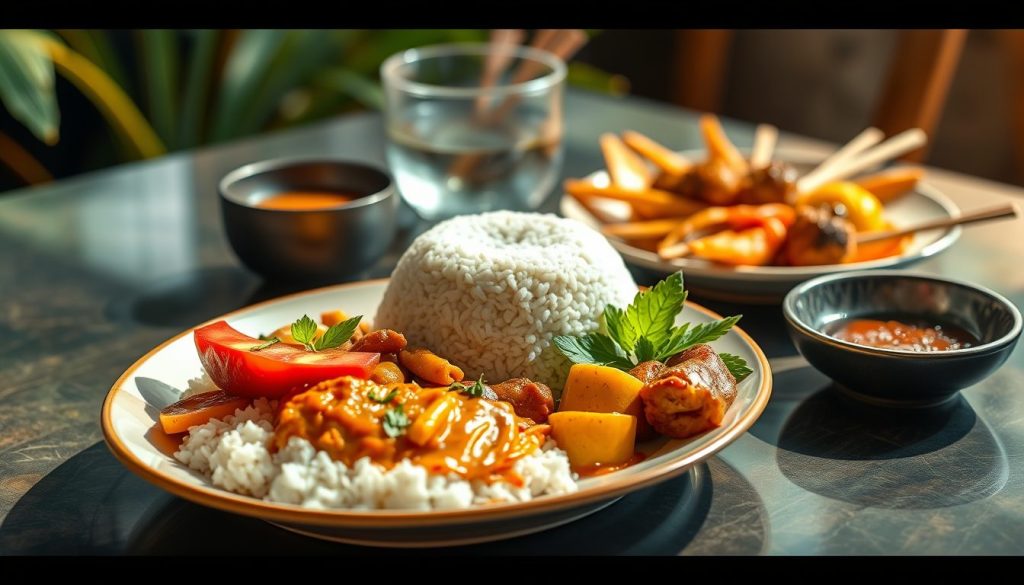
Sate lilit is also worth knowing because it feels distinctly Balinese in both flavor and presentation.
Instead of simple skewered chunks of meat, it is usually minced fish, chicken, pork, or other protein mixed with spices and wrapped around a stick or lemongrass.
Ayam betutu brings the deeper spice profile many travelers expect from a traditional Balinese meal.
Lawar can be more challenging for cautious eaters, but it is important to the local food story because it connects vegetables, coconut, spices, and sometimes meat into a ceremonial-style mixture.
Sambal matah, with its raw shallot, chili, lemongrass, and citrus brightness, often becomes the condiment luxury travelers remember because it makes grilled fish, rice, and simple dishes feel more alive.
The key is not to treat Indonesian cuisine as a single “local food night.”
A better Bali trip lets local flavor appear throughout the itinerary.
Try a polished Indonesian restaurant one night, a respected warung for lunch another day, seafood in Jimbaran near sunset, and a villa breakfast with tropical fruit the next morning.
That rhythm makes the trip feel like Bali instead of a resort that could be anywhere.
Fine Dining In Bali Has Become A Serious Reason To Travel
Bali’s fine dining scene has matured into one of the island’s strongest luxury draws.
That does not mean every expensive restaurant is worth the time, but it does mean travelers can plan special meals with real confidence when they choose carefully.
Current restaurant coverage describes Bali’s dining landscape as especially strong in places like Ubud, Seminyak, Canggu, and beach-club areas, with many meals now becoming part of the reason travelers choose the island. (The Urban List)
The strongest fine dining experiences in Bali usually do more than copy a Western luxury template.
They use Indonesian ingredients, island produce, spice traditions, tropical fruit, seafood, fermentation, smoke, rice culture, or ceremonial references in ways that still feel polished.
That is what separates a destination meal from an expensive dinner.
A tasting menu in Ubud should not feel exactly like a tasting menu in Singapore, London, or New York.
It should remind the traveler where they are.
Seminyak works well for luxury travelers who want refined restaurants close to nightlife, cocktail bars, boutiques, and upscale villas.
Ubud is better when the meal should feel slower, more atmospheric, or more tied to craft, wellness, and local landscapes.
Canggu brings newer energy and a more casual international style, which can be exciting when the traveler wants modern restaurants without a formal resort feel.

Paradise Is Calling Your Name
Explore Sandals & Beaches deals
Nusa Dua is strongest when the priority is resort service, oceanfront polish, and easy guest logistics.
Uluwatu makes the setting part of the experience, especially when dinner follows sunset or a cliffside afternoon.
Reservations matter more than first-timers expect.
The most talked-about restaurants, tasting menus, and resort dining rooms can book out ahead of peak travel periods, especially around July, August, Christmas, New Year, Easter, and major holiday weeks.
A luxury traveler should plan special dinners the same way they plan villas and spa treatments.
Choose the region first, then choose the restaurant that fits the night.
That prevents the common mistake of booking a beautiful dinner across the island and losing the mood to traffic before the first course arrives.
Beach Clubs Are Dining, Social Scene, And Sunset Plan In One
Bali beach clubs are not just places to grab lunch by the water.
For many travelers, they become a full half-day experience involving daybeds, pools, cocktails, DJs, ocean views, restaurant service, sunset timing, and a specific kind of social energy.
That is why they need to be planned differently from normal restaurants.
Seminyak and Canggu are the easiest places to understand the beach-club scene because the experience blends naturally with shopping, cafés, nightlife, villas, and dinner plans.
Current Bali dining coverage describes the island’s restaurant experience as spanning jungle-framed fine dining, sunset-facing tables, and barefoot beach clubs, which is exactly why beach clubs belong inside a dining guide rather than only an activities guide. (The Urban List)
Canggu often feels younger and more casual, with surf culture, gyms, cafés, nightlife, and beach clubs feeding into the same social rhythm.
Uluwatu is different because beach clubs and cliff clubs tend to feel more dramatic.
The view is often the point.
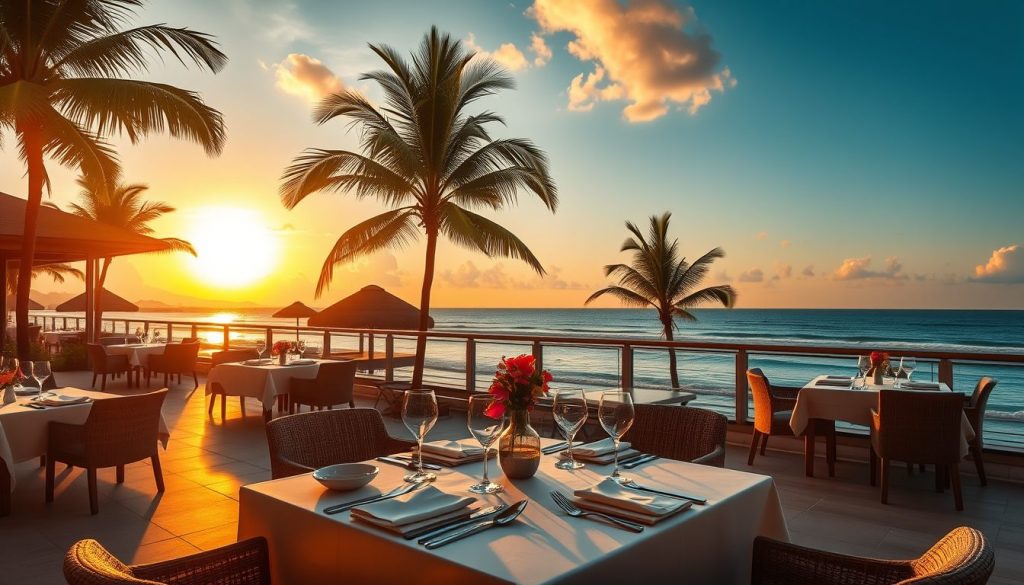
A traveler may go for lunch and end up staying through sunset because the coastline, music, pool, and dining are designed to hold the afternoon together.
Nusa Dua can also offer beach-club or resort beach dining, but the tone is usually more polished and controlled than Canggu.
Beach clubs can be wonderful, but they are not always spontaneous.
Some require reservations, minimum spends, daybed bookings, arrival windows, or dress expectations.
Popular venues can feel crowded at sunset, and the ride back can take longer than expected, especially from Canggu or Uluwatu.
The luxury move is to choose fewer beach clubs and give them enough space.
Do not schedule one as a quick stop between a temple and dinner.
Treat it as the plan.
That way the food, view, service, and atmosphere have time to become the experience instead of another item checked off a list.
Dietary Accommodations Are Usually Easier Than Travelers Expect
Bali is one of the more forgiving destinations for travelers with dietary preferences, especially in Ubud, Canggu, Seminyak, and higher-end resorts.
Vegetarian, vegan, gluten-aware, dairy-free, wellness-focused, and plant-forward dining are common in many tourist areas, although the ease depends heavily on the region and the seriousness of the restriction.
Ubud has the strongest wellness identity, which makes it a natural base for travelers who care about yoga food, raw desserts, plant-based meals, retreat menus, and lighter dining.
Canggu is strong for smoothie bowls, vegan cafés, brunch, specialty coffee, fitness-oriented menus, and flexible international restaurants.
Seminyak offers polished restaurants and hotel dining that often handle dietary requests professionally.
Escape the Chaos. Upgrade to Paradise.
See today’s exclusive offers

Nusa Dua can be easier inside luxury resorts because hotel kitchens are used to international guests, although the surrounding independent dining scene is less dense than Seminyak or Canggu.
Recent plant-based Bali guidance identifies Ubud as a major vegan destination and also points to Canggu and Seminyak as strong areas for plant-based dining.
That does not mean every dietary request is automatically safe.
A traveler with celiac disease, serious allergies, shellfish concerns, or strict religious dietary needs should communicate clearly before arrival, use written translation cards when needed, and confirm ingredients directly with the restaurant or resort.
Sauces, sambal, soy sauce, fish sauce, shrimp paste, shared fryers, and marinades can create hidden issues even when the main dish looks safe.
Luxury travelers have an advantage because better hotels and restaurants are more likely to take requests seriously, but they still need to ask precise questions.
The same applies to halal dining.
Bali has many Muslim visitors and plenty of halal-friendly options, but the island itself is predominantly Hindu, and pork is a visible part of Balinese cuisine.
Travelers who need strictly halal kitchens should verify restaurant status rather than assuming a dish without pork is enough.
The most practical strategy is to combine flexibility with clarity.
Enjoy Bali’s food scene, but do not leave important restrictions to chance.
Ask the villa, resort, or concierge for recommendations, review menus before booking, and use dining platforms or services such as Eatwith only when the host or operator can clearly explain how dietary needs are handled.
Coffee Culture Is Part Of The Bali Lifestyle
Coffee in Bali is no longer just a breakfast detail.
For many travelers, it becomes part of the daily rhythm of the island.
A morning in Canggu may begin with a specialty coffee and a laptop crowd.
An Ubud day might start with Indonesian beans, slow breakfast, and a café tucked near greenery.
A Seminyak stay can include polished brunch spots and serious espresso before shopping or beach-club time.
Even Uluwatu has built a café culture that fits surf mornings and clifftop afternoons.
Current coffee coverage describes Bali’s café scene as broad and compelling, with island-grown roasters, specialty counters, and strong café neighborhoods across Canggu, Seminyak, Ubud, and Uluwatu. (Condé Nast Traveller Middle East)
That matters because coffee gives luxury travelers a softer way to understand a region.
Canggu’s cafés reveal its modern, social, fitness-driven personality.
Ubud’s cafés often connect to wellness, design, books, local roasters, and slower mornings.
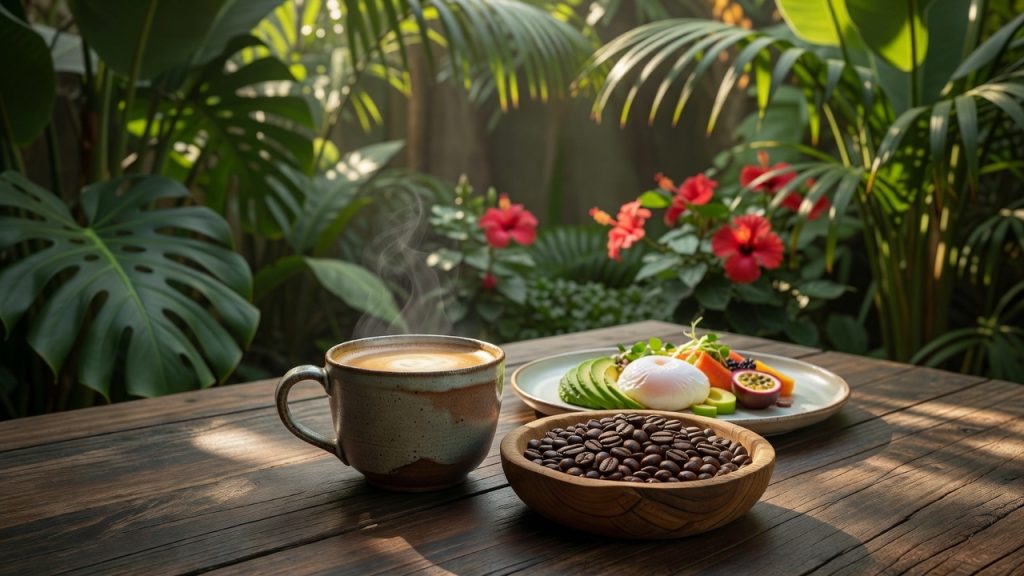
Seminyak cafés support a more polished brunch-and-shopping rhythm.
Sanur and Uluwatu offer a quieter or surf-oriented version depending on the neighborhood.
Coffee can also help with practical pacing.
A good café can become a transition point between spa appointments, private driver pickups, shopping, or beach-club reservations.
It gives the day an anchor.
For travelers working remotely or managing reservations, coffee shops also become planning spaces where mobile data, maps, messages, and dining choices come together.
That is why connectivity still matters even inside a food article.
Find the Escape You’ve Been Craving.
Reveal limited‑time Caribbean deals
Saily, Airalo, Yesim, and Drimsim can help travelers compare mobile data options before arrival, especially if they plan to rely on maps, reservations, ride apps, food research, and driver communication throughout the trip.
The coffee scene is not only about caffeine.
It is one of the clearest signs that Bali’s modern lifestyle culture has become part of the destination.
Where Dining Feels Best By Region
Bali dining gets easier when travelers stop asking where the “best restaurant” is and start asking which region fits the kind of night they want.
Seminyak is the most straightforward choice for polished dining, beach clubs, cocktails, boutiques, and villa-based evenings.
A traveler can spend the day at the pool, dress for dinner, eat well, and still feel close to the social center of the island.
That makes Seminyak a strong fit for couples, friend trips, and first-time visitors who want dining variety without making every meal a logistical project.
Canggu works when the traveler wants cafés, casual restaurants, health-forward menus, beach bars, social energy, and late-night options.
It can be exciting, but it can also feel busy and traffic-heavy.
The food scene is strong, but the experience is better when the traveler accepts Canggu’s pace instead of expecting resort-level ease.
Ubud is the better choice for travelers who want dining to feel connected to culture, wellness, landscape, and retreat energy.
A meal here may be less about being seen and more about setting, ingredients, balance, and the slower rhythm of the day.
Jimbaran is the classic seafood-and-sunset choice.
It does not need to compete with Seminyak’s restaurant density or Canggu’s café culture because its strength is simpler.
Go when the evening should feel coastal, easy, and connected to the bay.
Nusa Dua makes sense when dining comfort matters.
Resort restaurants, breakfast spreads, oceanfront service, and polished hotel kitchens can be ideal for families, honeymooners, older travelers, or guests who do not want to research every meal.
Uluwatu is for scenic dining.
The food can be excellent, but the full experience often depends on cliffs, sunset, resort design, and the feeling of arriving somewhere intentionally.
Each region has a role.
The best food itinerary usually uses that difference instead of fighting it.
Private Dining And Villa Meals Deserve A Place In The Plan
Luxury travelers sometimes forget that not every memorable meal needs to happen in a restaurant.
Bali’s villa culture makes private dining feel natural.
A floating breakfast can be touristy when treated as a photo prop, but a well-timed villa breakfast after a long flight can also feel deeply restorative.
A private chef dinner can be the right choice after a full day of touring.
An in-villa barbecue can be better than another long ride across the island.

Turn Your Next Getaway into Magic.
Discover your perfect resort match
A quiet lunch by the pool may feel more luxurious than sitting in traffic for a restaurant that looked better online than it feels in person.
This is especially true in Ubud, Uluwatu, and villa-heavy parts of Seminyak and Canggu.
When the property itself is part of the trip, eating there should not feel like settling.
It can protect the mood.
Private dining also works well for travelers with dietary needs, families with children, honeymooners who want privacy, or groups celebrating something specific.
The key is to ask about the food program before booking the villa.
Some properties have excellent in-house dining.
Others rely on outside catering or basic breakfasts.
A villa can be beautiful and still disappoint if the food plan is weak.
That is why dining should be part of accommodation research, not something handled after check-in.
Booking.com, Agoda, Trip.com, Tripadvisor, SuperTravel, and Hilton Honors through Points.com can help compare properties, but luxury travelers should read recent reviews carefully for breakfast quality, restaurant convenience, nearby dining, and staff support.
The villa photo matters.
The meals around that villa matter too.
How To Build A Food-Focused Bali Itinerary
A smart Bali dining plan starts by protecting the best meal moments instead of overbooking every night.
Choose one special fine dining or tasting-menu experience.
Add one beach club afternoon that can stretch into sunset.
Make room for one Indonesian or Balinese meal that feels rooted in place.
Plan one seafood or coastal dinner if the region supports it.
Keep a café morning or two open, especially in Canggu, Seminyak, or Ubud.
Leave at least one villa meal on the schedule so the trip does not become a series of transfers.
That structure gives the traveler range without turning the week into a reservation marathon.
It also keeps the food connected to the rest of the itinerary.
A Ubud day can flow from coffee to rice terraces, a local lunch, spa time, and a slower dinner.
A Seminyak day can move from brunch to boutiques, beach club, and cocktails.
A Jimbaran or Uluwatu evening can build toward sunset rather than forcing dinner to compete with traffic.
For curated food experiences, Eatwith can be useful when travelers want a hosted meal, cooking experience, or more personal connection to local dining.
Viator, GetYourGuide, Klook, WeGoTrip, Tiqets, and Tripadvisor – Experiences can also help compare cooking classes, food tours, market visits, and dining-adjacent experiences, but the best choice is the one with the right pickup point, group size, timing, and cancellation policy.
Bali’s food scene is too good to handle casually.
Plan it with taste, but leave enough room for surprise.
Practical Takeaways
Start with Indonesian and Balinese basics so the trip does not become only brunch cafés and resort dinners.
Book fine dining and tasting menus early during peak travel windows, especially in Seminyak, Ubud, Canggu, Nusa Dua, and Uluwatu.
Treat beach clubs as full afternoon or sunset plans rather than quick lunch stops.
Choose Ubud, Canggu, and Seminyak first if plant-forward dining, vegan options, gluten-aware menus, and wellness cafés matter.
Use resort and villa staff for dietary communication when allergies or strict restrictions need more care.
Make coffee part of the itinerary if you are staying in Canggu, Ubud, Seminyak, Sanur, or Uluwatu.
Check villa dining quality before booking, because private meals can shape the whole stay.
Match dinner reservations to geography so a great meal does not become a stressful cross-island transfer.
Bali Dining Is Best When It Feels Connected To The Trip
Bali’s food scene is world-class because it does not live in one lane.
It can be local, ceremonial, spicy, tropical, plant-forward, polished, beachfront, cliffside, casual, or deeply private depending on where the traveler chooses to sit down.
That variety is the luxury.
A great Bali dining plan might include nasi campur in Ubud, a tasting menu in Seminyak, coffee in Canggu, seafood in Jimbaran, a beach-club afternoon in Uluwatu, and a quiet villa breakfast when the body finally catches up with the trip.
None of those meals needs to compete with the others.
Together, they explain the island better than any single restaurant list could.
The best approach is not to chase every famous table.
It is to let each meal support the version of Bali you came to experience.
FAQ – Bali Dining Made Easy
Which Bali regions are best for fine dining and tasting menus?
Seminyak and Ubud are the primary regions for refined tasting menus and destination restaurants.
Choose Seminyak for polished nights near beach clubs and boutiques.
Choose Ubud for slower, craft-driven meals tied to wellness and landscape.Where can I find authentic Balinese and Indonesian classics?
Ubud and Jimbaran are the best places to sample nasi campur, babi guling, and sate lilit.
Visit respected warungs and local markets early to learn the island’s core flavors.
Let local dishes guide your palate before booking international-style restaurants.How should I plan beach club visits so they feel worthwhile?
Treat beach clubs as half-day experiences that include daybeds, pools, and sunset timing.
Book daybeds or reservations and factor in minimum spends to secure the best seating.
Schedule travel time so the return trip does not erode the sunset or dinner plans.How do I handle dietary restrictions while dining in Bali?
Communicate dietary needs clearly to restaurants or villa staff and confirm ingredients in writing.
Use translation cards when necessary and ask chefs to adjust sauces or shared fryers.
Rely on Ubud, Canggu, and Seminyak for the widest plant-forward and allergy-aware options.When should I book fine dining reservations to avoid disappointment?
Reserve special dinners well before peak travel windows such as July, August, and major holidays.
Align reservations with your accommodation geography to avoid long transfers.
Confirm tasting menu formats and cancellation policies when you book.What are the benefits of private villa dining for luxury travelers?
Private villa dining protects privacy, pacing, and convenience when transfers would break the mood.
Arrange a private chef or in‑villa service for special occasions to elevate the experience.
Verify the villa’s food program before booking to ensure quality and staffing.How does coffee culture shape daily planning in Bali?
Specialty coffee anchors mornings and creates natural transition points between activities.
Use cafés in Canggu and Ubud as planning hubs for maps, reservations, and relaxed pacing.
Include café stops to support remote work, timing, and local discovery.How should I structure a food-focused Bali itinerary for variety and ease?
Protect a few standout meals: one tasting menu, one beach-club afternoon, one local Balinese meal, and one villa meal.
Balance discovery with rest so transfers do not dominate your days.
Let region and mood determine where you book each key meal.What practical tips reduce dining logistics stress during a Bali trip?
Book key restaurants early and align reservations with where you are staying to minimize travel time.
Use villa or concierge support for timing and local recommendations to streamline choices.
Keep backup options like reputable cafés or nearby restaurants in case plans change.How should I prepare for tropical storms or travel disruptions that affect dining plans?
Monitor local weather alerts and adjust travel plans to prioritize safety and avoid flooded routes.
Reschedule transfers or request sheltered pickup points when authorities advise against travel.
Keep emergency contacts and travel insurance details ready to support recovery and rebooking.