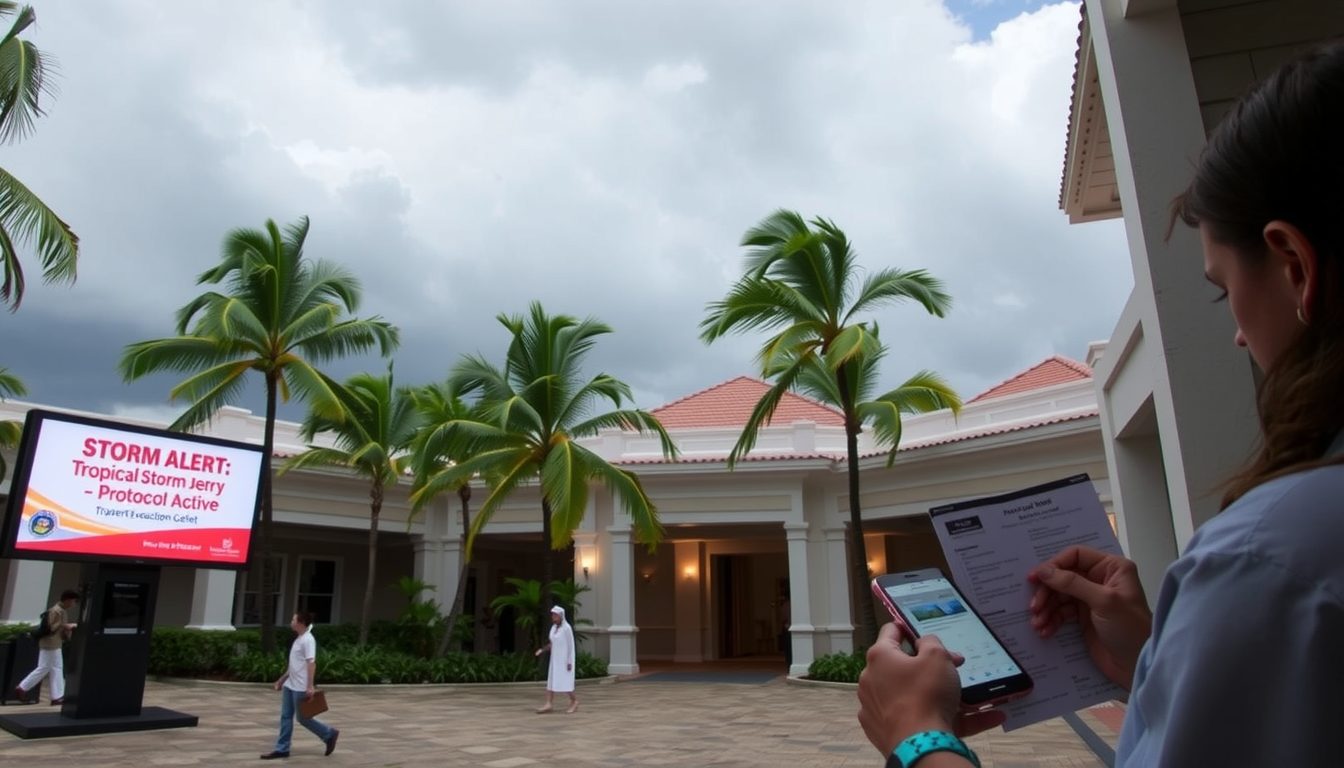


Don’t Let One Problem Ruin Your Vacation
A few seconds now protects the trip you’ve already invested so much into.
Short Excerpt
- Caribbean storm alerts are not just weather updates; they are operational signals that trigger specific resort safety procedures as conditions become more serious.
- Watches generally give resorts time to secure outdoor areas and prepare supplies, while warnings can lead to beach closures, suspended activities, indoor relocation, or shelter procedures.
- Understanding what each alert means helps travelers recognize when to keep monitoring, when to contact the resort or airline, and when the situation requires immediate action.
Quick Take
- A tropical storm watch or hurricane watch generally means conditions are possible within about 48 hours and resort preparations are beginning.
- Warnings indicate a more immediate threat, commonly within about 36 hours, and can trigger closed beaches, suspended water activities, guest relocation, and reduced resort operations.
- Follow official hurricane information, local government guidance, and resort instructions rather than making decisions from isolated social-media forecasts.
- Flight and cruise disruptions can begin before severe weather reaches your resort, so transportation deserves attention as soon as alerts escalate.
- Keep medications, chargers, snacks, essential documents, and a flashlight accessible in case resort operations become restricted.
- Travel protection may address eligible cancellation, interruption, delays, medical emergencies, or rebooking costs when storm alerts become actual travel disruptions.
When A Caribbean Storm Alert Changes From Something To Watch Into Something You Need To Act On
Storm alerts in the Caribbean aren’t just weather updates—they’re safety signals that activate resort protocols and travel decisions.
For guests, understanding what these alerts mean can turn uncertainty into confidence.
From securing outdoor areas to relocating guests indoors, resorts follow structured plans that prioritize safety over convenience.
Even when the skies shift, your vacation can remain protected.
See How Storm Alerts Trigger Safety Protocols at Caribbean Resorts
Storm alerts are issued by the National Hurricane Center (NHC) and local governments.
They are designed to give residents and visitors time to prepare.

Paradise Is Calling Your Name
Explore Sandals & Beaches deals
For resort guests, these alerts trigger tiered safety protocols:
- Tropical Storm Watch (48 hours): Resorts begin securing outdoor areas, stockpiling essentials, and briefing guests.
- Tropical Storm Warning (36 hours): Pools and beaches close, watersports stop, and guests may be moved indoors.
- Hurricane Watch (48 hours): Resorts prepare generators, medical kits, and communication systems.
- Hurricane Warning (36 hours): Guests are relocated to reinforced safe zones; nonessential operations pause.
These alerts are not meant to alarm but to protect.
Resorts are trained to act quickly and decisively, ensuring guest safety is always the top priority.
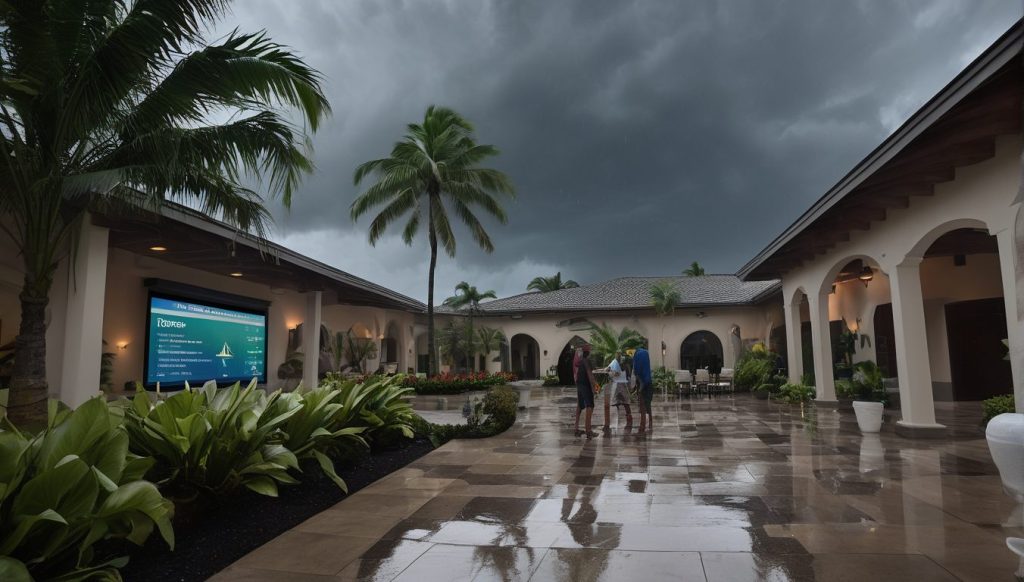
How Resorts Respond to Storm Alerts
Caribbean resorts follow structured emergency plans tied directly to storm alerts.
Guests can expect:
- Pre‑storm: Furniture secured, supplies stocked, staff briefings.
- During storm: Guests sheltered in reinforced areas with food, water, and medical support.
- Post‑storm: Engineers inspect structures, utilities, and beaches before reopening.
This process ensures that even during severe weather, guests remain safe and supported.
Escape the Chaos. Upgrade to Paradise.
See today’s exclusive offers

Feel Confident Knowing Caribbean Resorts Are Built for Storm Safety
Storm alerts often sound dramatic, but they are precautionary signals.
Most resorts are built with reinforced structures, backup generators, and dedicated safety teams.
While alerts may disrupt excursions or flights, they rarely mean guests are in immediate danger.
Instead, they reflect a culture of preparedness that prioritizes safety over convenience.
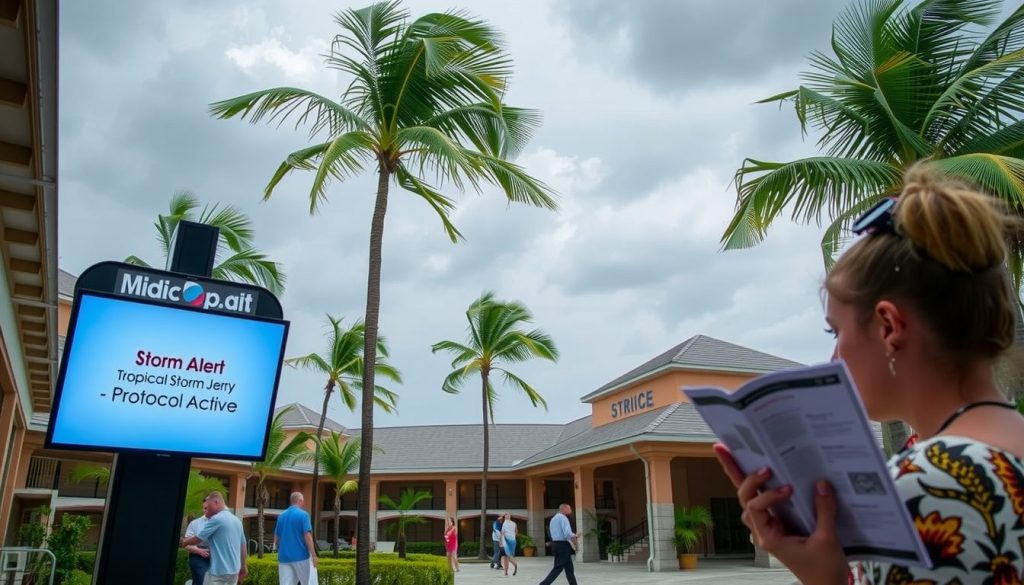
Protect Your Trip with Insurance That Covers Storm Disruptions
Storm alerts can disrupt flights, excursions, and even resort stays.
Travel insurance ensures you’re financially and medically protected when alerts escalate.
VisitorsCoverage — Protection When Nature Forces a Change
VisitorsCoverage specializes in trip cancellation and interruption coverage.
If a storm alert forces your resort to close or your airline cancels flights, VisitorsCoverage policies reimburse prepaid, non‑refundable costs and cover rebooking expenses.
Ekta — Medical Security When the Unexpected Happens
Ekta provides robust international medical coverage, including hospitalization and evacuation.
If storm alerts coincide with medical emergencies, Ekta ensures you have access to care even when local systems are strained.
Insubuy — Stability When Flights and Plans Collapse
Insubuy offers strong trip delay and rebooking benefits.
If storm alerts ground flights, Insubuy reimburses meals, hotels, and alternative transportation until service resumes.
Compensair — Extra Relief When Airlines Fail You
Compensair pursues airline payouts for cancellations, long delays, or denied boarding.
When storm alerts cause mass disruptions, Compensair ensures you don’t leave money on the table.
Learn What Past Hurricanes Taught Caribbean Resorts About Recovery
- Hurricane Irma (2017): Resorts in the Virgin Islands closed for months, highlighting the importance of long‑term recovery planning.
- Hurricane Maria (2017): Puerto Rico resorts coordinated mass evacuations, showing how alerts translate into decisive action.
- Hurricane Beryl (2024): Resorts in Jamaica and Barbados reopened within days, demonstrating how improved infrastructure shortens closures.
Plan Smarter: Travel Confidently with Storm Alert Awareness
- Check alerts early: Use the NHC 7‑Day Outlook before booking.
- Enroll in STEP: The Smart Traveler Enrollment Program provides real‑time alerts.
- Book flexible flights: Choose fares that allow no‑fee changes.
- Confirm resort policies: Ask about cancellation or rebooking if alerts escalate.
- Pack a resilience kit: Medications, chargers, snacks, and flashlights reduce stress if you’re sheltered.
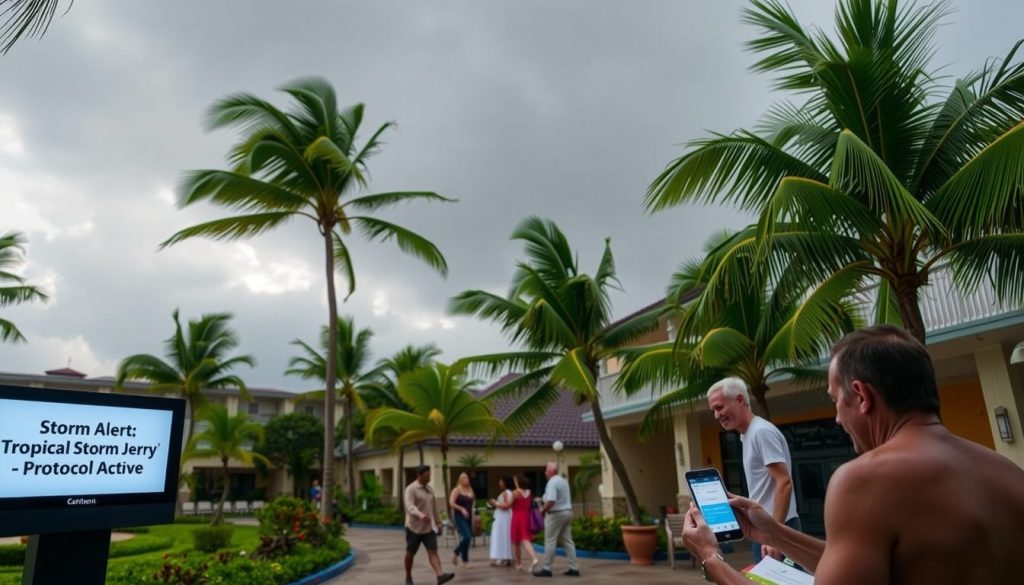
FAQ – When Does a Caribbean Storm Alert Start Changing What Happens at Your Resort?
What Does a Storm Alert Mean for Guests at a Caribbean Resort?
A storm alert means the resort may begin moving from normal operations into a defined level of hurricane preparation.
Early measures can include securing furniture, checking supplies, briefing employees, and updating guests about changing conditions.
More serious alerts can close beaches and pools or move guests into protected areas.
The practical meaning depends on whether the alert is a watch or warning and whether it involves tropical-storm or hurricane conditions.What Changes When a Tropical Storm Watch Is Issued?
A tropical storm watch generally means tropical-storm conditions are possible within about 48 hours.
Resorts may begin securing outdoor furniture, checking emergency supplies, reviewing staffing plans, and briefing guests.
Most normal activities can still be operating at this stage because the watch signals preparation rather than certainty.
For travelers, it is a good time to review flight plans, resort policies, medications, charging equipment, and other essentials.How Does a Tropical Storm Warning Affect Resort Activities?
A tropical storm warning signals that damaging conditions are expected soon, commonly within about 36 hours.
Pools and beaches may close, water sports can be suspended, and outdoor entertainment may stop.
Guests could also be asked to remain indoors or avoid certain parts of the property.
At this point, resort instructions should take priority over your original vacation schedule.What Does a Hurricane Watch Trigger at a Caribbean Resort?
A hurricane watch gives the resort a more serious preparation window before hurricane conditions potentially arrive.
Generators, medical supplies, food, water, communication systems, and designated shelter areas may receive additional checks.
Staff can also accelerate preparations around windows, landscaping, outdoor equipment, and vulnerable resort areas.
Travelers should use this stage to understand their options rather than waiting for a hurricane warning to begin asking questions.What Happens Once a Hurricane Warning Is Issued?
A hurricane warning can trigger some of the resort’s most restrictive safety procedures.
Guests may be relocated to reinforced interior areas, while nonessential operations, restaurants, entertainment, and outdoor facilities are reduced or suspended.
Food, water, medical support, generators, and communication systems become more important as normal resort services change.
Leaving protected areas without staff approval can create unnecessary risk once these procedures are underway.How Do Resorts Decide When It Is Safe to Resume Normal Operations?
The process continues after the worst weather has passed.
Engineering and maintenance teams inspect buildings, utilities, grounds, beaches, and other resort infrastructure for damage or hazards.
Individual areas may reopen gradually rather than the entire property returning to normal at once.
Guests should wait for official resort guidance because improving weather does not automatically mean every part of the property is safe to use.Can Storm Alerts Disrupt Your Flight Before They Disrupt the Resort?
Absolutely.
Airlines may cancel, reroute, or reposition flights as forecasts worsen, sometimes well before severe weather reaches your destination.
Connecting airports can also create problems when storms affect another part of the Caribbean or the southeastern United States.
That means transportation may become the first part of your vacation to change even while the resort itself remains fully operational.What Should You Do If a Storm Alert Is Issued While You Are Already at the Resort?
Follow the resort’s instructions and begin preparing for reduced movement or services.
Keep medications, identification, charging equipment, water, snacks, and other essentials where you can reach them quickly.
Stay away from beaches and other exposed areas when staff begin closing them, even if conditions still look manageable.
Conserving device battery and paying attention to scheduled resort updates can also become important if power or communications are disrupted.How Can You Tell Which Storm Alerts Deserve the Most Attention?
Pay attention to both the alert level and how directly it applies to your destination.
A watch means preparation should begin, while a warning means the threat has become more immediate and operational changes are increasingly likely.
Official hurricane forecasts, local government alerts, and resort communications should carry more weight than isolated model screenshots or dramatic online commentary.
Repeated forecast updates showing the threat becoming closer and more certain should increase your level of preparation.Where Does Travel Protection Fit Once Storm Alerts Begin Affecting Your Trip?
Travel protection becomes relevant when an alert turns into a covered disruption such as a qualifying cancellation, delay, interruption, closure, or medical emergency.
The article discusses VisitorsCoverage for cancellation and interruption protection, EKTA for medical and evacuation concerns, and Insubuy for delay and rebooking needs.
Compensair addresses eligible airline-compensation claims and serves a different purpose from travel insurance.
Coverage depends on the individual policy, so travelers should understand hurricane triggers and exclusions before a storm becomes a known event.