
Hurricane season travel can feel thrilling — and uncertain.
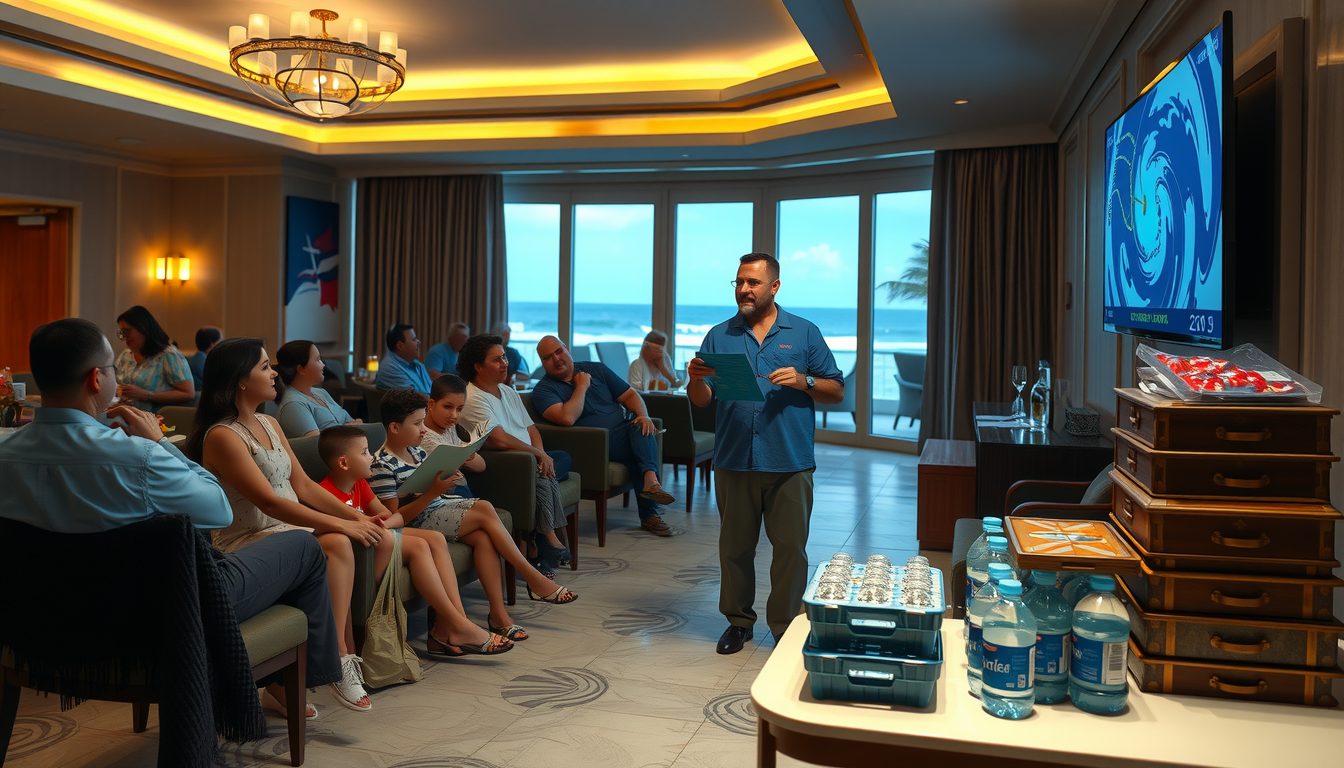
If a storm hits your resort, reinforced shelters, trained staff, and clear safety plans keep you protected.
Knowing what to expect and how to prepare turns anxiety into confidence, so your Caribbean vacation stays calm even when winds rise.
Shield Yourself When the Hurricane Strikes
Resorts in hurricane‑prone areas don’t improvise when danger looms — they follow carefully rehearsed emergency plans.
These protocols are designed to protect guests, maintain calm, and ensure that essential services continue even when winds roar outside.
Guests are guided into reinforced spaces, supplies are distributed, and staff remain visible to provide reassurance.
Guests are often relocated to interior ballrooms or hallways away from windows and glass.
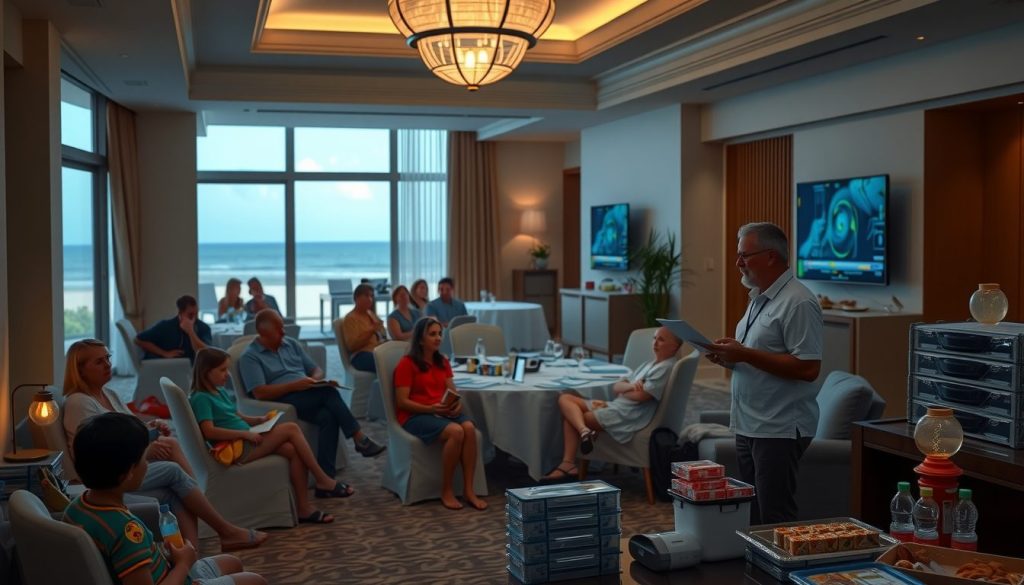
These areas are chosen because they minimize exposure to flying debris and flooding.
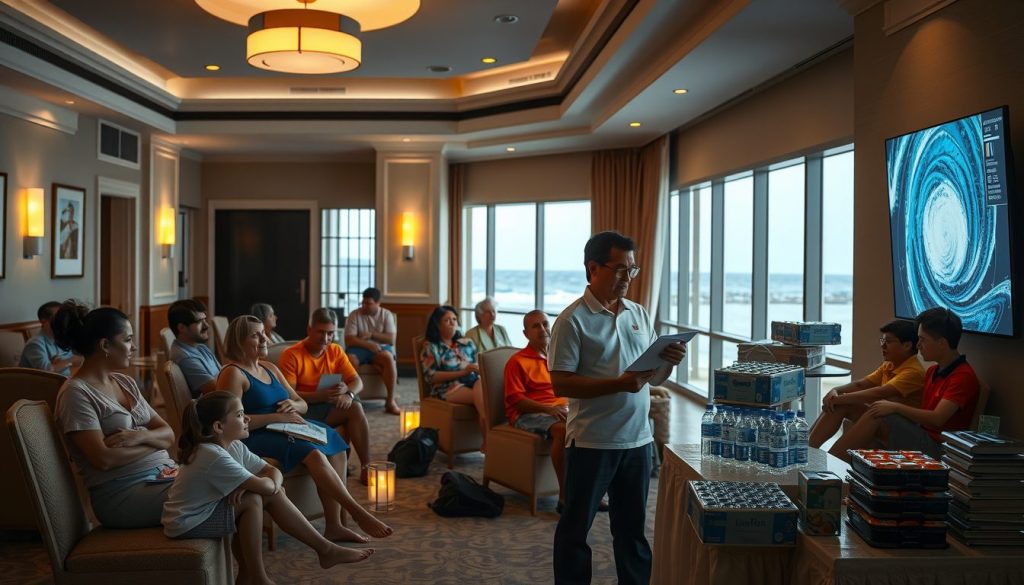
Resorts also prepare by stockpiling bottled water, non‑perishable food, flashlights, and medical kits.
Backup generators are tested to keep lighting, refrigeration, and communications running.
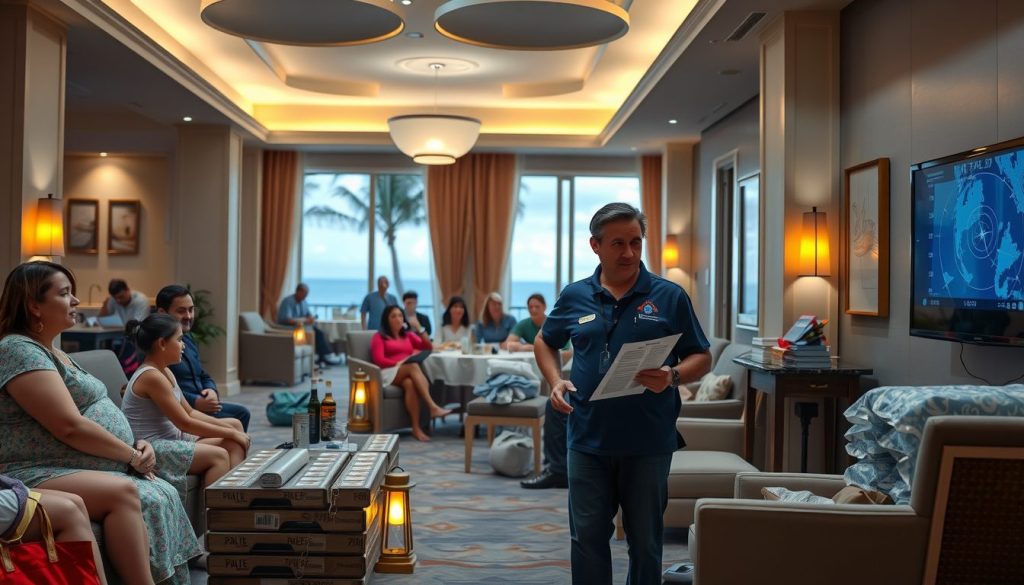
Staff play a critical role. Many remain on duty throughout the storm, guiding guests to safe areas, distributing supplies, and providing reassurance.
Resorts understand that hurricanes can be frightening, especially for families with children, so staff are trained not only in logistics but also in calm, supportive communication.
- Safe Relocation: Guests are moved to interior ballrooms or hallways away from windows and flood exposure.
- Essential Power: Backup generators sustain lighting, refrigeration, and communications.
- Staged Supplies: Food, water, flashlights, and medical kits are available and replenished.
- Visible Support: Trained staff remain on duty, guiding, checking in, and reassuring throughout the storm.
Living Through the Hurricane with Calm and Care
Inside the resort, the experience is structured to reduce fear and maintain a sense of order.
Staff create calm routines — scheduled updates, meal distribution, and small activities for children — so time feels guided rather than chaotic.
Guests are reminded that the “eye” of the storm can create false calm, and staying indoors is the safest choice.
Communication is constant. Resorts provide updates on the storm’s progress, either through staff announcements or printed notices.

Paradise Is Calling Your Name
Explore Sandals & Beaches deals
Guests are reminded to stay indoors, avoid windows, and remain in designated areas until the all‑clear is given.
For many travelers, the most important reassurance is knowing that they are not alone.
Staff remain visible and accessible, checking on guests, answering questions, and distributing essentials.
This human presence provides comfort and confidence, reinforcing the sense that the resort is prepared and capable of handling the crisis.
- Stay in Safe Zones: Remain indoors in designated areas until staff and officials confirm the all‑clear.
- Regular Briefings: Expect clear updates and printed notices to reduce uncertainty.
- Comfort Measures: Simple entertainment, books, and games help families pass the time.
- Steady Essentials: Food, water, and basic supplies are distributed on a predictable cadence.
The Aftermath: Recovery, Inspections, and Next Steps
When the storm passes, resorts immediately shift to recovery.
Engineers and maintenance crews inspect buildings, pools, and beaches to ensure safety.
If conditions allow, operations resume in phases. If damage is significant, resorts coordinate with local authorities to arrange evacuations or transfers.
Utilities such as electricity and water may be temporarily disrupted, but most resorts have backup systems to bridge the gap.
Guests are kept informed throughout the process, with staff explaining timelines for reopening facilities or arranging departures.
The goal is always to prioritize guest safety while minimizing disruption to the vacation experience.
Even when damage is significant, resorts work to maintain calm and provide clear guidance so guests feel supported.
- Safety Checks First: Structural and environmental inspections precede any reopening.
- Phased Reopening: Dining, pools, and beaches return in sequence as areas clear safety checks.
- Organized Departures: If needed, staff coordinate transfers to alternate hotels, shelters, or airports.
- Utility Bridging: Backup systems support water and power until full service returns.
Hurricane Guarantees That Protect Your Stay
Financial stress can be as disruptive as the storm itself.
That’s why many resorts offer hurricane guarantees — policies that allow guests to rebook, refund, or return later without penalties.
These guarantees are designed to give travelers confidence when booking during storm season.
Typically, hurricane guarantees allow guests to rebook their stay at no additional cost, often within a 12‑month window.
Some resorts offer full or partial refunds for unused nights, while others provide credits toward future stays.
Penalties for early departures or cancellations are usually waived when a hurricane warning is issued.
These policies vary by resort, so it’s important for travelers to confirm the details before booking.
Knowing that you have the option to rebook or receive a refund provides peace of mind, making it easier to commit to a Caribbean vacation even during hurricane season.
- No‑Penalty Changes: Early departures and cancellations are typically waived with official warnings.
- Flexible Rebooking: Return within a set window (often up to 12 months) without change fees.
- Refunds/Credits: Unused nights are refunded or credited toward a future stay.
- Value Protection: Seasonal packages often preserve rate parity for your rebooked dates.
Travel Coverage That Brings Peace of Mind
Resort guarantees cover lodging, but they don’t cover everything.
Travel insurance fills the gaps, protecting flights, medical emergencies, and prepaid excursions.
With the right coverage, disruptions become manageable — canceled flights are rebooked, medical care is covered, and unexpected costs are reimbursed.
Escape the Chaos. Upgrade to Paradise.
See today’s exclusive offers

Travel insurance can reimburse travelers for non‑refundable costs if a trip is canceled or interrupted due to severe weather.
It can also cover additional expenses such as meals, hotels, and rebooked flights if you’re stranded.
In the event of a medical emergency, insurance provides access to hospitalization, evacuation, and even dental care if needed.
The key is timing. Insurance must be purchased before a storm is named; once it becomes a “foreseeable event,” coverage for that storm is no longer available.
This makes it essential to buy insurance at the time of booking, not when a storm is already forming.
- VisitorsCoverage: Trip interruption and evacuation when severe weather forces changes.
- Ekta: Medical and hospitalization protection abroad, including emergency transport.
- Insubuy: Expenses for delays and rebookings, covering hotels, meals, and flights.
- Compensair: Airline compensation pursuit for cancellations and significant delays.
Real Hurricane Stories That Prove Preparation Matters
Past storms show why preparation and insurance matter.
Hurricanes Maria and Dorian caused mass evacuations, airport closures, and multi‑day cancellations.
In Jamaica, medical emergencies during storms highlighted the need for evacuation coverage.
These cases prove that even the best resorts can’t control regional infrastructure — but planning ensures you’re not left stranded.
- Evacuations Happen: Resorts and authorities coordinate safe transfers when damage is significant.
- Airlines Cancel Preemptively: Expect reroutes and multi‑day delays around landfall windows.
- Infrastructure Can Lag: Power, water, and roads may take time to restore post‑storm.
- Coverage Closes Gaps: Insurance turns unpredictable costs into planned reimbursements.
Preparing Smart for Hurricane Season Travel
Peace of mind begins before you board your flight.
Choosing storm‑safer islands, confirming your resort’s hurricane policy, and purchasing comprehensive travel insurance all reduce risk.
Packing a small resilience kit — medications, chargers, snacks — ensures comfort even if plans shift.
With preparation, you can enjoy the Caribbean confidently, even in hurricane season.
- Safer Geography: Favor southern and eastern Caribbean islands outside the main hurricane belt.
- Policy Clarity: Request written hurricane terms (refunds, rebooking windows, no‑penalty changes).
- Insurance Timing: Purchase coverage at booking to include weather‑related benefits.
- Comfort Kit: Medications, chargers, flashlight, snacks — compact items that reduce stress.
Find the Escape You’ve Been Craving.
Reveal limited‑time Caribbean deals
FAQ – Hurricane Season Travel Confidence and Safety
How do resorts keep guests safe when a hurricane strikes?
Resorts follow rehearsed emergency plans that guide guests into reinforced shelters.
Staff distribute supplies such as bottled water, food, and medical kits to sustain comfort.
Backup generators maintain lighting, refrigeration, and communication throughout the storm.
Visible staff presence reassures guests and supports calm during the crisis.What areas of the resort are safest during a hurricane?
Guests are relocated to interior ballrooms or hallways away from windows and glass.
These spaces minimize exposure to flying debris and flooding risks.
Safety zones are chosen to reduce fear and maintain order during the storm.How do resorts communicate updates during a hurricane?
Staff provide scheduled briefings and printed notices to reduce uncertainty.
Guests are reminded to remain indoors until the official all‑clear is given.
Constant communication supports confidence and prevents misinformation.What supplies are available to guests during a storm?
Resorts stockpile bottled water, non‑perishable food, flashlights, and medical kits.
Supplies are distributed on a predictable cadence to maintain stability.
Backup systems ensure refrigeration and essential utilities continue operating.How do resorts support families with children during hurricanes?
Staff create calm routines with small activities and entertainment for children.
Meals are distributed on schedule to reduce stress and maintain normalcy.
Visible staff presence reassures parents and supports emotional stability.What happens after the hurricane passes?
Resorts immediately conduct structural and environmental inspections.
Facilities reopen in phases once safety checks are complete.
If damage is significant, staff coordinate transfers or evacuations with local authorities.What are hurricane guarantees and how do they protect travelers?
Resorts offer policies that allow rebooking, refunds, or credits without penalties.
Guests can return within a set window, often up to 12 months, at no extra cost.
Refunds or credits for unused nights reduce financial stress during storm disruptions.How does travel insurance complement resort hurricane guarantees?
Insurance covers flights, medical emergencies, and prepaid excursions beyond lodging.
Policies reimburse non‑refundable costs if trips are canceled or interrupted by severe weather.
Coverage includes meals, hotels, and rebooked flights if travelers are stranded.Which travel insurance providers are recommended for hurricane season?
VisitorsCoverage offers trip interruption and evacuation coverage.
Ekta provides medical and hospitalization protection abroad. Insubuy covers expenses for delays, hotels, meals, and flights.
Compensair pursues airline compensation for cancellations and significant delays.